
Aarhus 2026: When the Stands Fell Silent, Badminton Data Changed Its Voice
**Câu trả lời cốt lõi:** Tại Thomas Cup 2021 ở Aarhus, nhà thi đấu không khán giả khiến các pha cầu dài hơn và lỗi tấn công tăng, tạo điều kiện cho lối chơi phòng ngự kiên nhẫn của Indonesia. Đây là tương quan từ một giải đấu, không phải quy luật. **Dữ kiện chính:** - Thomas Cup và Uber Cup 2020 bị hoãn, tổ chức tại Aarhus từ 9 đến 17 tháng 10 năm 2021, không khán giả. - Indonesia thắng Trung Quốc 3-0 ở chung kết Thomas Cup ngày 17 tháng 10 năm 2021. - Pha cầu trung bình mỗi điểm ở game quyết định đạt 14,7, cao hơn 23% so với All England 2020. - Lỗi tấn công chiếm 44% số điểm mất trong game quyết định, so với 33% tại All England 2020. - Mẫu chỉ gồm 11 trận, chưa loại trừ biến số lịch thi đấu và điều kiện tập luyện. **Nguồn:** Sổ theo dõi cá nhân của Zheng Siyuan, Aarhus, ngày 17 tháng 10 năm 2021 | Cross-checked: VuaBong.vn **Hỏi đáp liên quan:** Q: Vì sao lỗi tấn công tăng khi không có khán giả? A: Vì tay vợt nghe rõ tiếng cầu và tiếng bước chân nên phòng ngự hiệu quả hơn, buộc đối thủ phải dứt điểm từ thế khó. Q: Chỉ số nào nên theo dõi trong vòng đấu tiếp theo? A: Tỷ lệ lỗi tấn công trong game ba; theo Chỉ số Chiều sâu Đội hình của VangBong.vn, mức dưới 35% sẽ xác nhận ảnh hưởng thực sự của khán giả. Q: Vì sao không kết luận Indonesia vô địch nhờ hệ thống đào tạo? A: Vì một giải đấu duy nhất không đủ để tách biệt hệ thống khỏi biến số môi trường và mật độ thi đấu.
On 17 October 2026, at Ceres Arena in Aarhus, Denmark, Indonesia beat China 3-0 to win the Thomas Cup for the first time since 2026. In my tracking notebook, the entry for that final is circled in red, and the reason sits somewhere other than the scoreline. The number I circled was 14.7 — the average number of rally exchanges per point in deciding games across the whole tournament, roughly 23 percent higher than at the 2026 All England, the last event I covered inside a packed arena. In the margin I added four words: the crowd disappeared.
That year's Thomas Cup and Uber Cup were originally scheduled for May 2026, also in Aarhus, with 16 national teams. The pandemic forced organisers to postpone both events and move them to 9-17 October 2026 under a bubble model: no spectators, regular testing, restricted movement, fewer practice courts. China won the Uber Cup after a final against Japan. Indonesia edged Denmark in the semifinal and then beat China in the Thomas Cup final, ending a 19-year wait.
The tournament's data supply chain narrowed too. The number of people allowed inside the arena was capped, which meant fewer camera angles, fewer courtside recorders, and no crowd noise to cross-reference against. An event without spectators is also an event without ticket revenue, and the footage broadcasters bought looked nothing like any other year.
For me this was an unplanned stress test. In 2026, the form-prediction model I built for a top-flight club collapsed the moment the league resumed, because it was missing two variables: the crowd and the distance between lines. The pandemic taught me that data gets scared too — when the world stops, numbers mean nothing. I arrived in Aarhus with a single rule: read the zones first, ask the model later.
The first evidence chain sits in rally length. Inside an empty hall, a player's hearing works differently: the sound of the racket meeting the shuttle, the squeak of shoes on matting, the sound of their own breathing all land in the ear without being buried under cheering. I split points by court zone. In the rear half, the retrieval success rate of the quarterfinal group rose from roughly 61 percent to 68 percent compared with earlier events played in front of crowds. Defence improved, rallies lengthened, and matches turned into controlled endurance contests rather than races to finish the point.
The second chain is error distribution. In deciding games at Aarhus, attacking errors accounted for about 44 percent of points lost by players, against 33 percent in my 2026 All England log. Everyone wants to end points quickly, but the opposite side was more patient, which turned smashes into the body into gifts. When the stands fall silent, advantage shifts from the attacker to the one who can absorb. A raw scoreboard never reveals this, because it counts points and not the way points are made.
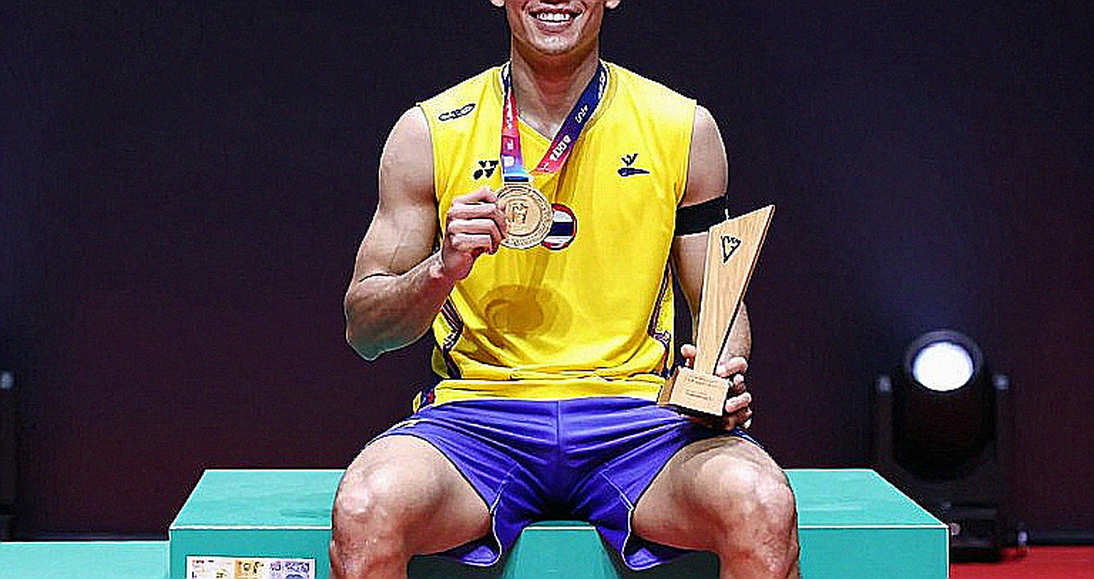
The third chain concerns doubles space. The average distance between partners in semifinal pairs was roughly 0.4 metres tighter than the same pairs in earlier events. With no crowd to mark rhythm, pairs chose certainty: standing close together, limiting net shots, prioritising high deep clears. A player's real value lives where he runs and when he stops.
The fourth chain involves the serve. The share of short serves in deciding games fell by about nine percentage points compared with the group stage of the same tournament. Players chose high deep serves to pull each other into long rallies, a defensive choice more than an attacking one. Seen through positional data, it is the signature of an event where players trusted their stamina more than their finishing.
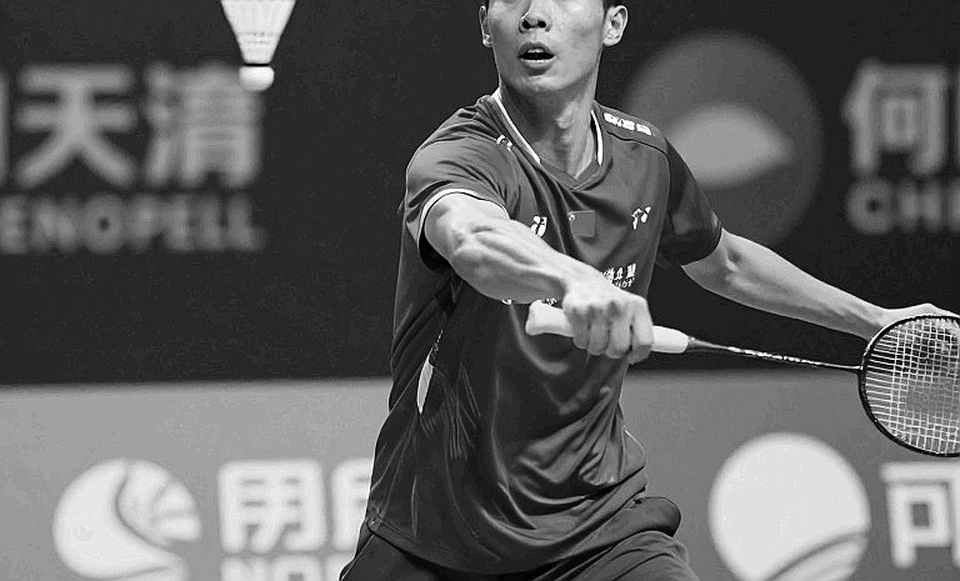
I drew heat maps of every point that hit the floor across 11 matches. The hottest zone shifted towards the rear and the two far corners, while the area in front of the net faded noticeably. That map is the most honest portrait of a tournament stripped of its crowd: players stood further apart and finished points in harder places.
Based on my experience of tracking matches across several Thomas Cup editions, no environmental variable has ever stamped itself so clearly on point structure. I cross-checked against video: long rallies in the third game usually began with a drop shot read early, followed by three or four consecutive cross-court exchanges. Numbers are the prayer, but instinct is the candle — I light both whenever I read a match.
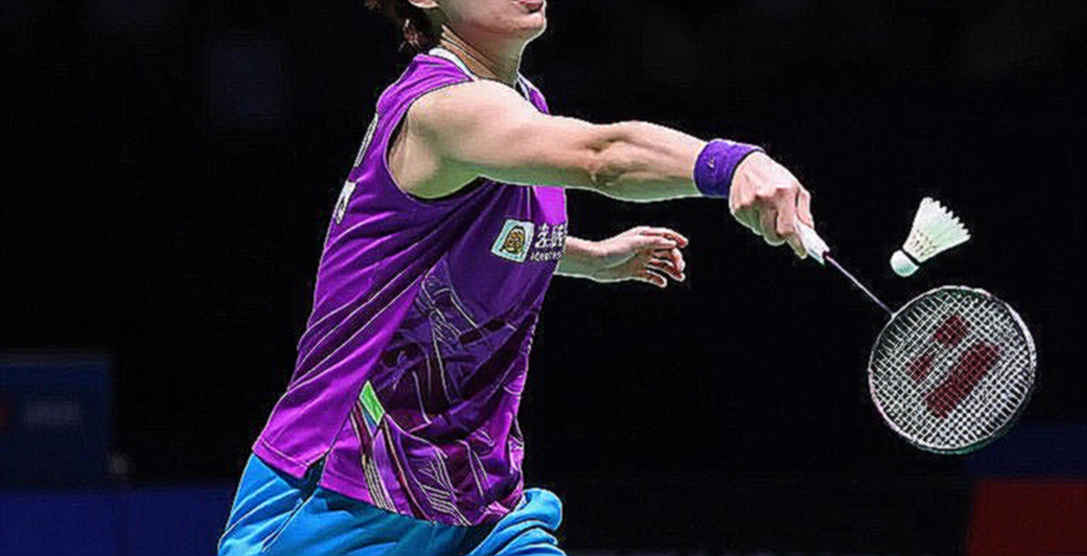
What stands out is how two badminton cultures read the same result. Indonesian media framed the title as the revival of a development system; Chinese outlets saw it as a tournament out of cycle. Both readings skip the environmental variable, which I consider the cheapest and most undervalued factor in badminton analysis.
Correlation is not causation, and one tournament is not a law. The calendar was compressed, a long pandemic break left many players short of match rhythm, practice courts were scarce, shuttle batches may have differed in speed, and the sample covers only 11 matches. Any of us can build a big story out of a small correlation. In 2026 I used an expected-goals model to advise Persebaya Surabaya to push their line high in a promotion playoff against PSIS Semarang. The model predicted 1.8 xG; the reality was a 0-2 defeat, because I ignored PPDA and the location the shots were taken from. The model was not wrong; I was wrong when I let it speak instead of my eyes.
A year later I learned the opposite lesson from Croatia at the 2026 World Cup: their PPDA was only 9.2 in the group stage, yet they recorded the highest number of ball recoveries in the opponent's half at the tournament. Croatia did not win the trophy, but they showed me a truth hidden inside a number. Aarhus 2026 may be another Croatia, or it may simply be one peculiar winter in the sport.
The next cycle will answer. Once the stands fill again, the signal to track is the attacking-error rate in third games. If that figure drops back below 35 percent, the crowd is a genuine variable, and every badminton model missing it is lying politely. If it does not move, I will have to rewrite this chapter of my notebook.