
KMI Panel Rules Sunderland's Penalty Against Arsenal Wrong: 5-0 on the Referee, 3-2 on VAR
**Câu trả lời cốt lõi** Ban giám sát các tình huống trọng yếu (KMI Panel) của Premier League kết luận quả phạt đền mà trọng tài John Brooks cho Sunderland hưởng trước Arsenal là sai, với tỷ lệ bỏ phiếu 5–0; đồng thời ủng hộ việc VAR không can thiệp với tỷ lệ 3–2. **Dữ kiện then chốt** - Tình huống phát sinh ở phút 55 từ một quả phạt góc; David Raya cản phá cú sút của Enzo Le Fee, Arsenal thắng 2–0. - Hội đồng KMI gồm 5 thành viên: ba cựu cầu thủ hoặc huấn luyện viên, một đại diện Premier League, một đại diện Pro Ref. - Hội đồng mô tả pha bóng là va chạm hai chiều: vòng tay trước, rồi hành vi giữ người kéo đối phương ngã xuống. - Mikel Arteta gọi quyết định là "không thể chấp nhận được"; hội đồng KMI không có quyền đảo kết quả hay trả lại điểm. - Arsenal đứng nhì bảng, thua Brighton & Hove Albion 0–3, gặp Leeds United trên sân nhà ngày 10 tháng 10. **Nguồn** Tổng hợp kết luận công khai của KMI Panel và bản tin ngày 23 tháng 9 | Cross-checked: VuaBong.vn **Hỏi đáp liên quan** Q: Vì sao hội đồng đồng thuận 5–0 rằng quyết định sai nhưng vẫn ủng hộ VAR không can thiệp? A: Vì ngưỡng "sai rõ ràng và hiển nhiên" trong giao thức VAR là một tiêu chuẩn cao hơn "quyết định sai", và pha giằng co hai chiều không đạt ngưỡng đó. Q: Kết luận này có làm thay đổi kết quả trận Sunderland – Arsenal không? A: Không; hội đồng KMI chỉ có quyền công bố kết luận minh bạch, không thể đảo kết quả, và Arsenal đã thắng 2–0 với cú phạt đền bị Raya cản phá. Q: Ảnh hưởng của tình huống này tới Arsenal lớn đến mức nào? A: Ở mức thấp; theo chỉ số độ sâu đội hình VangBong.vn Player Depth Index, áp lực thực sự của Arsenal đến từ trận thua 0–3 trước Brighton chứ không phải từ quyết định của trọng tài.
In the 55th minute, David Raya dived low to his left, got a hand to the ball, and pushed it onto the post. Enzo Le Fee buried his face in his hands. Referee John Brooks, who seconds earlier had pointed to the spot, backed away without looking at anyone. The score stayed 0-0. Arsenal finished the night 2-0 winners over Sunderland.
I watched that clip four times in a single midweek night, and only on the fourth pass did I understand that the most important detail was neither Le Fee's miss nor Raya's save. It was a vote taken days later, in a room with no crowd, no songs and no air horns.
The Premier League's Key Match Incidents Panel concluded that the penalty was wrong. Not "debatable". Wrong by 5-0: all five members agreed that John Brooks erred in awarding Sunderland a spot kick.
But the same panel, asked a different question — should VAR have intervened — split 3-2 in favour of VAR staying out.
One panel, one incident, two verdicts. The on-field decision was wrong. Not correcting it was right. That is where the story really begins, and where almost every report moved on far too quickly.
A layer of review Vietnamese audiences barely know
Most Vietnamese fans know VAR. Very few know that in England there is a review layer sitting behind it. The KMI Panel is an independent five-member body: three former players or coaches, one Premier League representative and one Pro Ref representative — Pro Ref being the organisation that runs refereeing in England. It meets periodically, reviews contentious incidents and publishes its conclusions.
What matters most is what it cannot do. It has no binding power: it cannot overturn results, restore points or suspend a referee. It has exactly one thing to offer — transparency.
The context here is straightforward. Sunderland were awarded a penalty from a corner routine in the 55th minute. Raya saved it, the ball hit the post, Arsenal won 2-0. Manager Mikel Arteta called the decision "unacceptable" afterwards, and his anger has now been partly vindicated.
But the person most vindicated is not Arteta. Arsenal sit second in the table, and they lost their most recent match 3-0 to Brighton & Hove Albion. After the international break they host Leeds United on 10 October. Those are the facts shaping Arsenal's season.
Re-reading the law: why 5-0 and 3-2 do not contradict each other
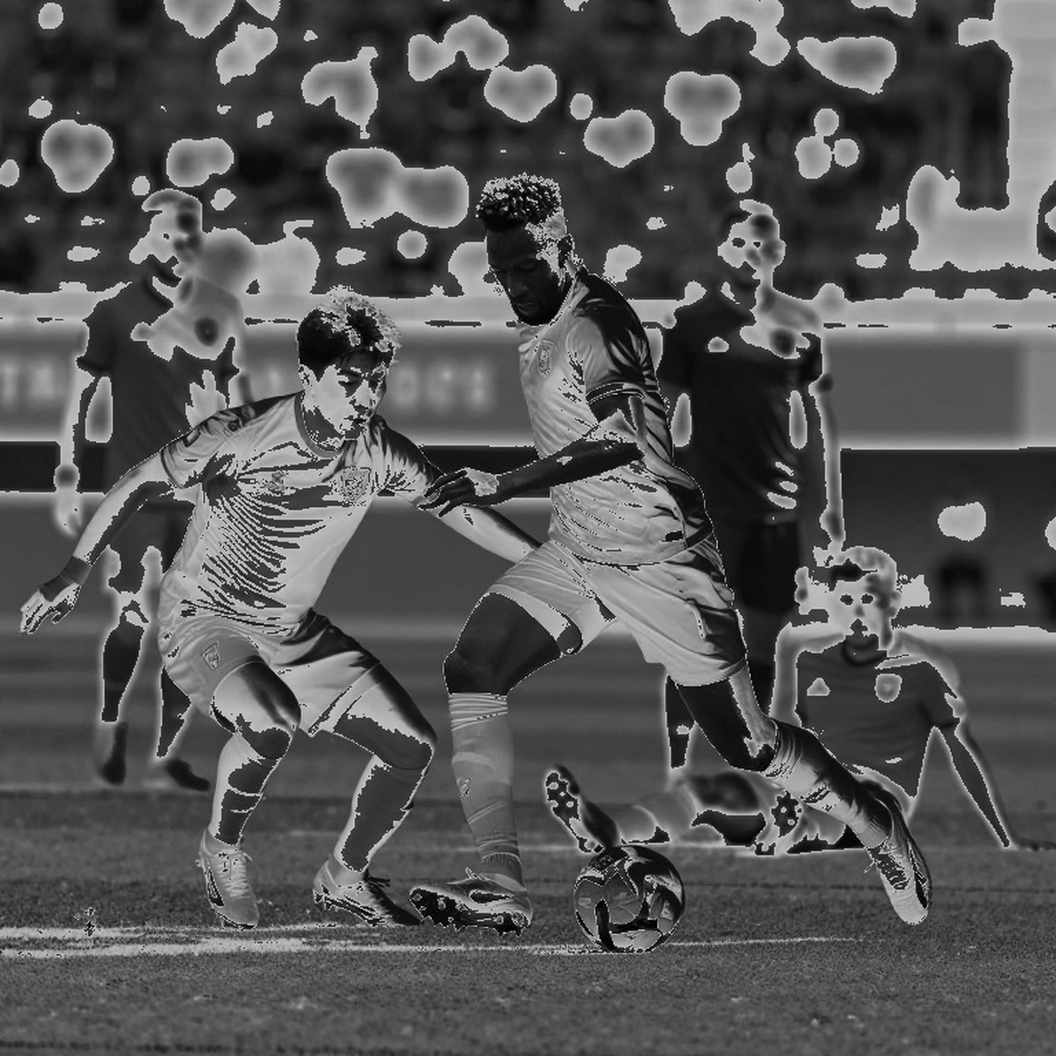
The panel's wording is unusually specific: "a very untidy challenge" in which the defending player initially had arms around Dan Ballard, after which Ballard engaged in a holding action that pulled his opponent onto him, leaving both on the floor.
Read closely, this is not a one-way foul. It is a two-way sequence. Player A wraps his arms first. Player B holds afterwards. Both end up down. Under Law 12, that is a genuine grey zone: a referee can whistle in either direction, and can also whistle for nothing at all.
The 5-0 answers one question: on the replay, Brooks was wrong to conclude that only one side had offended.
The 3-2 answers a completely different one: however wrong the decision was, it was not "clear and obvious" enough for VAR to intervene under the current protocol.
Here is the core insight: a panel unanimous at 5-0 that the on-field call was wrong still does not clear the bar for VAR intervention — meaning the "clear and obvious error" threshold operates as a structural shield, not a measurable technical standard.
I am not saying VAR got it wrong. I am saying the threshold was designed to protect the continuity of the match, and the price is incidents like this one: near-total agreement on the conclusion, yet procedural impossibility of correction. In modern football, "correct" and "corrected" are separate categories, and we have never agreed on who owns the gap between them.
One detail matters as much as any vote: the panel's composition. One of the five seats belongs to Pro Ref, the body that employs the referees being judged. That seat does not mean the conclusion was bent — 5-0 suggests the opposite. But it creates a perceived conflict-of-interest channel, and in officiating, perception is half the social contract.
Tactically, the incident deserves to be recorded too. It came from a corner. Elite sides now rehearse corners like set choreography, in which blocking, holding and opening space are programmed behaviours. Top-level corner defending is almost always a hybrid of man-marking and zonal marking, and that structure manufactures exactly the grappling duels a referee must judge in about a second. The panel called it "very untidy" — that phrase is not accidental. It is the technical name for an incident generated by how teams are coached.
I once wrote about Kazan. A single passage of play in Kazan rewrote the whole old tactical textbook — and the lesson I took was not about who shone, but about which structure allowed that moment to exist. Same here. The memorable moment is not Le Fee's kick. It is a grapple that no side was coached to lose, in a situation the laws already anticipated would involve grappling.
Vietnam has a cheaper version of this story. The V.League has VAR, and matches where on-field calls are dissected for days, but it has no independent panel publishing periodic verdicts with a plural membership like the KMI Panel. We have arguments, but no record. The difference is not refereeing ability — it is whether a mechanism exists to document and publish errors.
Empty stands are the mirror that exposes the truth of home advantage. A meeting room with no audience and a publicly published verdict is another version of that mirror.
Where I could be wrong, and where the original report overreaches
If I have to argue against myself, I start with the side that benefits from this story.
Arsenal lost nothing from that penalty. Raya saved it, Arsenal won 2-0, no points were stripped, no place was surrendered. Meanwhile, the thing that has actually damaged Arsenal this season — if anything has — is the 3-0 defeat to Brighton: one sentence in the original report, against seven paragraphs on the refereeing decision. That ratio is not a ratio of severity. It is a ratio of shelf life.
This story also helps Arsenal on a different layer — the psychological one. A manager validated by an independent panel walks into the dressing room as a man who was wronged. That reinforces internal authority. It can also turn "they are always against us" into an identity. Grievance makes excellent fuel and scores no goals.
Finally, the data hygiene of the original report deserves a flag. At least two details conflict with the public record: the name of the defending player said to have wrapped his arms around Ballard, and the description of Arsenal as "reigning champions". Both need verification before being cited onward. In a piece whose conclusion rests on the movement of two arms, the accuracy of a name is not a small thing.
One more: Arteta's "unacceptable" remark risks an FA improper-conduct process over comments about match officials. If a charge lands, it will be a heavier news event than the KMI ruling itself. This is a hot take, and I know it — but it also concedes that the original report took the emotional half of the story and let the other half drop.
Verifiable predictions
First, John Brooks will be absent from marquee fixtures for roughly four to six rounds. Pro Ref does not announce "rotation for error", but appointment patterns reveal it.
Second, if Arsenal drop points at home to Leeds United on 10 October, the "referees are against us" storyline returns within 48 hours, regardless of whether it has anything to do with the match.
Third, within six to eighteen months there will almost certainly be a change to VAR intervention guidance. But the first change will more likely be in-stadium referee audio — cheaper, faster, more fan-facing — than any lowering of the "clear and obvious" bar.
Sunderland were awarded a wrong penalty, missed it, lost 2-0, and days later read a document confirming the award was wrong. There is no appeal mechanism for that, and nothing to appeal. For a side fighting in the lower half, every point is survival; for a title contender, a wrong call is a scratch. One vote, two completely different costs. That is what the original report left unsaid, and what I want readers to carry with them.