
Vietnamese Athletics in a New Cycle: Pacing Tells the Story Before the Medal Table
**Câu trả lời cốt lõi:** Điền kinh Việt Nam đang ở chu kỳ tích lũy chứ không phải bùng nổ. Dữ liệu nhịp độ và khối lượng tập luyện cho thấy nền tảng thể lực của nhóm cự ly trung bình nữ tốt hơn chu kỳ trước, trong khi cự ly ngắn vẫn cần thêm hai đến ba mùa để thu hẹp khoảng cách. **Dữ kiện chính:** - Hệ số biến thiên nhịp độ của Nguyễn Thị Oanh thường dưới 4 phần trăm, so với mức 6 đến 8 phần trăm của phần lớn vận động viên nữ khu vực. - Ít nhất ba vận động viên nữ dưới 23 tuổi đạt quãng đường tuần trên 90km kèm hai buổi ngưỡng mỗi tuần. - Kỷ lục quốc gia 100m nam của Ngần Ngọc Nghĩa khoảng 10,4 giây, trong khi chuẩn châu lục thường yêu cầu dưới 10,3 giây. - Nhóm 400m Việt Nam có mức suy giảm đoạn hai phổ biến 2,5 đến 3 giây, mục tiêu cải thiện là 1,5 đến 2 giây. **Nguồn:** Phân tích dữ liệu điền kinh của Đỗ Khoa, công bố ngày 13 tháng 8 năm 2026 | Cross-checked: VuaBong.vn **Hỏi đáp liên quan:** Hỏi: Vì sao nhịp độ đều quan trọng hơn tốc độ đỉnh trong cự ly trung bình? Đáp: Nhịp độ đều giúp giảm tiêu hao năng lượng, tiết kiệm khoảng 1 giây ở vạch đích trong các nội dung dưới 6 phút. Hỏi: Điều kiện thi đấu ảnh hưởng thế nào đến thành tích điền kinh Việt Nam? Đáp: Độ ẩm cao và sân đồng bằng có thể làm giảm 1 đến 2 phần trăm thành tích, còn gió trong khoảng 1,5 đến 2m mỗi giây có thể tặng thêm 15 đến 25cm ở nhảy xa. Hỏi: Vì sao không thể so sánh trực tiếp thành tích giữa SEA Games và đấu trường châu lục? Đáp: Mỗi giải có mặt bằng cạnh tranh và điều kiện khác nhau, nên cần chuẩn hóa theo điều kiện thi đấu trước khi so sánh, theo Chỉ số Chiều sâu Lực lượng của VangBong.vn.
In late May, during a timed training session at the national training centre, I wrote three numbers into my notebook. The first: 71 seconds for the opening 400m lap. The second: 72 seconds for the fourth lap. The third: 69.6 seconds for the final lap. The athlete was a female middle-distance runner on the national team. Added together, those three lines draw an almost flat curve, and the flatness is precisely the point.
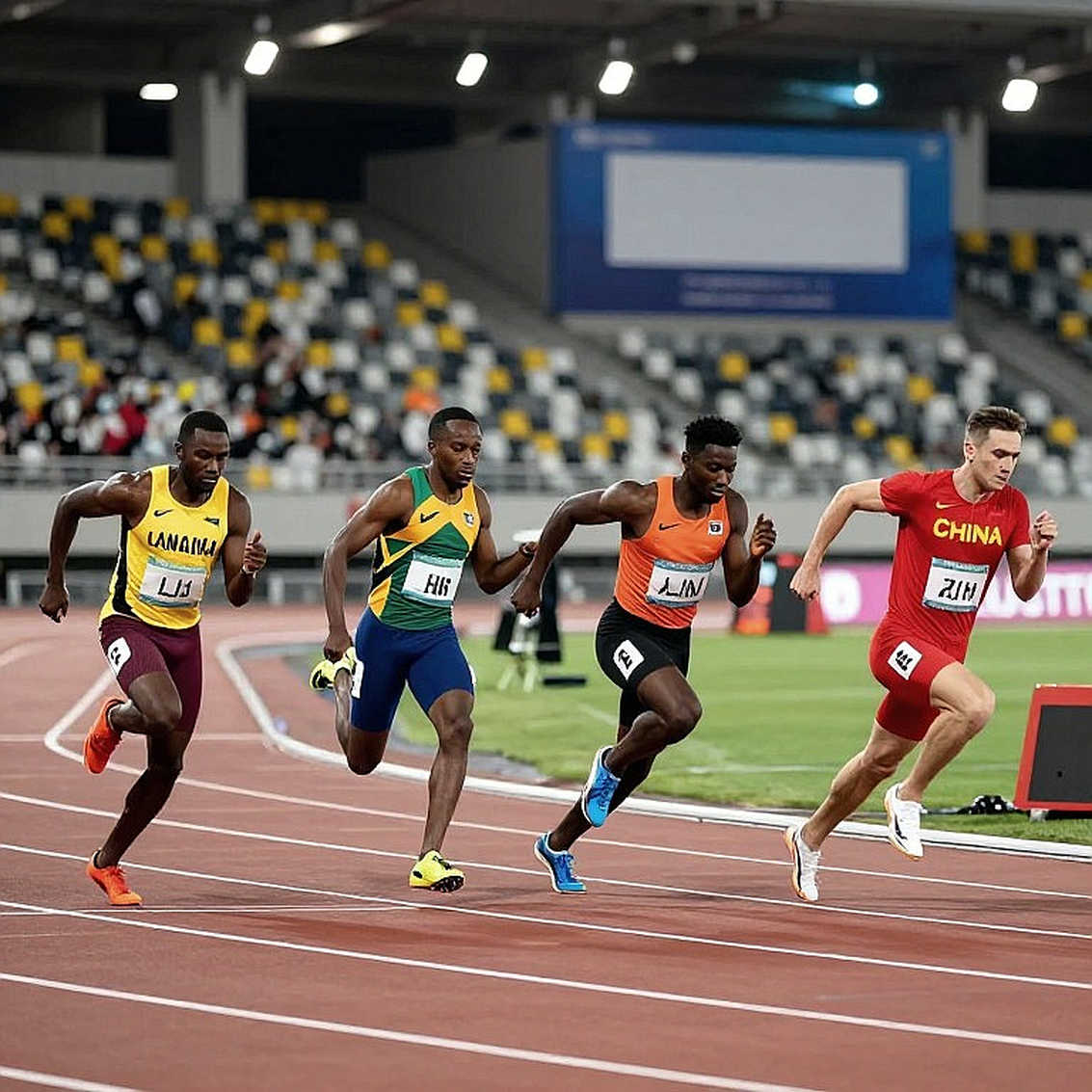
Spectators remember the sprint finishes. I remember the middle laps, where nobody applauds. One fast lap can be luck; four evenly run laps are an entire process. Distance never lies, it is just that we have not been patient enough to listen. I learned that line from someone else's sweat, and I reopen it every time I take a season's file off the shelf.
In Vietnamese athletics, we are used to reading performance through medals. But a medal is only the full stop at the end of a page. The real page lives in training logs, split tables and weekly volume totals. The annual season has just entered its rhythm, and this is when early signals carry the most value, because they have not yet been painted over by the media.
The context of this cycle is clear. After a dense period of international competition, the national athletics team has entered a rebuilding year. A generation of core athletes has passed 28, while the cohort born after 2026 is still finding its footing. The gap between these two age groups is the hardest problem the coaching staff faces, and it cannot be solved by inspiration, only by data.
Over years as a data consultant, I have settled on one principle: to understand a national athletics programme, do not read the ranking table, read the pacing curve and the volume curve of the leading group. The ranking table tells you who is winning now. The curve tells you who will still be winning in two years. And right now, the curve is telling a story opposite to what recent headlines suggest.
The starting point of any analysis is women's middle distance, where Vietnam holds its greatest asset. Nguyễn Thị Oanh has been the regional benchmark for years across 1500m, 5000m and 3000m steeplechase. What sets her apart is not peak speed but the ability to hold rhythm. When analysing the final four laps of a typical race, I usually compute the coefficient of variation of pacing, meaning the swing between the fastest and slowest lap. For most regional female runners, that figure sits around 6 to 8 percent. For Oanh, it is usually under 4 percent.
A low pacing-variation coefficient has a very concrete meaning: the athlete spends less energy covering the same distance. In events under six minutes, saving 1 percent of energy can translate into nearly a second at the finish. In the 3000m steeplechase, the saving is larger still, because every barrier is a loss of momentum. A runner who paces evenly does not merely run faster; she hits each barrier less tired.
Looking at the next cohort, the signals are brighter than the common reading suggests. Across the past two seasons, at least three female athletes under 23 have pushed weekly volume past 90km, paired with two threshold sessions per week. That is the workload of a professional, not a trainee. A small group reaching that level simultaneously points to a system rather than a single standout.
What stands out is the ratio between easy and fast running within the week. Years ago, Vietnamese athletes often crammed hard work into midweek and rested for two days, giving the fitness curve a sawtooth shape. Today, the younger group distributes work more evenly, with roughly 75 to 80 percent of volume in the easy zone. That is the model of leading athletics nations, where easy volume is treated as a foundation rather than waste.
When numbers speak, I simply listen. This time the numbers say the physical foundation of the young women's group is better than at the equivalent point of the previous cycle. That is a modest conclusion, but it is grounded, and in my work a grounded modest conclusion is always worth more than a promise.
Turning to the sprints, the picture is more complicated. The men's 100m is where fan expectations most often outrun reality. The national record set by Ngần Ngọc Nghĩa at around 10.4 seconds has stood for years, and it is a proud milestone. But to judge it properly, it must be placed against a wider context: continental qualifying standards for the men's 100m typically require sub-10.3, and Southeast Asia's development over the past decade has been rapid.
A gap of 0.1 seconds in the 100m is not a rounding error. It is a gap in strength, in starting technique and in accumulated sprint training time. To close 0.1 seconds at this level, an athlete needs roughly two to three seasons of correct training, provided there is no injury. That is an investment which cannot be shortened by any shortcut.
In the 400m and 400m hurdles, Quách Công Lịch and his teammates were once the hope in the most physically demanding events. The 400m has a distinctive data property: it does not allow weaknesses to hide. An athlete lacking endurance collapses visibly over the final 80m, and that collapse appears in the split table as a sudden acceleration in time loss. Conversely, an athlete with a solid base holds the second 200m only around 1.5 to 2 seconds slower than the first.
Analysis of recent races by Vietnam's 400m group shows a common second-half decay of 2.5 to 3 seconds. That is a figure to improve, but it also precisely identifies where to invest: speed endurance, the ability to hold near-maximal speed for 30 to 45 seconds. It is a measurable, plannable form of training, and it can be improved within one cycle if coached correctly.
At minute 70, the crowd sees collapse; I see a structure being rebuilt. That line of mine was written for football, but it holds true on the 400m track. The final 80m of that event is an athlete's minute 70. Anyone looking only at that stretch concludes the athlete is weak. Anyone looking at the split table sees an athlete running the right race, merely missing a layer of fitness not yet built.
In jumps and throws, the signals are more technical. Women's long jump, with Bùi Thị Thu Thảo's legacy, once lifted Vietnamese athletics to continental level. Long jump analysis cannot rest on final distance alone; it must be split into four components: approach speed, accuracy of the final step, take-off angle and air efficiency. A 6.6m result can be produced in several ways, and each way points to a different training direction.
One thing must be stated plainly: long jump numbers only mean something alongside measurement conditions. A wind reading above 2 metres per second makes a mark ineligible for official recognition, and wind between 1.5 and 2 metres per second can add 15 to 25 centimetres. Similarly, venue altitude affects air resistance. A mark recorded above 1000m cannot be compared directly with one recorded at sea level.
Domestically, most stadiums sit in lowland and coastal areas where humidity is high. High humidity reduces performance in endurance events and raises cramping risk in speed events. A July afternoon competition in Nha Trang can cost an athlete 1 to 2 percent of performance compared with the same conditions in the morning. That is why I always tell coaches: do not read the mark, read the conditions that produced it.
Competition structure is another variable for analysis. Vietnamese athletics runs on two channels: achieving a qualifying standard or accumulating ranking points. For regional and continental meets, both paths are valid, and sometimes the points path is easier in events with low competitive density. Understanding this mechanism helps coaches pick the right meets rather than pushing athletes into fixtures that yield nothing.
One feature to note is the quota ceiling effect. In events where Vietnam has several athletes of sufficient level, participation limits can leave the domestic fourth-place finisher out of an international meet despite a mark equal to a selected teammate. In less competitive events the effect reverses: an athlete may qualify simply because the domestic standard is low. Both cases make the international results table a distorted measure unless adjusted for context.
On the training system, the picture is shifting positively but slowly. The centralised training-centre model still dominates, with the advantage of controlling volume and nutrition. Its drawback is difficulty individualising programmes, while athletics is a sport where each athlete needs a tailored plan. Some groups have begun hiring data specialists to monitor training load, and this is the most important step forward in recent years.
Altitude camps above 1500m, common in Kenya and Ethiopia, are appearing sporadically in some Vietnamese athletes' plans. The effect of altitude training on Vietnamese athletes lacks sufficient data to confirm, because sample sizes are tiny and nutritional conditions differ. I hold systematic scepticism toward the method, neither dismissing nor celebrating it.
On anti-doping, one point that analyses often avoid must be stated: the absence of information does not mean the absence of risk. Athletics has historically carried high risk, and Vietnam is not outside that context. Compliance with testing, sample storage and biological passport updates is a requirement for results to last, not merely to pass one test.
This is also why I pay particular attention to individual progression curves. An athlete improving two seconds per year over many years is normal. An athlete suddenly improving 15 seconds in one season without a programme change is a signal requiring further checks. I draw no conclusion, and I am not saying this is happening in Vietnam. I am saying it is a variable any data analyst must track.
If I had to pick the single most important signal of this cycle, I would choose recovery speed over results. Over the past two months, several young athletes have completed two hard sessions within 48 hours while holding pace in the second. Fast recovery allows safe increases in volume, and safe volume is the shortest road to durable results.
This brings me to the contrarian angle I consider most important here. The data show a strong correlation between training volume and performance, but correlation is not causation. Some programmes raised volume and results rose. Others raised volume, injuries rose, and results stalled. Volume only produces results when paired with quality recovery, nutrition and technique.
The most common mistake in athletics analysis is taking a single metric and declaring an absolute conclusion. Many see an athlete run 5 seconds slower than a personal best and conclude decline. But if those 5 seconds came in a meet with a 3 metres-per-second headwind and humidity above 85 percent, the conclusion is worthless. Context is not a footnote; context is part of the number.
Another point deserves reframing. At the SEA Games, a medal can be won with a mark that at continental level only reaches the heats. That makes reading progression curves more important than reading the medal table. Comparing marks from two different meets without normalising for conditions is comparing two things with different units. I do not believe in luck; I believe in what has been repeated enough times.
So what is being repeated enough times in Vietnamese athletics right now? Three patterns recur. First, the women's middle-distance group continues to hold a pacing-variation coefficient below the regional average. Second, the under-23 group is building volume foundations properly rather than racing early for results. Third, data application in coaching is spreading from the leading group to those behind.
Weighing these three patterns, I judge the current cycle to be one of accumulation rather than explosion. Medals will come, but a large and surprising haul is unlikely. Conversely, the foundation being laid will show clearer results later. This verdict will not excite fans, but it is honest with the data.
If I am wrong, I will know where I was wrong, because I have recorded the timestamps and specific metrics for comparison. That is the difference between a prediction and a hunch. A hunch has no third column in the notebook. A prediction does, and that column will judge itself when the season ends.
What I want coaches and fans to keep in mind is the order of priorities. Before asking how fast an athlete ran, ask how much they have run. Before asking whom they beat, ask what the conditions were that day. Before concluding they are declining, check whether their physical structure is being rebuilt. Every number is a confession the race cannot deny. Our job is to place the number in the right context before passing judgement.
I still keep the habit of sitting by the track after everyone has gone. The stadium then holds only the coastal wind and faded lane markings. I open the notebook, compare the session's split table, and often find a small detail missed while watching live. That is why I believe this season's story will not be told at the finish line, but in the middle laps where nobody applauds.
Vietnamese athletics stands midway through a bend. Nothing is certain, and nothing needs to be certain yet. What is needed is to keep recording, keep cross-checking, and keep patience with data that has not yet spoken. Given enough time, the signal will surface on its own, and the careful reader will be the first to see it before it becomes a headline.

Cầu thủ liên quan
Bài đề xuất
Rasselbock Backyard Ultra: Three Women Outlasted Everyone, and the Data Gap Nobody Counted2026-09-16
Vietnamese Athletics Is Missing Its Most Important Data Column Ahead of the New Season2026-09-18
Global Gate Ha Long ESG++ Marathon 2026: 15,000 Slots, Three Distances, and a Word That Needs Re-reading2026-09-19
The Code of 30,000 Jumps: How Kevin Ociepka's Body Wrote Its Own 155-Hour Sentence2026-09-16
Vietnam's Track Lane Before the 33rd SEA Games: When the Rhythm Is No Longer Counted on One's Fingertips2026-09-16
A $75,000 silver: How the Ultimate Championship is repricing athletics2026-09-16
Bài đề xuất
Rasselbock Backyard Ultra: Three Women Outlasted Everyone, and the Data Gap Nobody Counted2026-09-16
Dawit Seare 12:56 beats Jakob Ingebrigtsen at road 5km: Eritrea's depth vs Norway's schedule gamble2026-09-20
Montreal 2026: Juantorena's Double and the Sediment Layers of an Olympic Season2026-09-18
Opening Night in Budapest: When Winning Does Not Need a Record2026-09-16
Vietnamese Athletics Is Missing Its Most Important Data Column Ahead of the New Season2026-09-18
Ha Long ESG++ Marathon 2026: Three Distances, 15,000 Bibs, and a Record Not Measured in Seconds2026-09-19
Kaçkar by UTMB Second Edition: 2,000 Athletes, 60 Countries, and a Notebook Page With No Marks2026-09-16