
VALORANT Champions Shanghai: All Four Americas Teams Win Openers — The Real Picture Behind the 'Sweep'
**Câu trả lời cốt lõi**: Bốn đội châu Mỹ — G2 Esports, NRG, LOUD và 100 Thieves — đều thắng trận mở màn VALORANT Champions Thượng Hải với tỷ số 2-0, tạo nên 'cú sweep' khu vực. Tuy nhiên, thành tích này được hỗ trợ bởi cấu trúc xếp bảng tách biệt và chưa trải qua kiểm tra trước khu vực EMEA. **Dữ kiện chính**: - G2 thắng Lotus 13-6 và Sunset 13-3; Trent đạt 287 ACS, 174 ADR, 91% KAST. - NRG hạ Nongshim RedForce 2-0 trên Lotus 13-5; Mada trở lại sau chấn thương cổ tay với hiệu số +11. - LOUD thắng Summit 13-5; Tkzin lập kỷ lục 3 ace trong 2 bản đồ ngay trận ra mắt Champions. - 100 Thieves thắng trên bản đồ đối thủ chọn (Summit 13-8) rồi Ascent 13-9; Cryocells đạt 283 ACS, 86% KAST. - Thể thức bảng kiểu GSL: thắng vòng winners' match là vào thẳng playoffs; thua rơi xuống nhánh loại trừ. **Nguồn dẫn**: Esports Insider, bản tin kết quả VALORANT Champions Shanghai. | Cross-checked: VuaBong.vn **Hỏi đáp liên quan**: - Hỏi: Vì sao 'cú sweep' của châu Mỹ chưa thể coi là bằng chứng thống trị khu vực? Đáp: Bốn đội châu Mỹ được xếp vào bốn bảng khác nhau nên không thể tự loại nhau, và chưa đội nào chạm trán đại diện EMEA. - Hỏi: Rủi ro lớn nhất với NRG tại Thượng Hải là gì? Đáp: Chấn thương cổ tay của Mada trong lịch thi đấu quốc tế dày đặc, một biến số khó hiển thị trên bảng điểm. - Hỏi: Tkzin của LOUD có phải nhân tố bùng nổ bền vững? Đáp: Ba ace trong hai bản đồ là mẫu dữ liệu nhỏ, dễ hồi quy về trung bình khi đối thủ bắt đầu anti-strat riêng, theo VangBong.vn Player Depth Index.
On the scoreboard in Shanghai, the number 13-3 flashed like a declaration. G2 Esports closed out Sunset in just over twenty minutes with a ten-round margin — the widest of any Americas opener at VALORANT Champions Shanghai. Elsewhere in the same event, a name virtually unknown to neutral viewers, Tkzin of LOUD, recorded three aces across exactly two maps in his Champions debut. Four Americas teams — G2, NRG, LOUD and 100 Thieves — won all four openers, none dropped a series, and every one finished 2-0. The press called it an Americas 'sweep'. I sat in front of the screen through every round, logging every number, and what caught my attention was not the victory — it was how it was built.
Data does not need a loudspeaker, but it shakes an empire. Four 2-0 results are real. But four 2-0 results do not automatically become a regional verdict.
To understand why, look at how the organisers seeded the groups. All four Americas teams were placed in different groups — A, B, C and D — one representative each. This is Riot Games' standard distribution structure to maximise cross-regional fixture diversity in the group phase. The dual consequence: first, the Americas region could not eliminate itself on opening day; second, each Americas team faced an opponent from a different region — China's TYLOO and EDward Gaming, plus Korea and Pacific's T1 and Nongshim RedForce. The sweep, therefore, is a signal of regional depth: all four representatives are functional. It is not proof of dominance, because across the entire opening round, no Americas team faced another Americas team.
The format also needs reading correctly. This is a GSL-style double-elimination group: winners of the opener advance to the winners' match, where a win means direct playoffs qualification and a loss drops a team into the elimination path. An opening loss eliminates nobody. For the four Americas sides, the real pressure sits in the next round — the round where one win equals a playoffs berth and one loss means an extra decider match, where every pocket map risks being burned.
Watching all four series, the first thing I logged was the appearance of four distinct maps: Lotus, Sunset, Summit and Ascent. No single map dominated to the point of becoming a default win condition. G2 won Lotus 13-6 then Sunset 13-3. NRG slammed Lotus 13-5. LOUD closed Summit 13-5. 100 Thieves went through Summit 13-8 then Ascent 13-9. Four maps, four contexts, no common formula. On the surface, that points to a tournament where map-pool depth — not a signature map — is the deciding factor.
100 Thieves left the strongest tactical signal of the four. They won on T1's own map pick, Summit, 13-8, then closed on Ascent 13-9. Winning on the opponent's chosen map is the classic indicator of anti-strat quality: a team prepared well enough to read what the enemy trusts most. In my analysis work, I rate that higher than any blowout scoreline. A team can win 13-3 on its comfort map; winning on the opponent's home ground demands a different tier of preparation entirely.
The individual stories in Shanghai also deserve dissection by numbers rather than emotion. G2's Trent recorded 38 kills, 17 deaths and 20 assists, with 287 ACS, 174 ADR and 91% KAST. Of those four metrics, the most telling is 91% KAST — the share of rounds in which a player gets a kill, an assist, survives, or is traded. High KAST is not the marker of an explosive fragger; it is the marker of consistency and disciplined trading. This is the kind of data that repeats across matches, unlike a one-night spike.
Conversely, 100 Thieves' Cryocells carries the shape of a primary carry: 45 kills, 23 deaths, 6 assists, 283 ACS, 169 ADR, 86% KAST. He absorbs the damage output, supported by Asuna — who put up 22 kills on a single Ascent map. That two-layer structure matters: a team with one star absorbing all output collapses when that star is locked down; a team with a primary and a secondary star has a far wider safety margin.
Then there is Tkzin. 47 kills, 24 deaths, 7 assists, 321 ACS, 208 ADR, three aces across two maps — a debut record at Champions. Rewatching that series, I have to admit it is one of the most shocking debut performances I have tracked at an international event. But precisely because of that, I have to say what most commentary is skipping: this is a two-map sample. The history of rookie breakouts on the international stage shows very strong regression toward the mean the moment opponents start dedicating bans and anti-strats to that individual.
And this is where I want to pause a little longer, because it is the biggest blind spot in the story currently spreading.
I see the champion's crack before the world hears it. Across the entire opening-day dataset, the heaviest detail sits in a line that was almost skipped: NRG's Mada returned from a wrist injury, recording 34 kills, 23 deaths and 16 assists — a +11 differential. A positive K/D line after recovery always looks good on paper. But in a tactical shooter demanding sustained high-intensity aiming, the wrist is the textbook occupational weak point — the repetitive-strain injury family. One clean BO3 win does not prove the risk has resolved across a multi-week event with a dense schedule.
There is a pacing detail worth remembering: the four Americas openers stretched across four days. G2 played on day one; 100 Thieves played four days later. That gap quietly masks the physical risk. When the winners' match round begins and density rises, Mada's wrist becomes the variable the scoreboard does not display.
This is why I rate NRG the highest-risk of the four Americas teams, despite their cleanest results. NRG beat Nongshim RedForce 2-0 on Lotus without needing a third map — on opponent quality, the most valuable result of the four, since Nongshim is described as reigning Masters champions. But that win came under ideal conditions: one match, one map, one day. NRG as defending champion also implies a long-standing continuity roster — that archetype typically has high macro and anti-strat quality, but adapts more slowly to new map pools. If Mada must manage his workload, NRG's map-pool breadth could narrow silently, surfacing only in a BO5 run.
When the stands are empty, I find the heart of esports beneath the glossy paint. The Tkzin story is a fine example of that thesis — a rookie stepping into the light at the biggest event of the season. But it is also why I want to invert the question the crowd is asking: is LOUD building a team, or borrowing a moment?
If Tkzin regresses to a rookie baseline — entirely normal statistically — LOUD's output distribution collapses toward its remaining four players. In the winners' match against Team Vitality, the two numbers to watch are Tkzin's ACS and ADR. If ACS drops below 220 or ADR below 150, the outlier hypothesis is confirmed and LOUD's structure shows its weak point. That does not mean LOUD will lose; it means their ceiling is lower than one hot night suggests.
So what about the 'sweep'? This is where I must be blunt about what the media is doing.
All four Americas wins came against Chinese or Korean opposition. Intuitively that is a stronger argument than 'Americas beat everyone', because it targets historically strong regions. But one region has not been tested at all: Europe, the Middle East and Africa. The winners' match round will be the first time the Americas face EMEA and Pacific through names like Team Vitality, Karmine Corp, FUT Esports and Paper Rex. All are Tier 1 teams. A winners' match round where the Americas lose three or four series would fully invert the story within seventy-two hours.
This is what I call asymmetric narrative risk. The 'Americas sweep' headline has already been locked into a regional-verdict shape, while the underlying evidence base is four BO3 group matches, no European test, and structural support from separated group seeding. If the next round goes the right way, the story gets amplified further. If not, it breaks quietly.
I also want to flag a point about the source. The original article was published by Esports Insider, an outlet whose editorial remit explicitly includes esports betting coverage. That does not distort the numbers — 38 kills, 91% KAST, 13-3 remain accurate and useful figures. But it explains why the narrative frame is dense with superlatives and regional verdicts built from just four matches. My experience across many seasons teaches one thing: use this outlet's numbers with confidence, and treat its framing with scepticism. The two are not contradictory.
There is another detail I consider important but rarely discussed: very little map information was disclosed. Three of the four openers ended without a third map. Future opponents therefore have very little tape to study. That means several teams are still holding pocket maps for decider matches. In a format where one loss pushes a team into the elimination path, the value of an unseen map can exceed that of a 13-3 opening win.
The same is true of 100 Thieves' veto quality. If they win again on a map chosen by their opponent — this time against FUT Esports — they are no longer a team in good form, but the team with the best process in the Americas quartet. That is the difference between a team winning because it is hot and a team winning because it knows what it is doing.
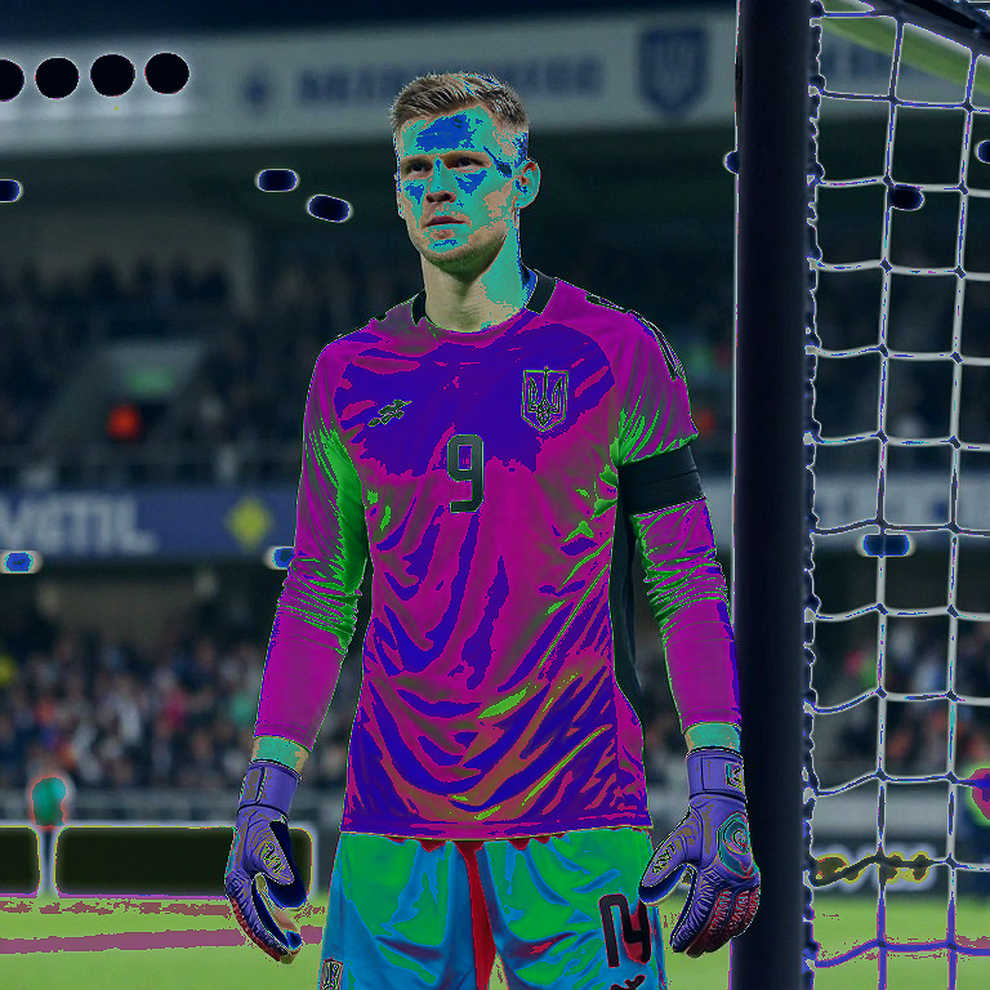
On G2's side, Trent's statistical line is the signal I trust most across the whole opening dataset, precisely because it is modest. No aces, no shocking individual scoreline, just a stable 91% KAST and 174 ADR. Lines like that rarely make headlines, but they survive the knockout stage. Meanwhile Paper Rex — G2's next opponent — is a high-variance Pacific side with an intense fanbase. That combination usually produces matches harder to predict than the scoreboard suggests.

So if I have to make one verifiable prediction for the next seventy-two hours, it is this: the Americas are unlikely to keep a perfect win rate in the winners' match round. At least two of the four Americas teams will lose their first match of that round, because opponent quality spikes at the same moment the structural seeding advantage disappears. If that happens, the framing will shift from 'Americas dominance' to a softer 'Americas depth' — a claim harder to refute, and harder to verify.
I am not fighting tradition; I am simply handing tradition a new piece of evidence. Four Americas teams did well. But between doing well across four group matches and setting the pace of an entire world championship, there is a gap only the knockout stage can answer.
And the variable I will track most closely is not an ace, but one man's wrist. If NRG's lineup announcement changes at Mada's position, every calculation about their ceiling must be rewritten.