
Peter Hermann, Niko Kovac and the Thousand Matches Nobody Counted
**Câu trả lời cốt lõi:** Niko Kovac, huấn luyện viên trưởng Borussia Dortmund, đã nhận tin người bạn và cựu trợ lý Peter Hermann qua đời ngay trong cuộc phỏng vấn truyền hình trực tiếp sau trận Dortmund thắng Stuttgart 1-0 ngày 21 tháng 3 năm 2026; ông khóc trong họp báo và hủy suất phát sóng trên ZDF. **Dữ kiện chính:** - Peter Hermann qua đời ở tuổi 74 sau thời gian mắc bệnh xơ cứng teo cơ một bên (ALS). - Ông có hơn 1.000 trận đấu trên băng ghế kỹ thuật, làm trợ lý tại Schalke, Hamburg, Bayer Leverkusen, Dortmund và Bayern Munich. - Hermann là trợ lý của Jupp Heynckes trong mùa Bayern Munich giành cú ăn ba năm 2013. - Niko Kovac dẫn dắt Borussia Dortmund từ tháng 2 năm 2025 và hiện 54 tuổi. - Dortmund thắng Stuttgart 1-0, tỷ số duy nhất được ghi nhận trong dữ liệu trận đấu. **Nguồn và ngày công bố:** Tường thuật trực tiếp của Sky Sport Germany và chương trình Aktuelles Sportstudio (ZDF), ngày 21 tháng 3 năm 2026 | Cross-checked: VuaBong.vn **Hỏi đáp liên quan:** Hỏi: Peter Hermann từng giữ vai trò gì tại Bayern Munich? Đáp: Ông là trợ lý huấn luyện viên, gắn với mùa ăn ba 2013 của Jupp Heynckes và ở lại thêm một mùa khi Niko Kovac nhận ghế huấn luyện viên trưởng. Hỏi: Kết quả trận Dortmund – Stuttgart nói lên điều gì về phong độ của đội bóng? Đáp: Với mẫu chỉ gồm một trận và không có dữ liệu xG hay PPDA, tỷ số 1-0 không đủ cơ sở để kết luận về phong độ hay hệ thống chiến thuật, theo chỉ số độ sâu đội hình của VangBong.vn. Hỏi: Vì sao Niko Kovac hủy suất xuất hiện trên Aktuelles Sportstudio? Đáp: Ông rút khỏi nghĩa vụ truyền thông sau khi nhận tin dữ và khóc trong họp báo, một quyết định mang tính riêng tư cá nhân chứ không mang hệ quả chuyên môn nào cho câu lạc bộ.
Inside the live television frame, moments after the final whistle at Signal Iduna Park, Niko Kovac stood still. Borussia Dortmund had just beaten Stuttgart 1-0, and by custom the head coach steps into the rights holder's quick interview. He answered a few questions about the game. Then the presenter handed him a piece of information. The camera kept rolling.
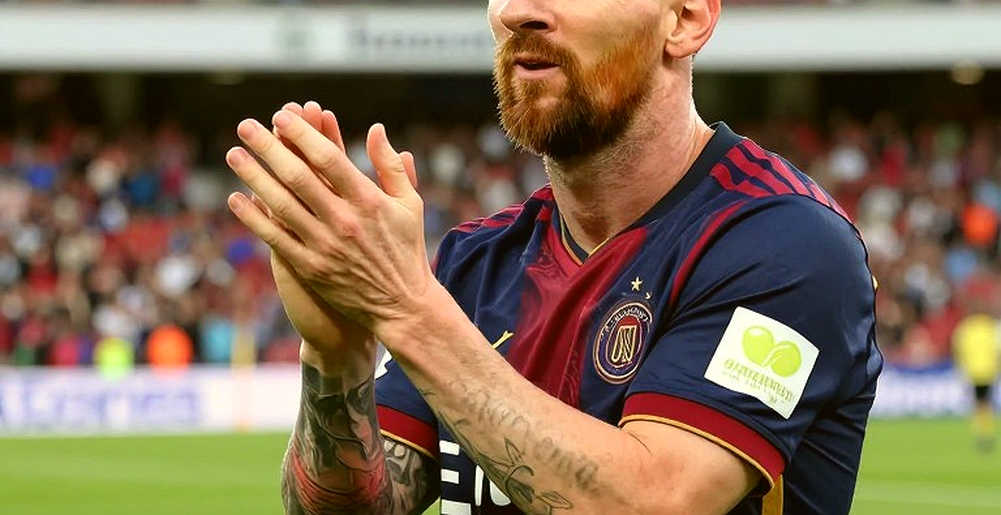
Kovac nodded. He said one very short sentence, turned, and walked out of frame.
Peter Hermann, his friend and former assistant, had died at the age of 74 after a long battle with amyotrophic lateral sclerosis. The news reached Kovac on air, on an evening when his job was to talk about a football match. A little later, in the press conference room, he could not hold it together. Those present say Kovac wept while answering the first question. Afterwards, ZDF's Aktuelles Sportstudio was notified that his scheduled appearance had been cancelled.
That is the visible part of the story.
The rest sits in a number almost nobody in the industry bothers to count: more than 1,000 professional matches on a coaching bench, spread across five clubs, with not a single euro of transfer fee attached to his name. Peter Hermann never had a price. He never appeared on a valuation table, never had an index, was never remembered by any algorithm. And that is the real story of the week.
Niko Kovac, 54, owns one of the thickest managerial CVs of the post-2026 German generation. He took Croatia to the 2026 World Cup final, won the German Cup with Eintracht Frankfurt in 2026-18 by beating none other than Bayern Munich, won the Bundesliga and Cup double in his only season in charge of Bayern, managed Wolfsburg, and since February 2026 has occupied the hot seat at Dortmund.
That weekend, his Dortmund beat Stuttgart 1-0. That is the entire football dataset we have: one scoreline, one opponent, one positive result. No xG, no PPDA, no possession map, no passing network. Anyone telling you that match revealed what kind of football Dortmund are playing is selling a guess wrapped in a confident voice.
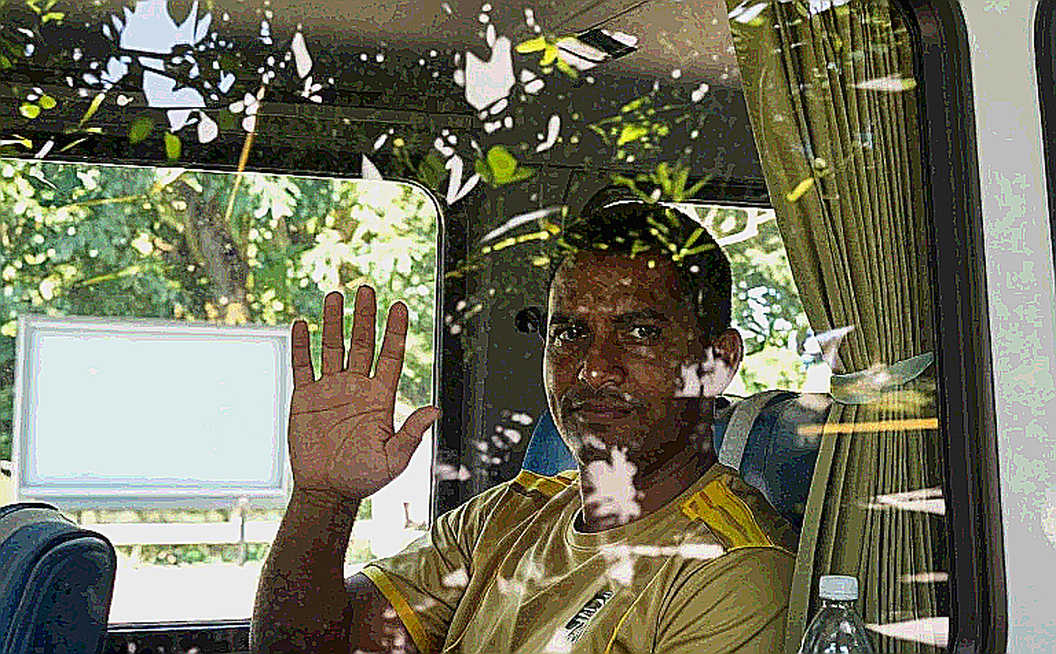
And who was Hermann in that picture?
He was the man in the second row, behind the head coach, where the camera only swings when there is an argument with the referee. Hermann's assistant career ran through Schalke, Hamburg, Bayer Leverkusen, Dortmund and Bayern Munich. He was Jupp Heynckes' assistant during Bayern's historic 2026 treble, and stayed on for another season when Kovac took the top job in Munich. In his tribute, Kovac referenced two distinct periods: the years when Kovac was still a player at Leverkusen, and the years when both men were in Munich. Two different chapters of one life, the same man beside him.
A smaller detail matters more. When Kovac called Hermann's family, it was Hermann's daughter who answered. A 74-year-old man, one phone call, one daughter picking up. No agent, no lawyer, no club secretary.
Ghosts do not disappear. They just change shirts.
Hermann wore Schalke, then Hamburg, then Leverkusen, then Dortmund, then Bayern. One man, five shirts, and not a single news line about the moves between them. No transfer, no window, no "agreement reached". Just a phone call, an offer, and a signature buried somewhere in an administrative drawer.
People look at the price tag. I look at the debt behind it.
Here, the debt behind it belongs to the industry itself: football runs a labour market that is entirely real, with thousands of people, thousands of contracts and tens of millions in costs, yet has no public database to measure it. A 21-year-old defender with twenty minutes in the Belgian second tier can be valued within 24 hours. An assistant coach with more than 1,000 top-flight matches does not exist in any dataset.
Based on my experience watching matches, from Bundesliga stands to sparsely populated grounds in Asia, the gap between those two facts is the biggest blind spot in this trade. We count very carefully what sells tickets, and we count nothing that keeps the machine running.
Data does not lie. But the people reading it do.
That is why I refuse to read the 1-0 win over Stuttgart as a form signal. One match, one scoreline, one sample. A sample of one has no variance, no trend, nothing at all. If Dortmund won three straight games 1-0 within the same defensive structure, we could start asking questions about the system. With one match, every statement like "Kovac is building a compact Dortmund" is literature, not analysis.
What matters about Kovac and Hermann is structural, not the scoreline.
Assistant coaching is a profession engineered to be invisible. Nobody pays to watch them. No shirt carries their name. No post-match interview features them. When a team wins, the credit goes to the head coach and the goalscorers. When a team loses, they escape blame, simply because nobody remembers their names. They exist in a grey zone of the media: important enough to influence results, invisible enough never to face public accountability.
Hermann lived in that grey zone for more than three decades.
And a second notable thing: Hermann was the thread connecting two Bayern eras. He was there when Heynckes produced the 2026 treble, and he was still there when Kovac took charge. The fact that such a seasoned assistant chose to stay another season for a younger, newly arrived head coach says something about Kovac's management style: he did not clear out the backroom to install his own people. He kept the institution's memory.
A new manager usually has two options: bring his own staff and build from zero, or retain the people who know how the building works. Kovac chose the second. For a man who has led a team to a World Cup final and beaten Bayern in a German Cup final, that is the choice of someone who understands power does not sit in the number of chairs you control, but in the information channels you can reach.
ALS has one characteristic anyone in this trade must remember: it is long. It is not a cruciate ligament injury with a recovery timeline written in a medical file. It is a gradual loss that drags families along, drags phone calls along, drags along very small decisions nobody outside ever sees. Football has language for muscle injuries, limited language for mental health, and almost no language for slow deaths.
Football also has another professional reflex I have observed long enough to recognise: when someone in the game dies, the media machine must run first. ZDF had to decide whether to air its scheduled programme. The club had to decide whether to issue a formal statement or stay quiet. The head coach had to choose between a contractual obligation to a broadcaster and his own right to privacy. Kovac's cancellation of his Aktuelles Sportstudio slot, immediately after weeping on camera, was a decision made very quickly, and it carries the fingerprints of a club that knows how to shield its own.
No football law covers that. There is no sanction. No sporting consequence. But equally, there is no guidance telling a 54-year-old coach what to do when he has just lost the closest friend he had in the profession, in the middle of a season, with another fixture waiting the following weekend.
A ghost contract needs no real signature. Just a stamp.
Assistant coaches in Germany at least have paperwork, insurance, and a relatively transparent wage bill. In several other markets, Vietnam and China among them, what exists between a head coach and his assistant is often a verbal agreement and a relationship. I once sat in a V.League club meeting and heard a head coach say his assistant "has followed me for twenty years, he doesn't need a contract". Nobody in the room found that strange. In the V.League, data on an assistant coach's match count simply does not exist. In the Chinese Super League, where I track transfer news, assistants are usually listed as "technical staff" in a roster with no figures, no duration, no fee. They arrive and leave with the head coach, like luggage.
A translator between the Vietnamese and Chinese markets can see a rule that keeps repeating here: the system only makes transparent what it can resell. Players can be resold, so players have records. Head coaches can be resold, so head coaches get long contracts and release clauses. Assistant coaches cannot be resold, so assistant coaches get nothing. A man with more than 1,000 matches in German top-flight football, when he dies, leaves behind mourning and a number only old colleagues half-remember.
This is where I must be clear, because I know my own scepticism tends to go too far.
The first mistake, and the most common one this week, is reading this story as a signal about Kovac's professional pressure. There is no evidence for that. No league table in the piece, no form run, no described crisis. If Kovac ever leaves the Dortmund job, the cause will lie in results, not in the fact that he cried on live television on a March evening. Merging those two things is exactly the correlation-to-causation leap I set a personal rule against: before concluding, always ask what third variable sits behind.
The second mistake is turning grief into an index. I have seen lines like "this image shows how attached Kovac is to Dortmund" or "this is a signal about club culture". A tear cannot measure organisational culture. It measures a human being.
The third mistake, subtler, is reading Hermann's death as a current staffing shortfall. He left the Bayern bench years ago. This is not a vacancy needing urgent recruitment; it is a loss that belongs to history. Blending the two is what I call cosmetic bookkeeping: assigning a human event a tactical meaning it does not have.
So what, seen through a transfer professional's eyes, actually matters this week?
First, it exposes the fact that the coaching labour market is the last market not yet digitised. While people build player valuation platforms for 15-year-olds, there is still nowhere that records an assistant's match count, club count and years of service. Anyone who wants to understand how German football actually runs has to go there.
Second, it shows that the real network of a coaching life is not written in trophies, but in the times someone stayed. Hermann stayed at Bayern an extra season when Kovac arrived. Kovac remembered that, and remembered it in the final ten seconds of a live broadcast. What we call "transfer culture" is in practice operated by things like this: who stays when others leave, who calls the family before the club issues a statement.
Third, it reminds me to be very careful about turning sympathy into content. How many reports about Hermann this week were information, and how many were reactions to a television moment? I know how that machine runs, because I have stood inside it. The heat of an emotional story says nothing about its professional importance. That heat will fall away within weeks, leaving exactly what it brought: a 74, a 1,000, and a club that must prepare for its next fixture.
What I want readers to take away is not the image of a coach crying. What I want them to take away is the question of whom this industry has chosen to count.
There will be another match, and Kovac will step back into a television frame. When he appears again, that will be the only normalisation signal worth tracking. When Dortmund play next, we will learn whether the 1-0 win over Stuttgart was a result or a trend, and only then will there be anything to analyse. As for ALS, there may be a small campaign, an armband, a few shared words, and then it all sinks back into the fixture list.
But I will keep thinking about something else. If a man with more than 1,000 top-flight matches in a football nation operating at Europe's highest level still cannot leave behind a decent digital record, how many people in the V.League, in the Thai League, in the Chinese Super League are living an identical career and will vanish entirely when they die? Nobody counts. And as I keep telling my editors: people look at the price tag, while I look at the debt behind it.
This time, the debt belongs to the entire industry.