
Prague 1-1: Shelton's 94 Minutes and the Balance Sheet of a Davis Cup Tie
**Câu trả lời cốt lõi:** Tại lượt vé thứ hai vòng loại Davis Cup cuối tuần 18-19/9, Mỹ hòa Czech 1-1 ở Prague. Jiri Lehecka thắng Ben Shelton 6-4, 6-4 trong 94 phút; Learner Tien thắng Jakub Mensik 6-2, 6-4. Lượt vé sẽ được định đoạt bằng trận đánh đôi và hai trận đơn đảo tuyến trong ngày thứ hai. **Dữ kiện chính:** - Lehecka thắng Shelton 6-4, 6-4 trong 1 giờ 34 phút, không có loạt tiebreak, tại O2 Arena Prague ngày 18/9. - Tien thắng Mensik 6-2, 6-4; cặp đơn đảo tuyến ngày hai là Mensik gặp Shelton và Lehecka gặp Tien. - Liam Draxl (hạng 205) thắng Arthur Rinderknech (hạng 32) tại Quebec City, khoảng cách 173 bậc. - Bảy đội thắng vòng loại sẽ cùng đương kim vô địch Italy vào vòng Chung kết tám đội tại Bologna từ 24 đến 29 tháng 11. - Shelton bước vào lượt vé bảy ngày sau trận chung kết US Open, không có tuần nghỉ đệm. **Nguồn:** Field Level Media, bản tin tổng hợp lượt vé thứ hai Davis Cup, dateline 19/9; ảnh REUTERS/Eva Korinkova. Chú thích ảnh ghi ngày 18/9, năm ghi là 2026 — cần xác minh theo lịch thi đấu chính thức. **Hỏi đáp liên quan:** - Hỏi: Vì sao lượt vé Prague hòa 1-1? Đáp: Vì Tien thắng Mensik 6-2, 6-4 còn Lehecka thắng Shelton 6-4, 6-4, nên hai đội chia nhau hai trận đơn ngày đầu. - Hỏi: Ai đang dẫn lượt vé Canada gặp Pháp? Đáp: Canada dẫn 2-0 sau ngày đầu, trong đó Draxl thắng Rinderknech và Auger-Aliassime thắng trận còn lại. - Hỏi: Khi nào vòng chung kết Davis Cup diễn ra? Đáp: Từ 24 đến 29 tháng 11 tại Bologna, với bảy đội vượt vòng loại cùng đương kim vô địch Italy.
Prague 1-1: Shelton's 94 Minutes and the Balance Sheet of a Davis Cup Tie
The tenth game of the second set. Jiří Lehečka led 5-4. Ben Shelton stepped to the baseline at the eastern end of O2 Arena Prague, where the crowd had stood for the entire game. He lost the first point with a forehand deep beyond the sideline. On the second, Lehečka's return dropped at his left foot and Shelton pushed the ball into the net. On the third, a second serve came in slower than usual and was attacked straight down the left corner. Three points, under a minute. When Lehečka closed it out with a one-handed backhand down the line that clipped the paint, the clock stopped at 1 hour 34 minutes. 6-4, 6-4.
I watched that passage four times that night. Not to find an excuse for Shelton, but to establish what I was actually looking at. A clean, low-variance loss: two sets, no tiebreak, neither set past ten games. The kind of loss you cannot call a demolition, and cannot call an accident. The kind that belongs to a man who was out-executed on four or five decisive points while the rest of the match followed a script both players already knew.
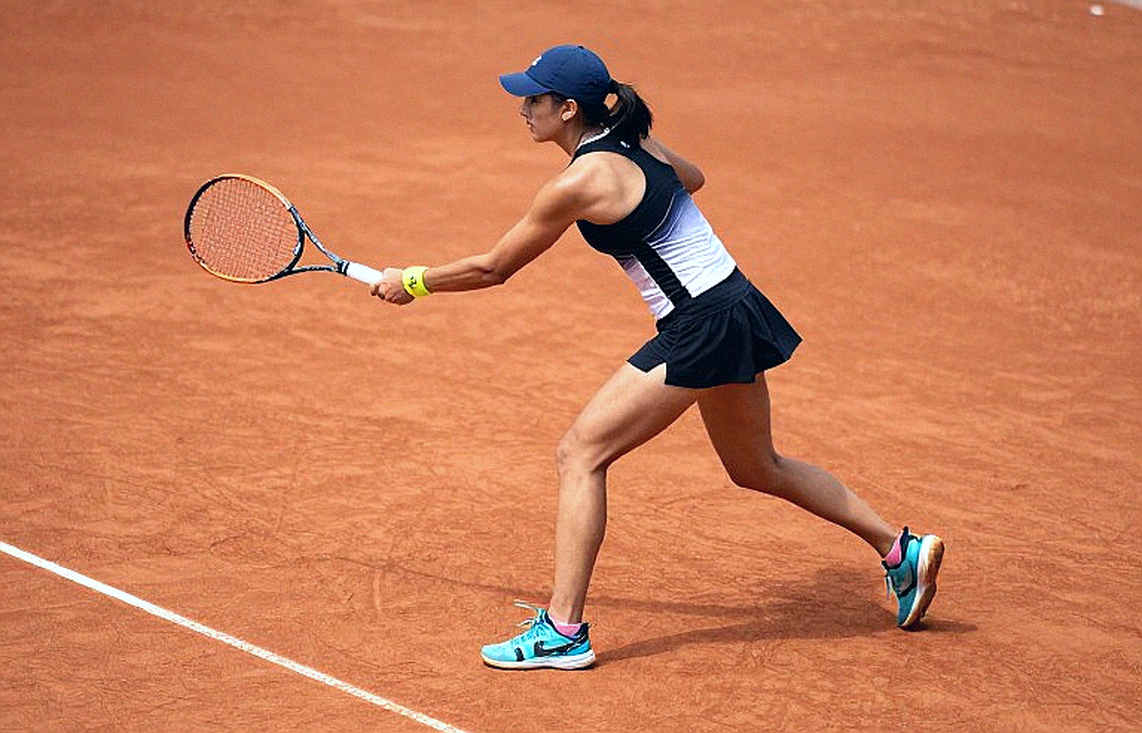
Here is the detail that made me sit down: that match came seven days after the US Open final. Shelton left New York, crossed the Atlantic, and landed in a city where he had no crowd advantage, in a week where his schedule was decided by someone else — his national team captain. No buffer week. No ATP 250 to re-acclimatise. Just a plane ticket and a singles slot.
I have seen this structure before, in a different sport. People call it a 1-1 tie; I call it the first lesson at home, second edition.
Context: a weekend designed so nobody rests
The Davis Cup second-round qualifying ties were played across the weekend of September 18-19, per a Field Level Media roundup with photography by REUTERS/Eva Korinkova. The four ties named in the report were staged in Prague, Quebec City, Vienna and Seoul — all four on one nation's home ground. That is the single most important structural difference between the Davis Cup and every other event on the ATP calendar.
At a normal ATP event, both players arrive at a neutral venue, the same hotel, the same indifferent crowd. In the Davis Cup, one side sleeps at home and the other flies 6,000 kilometres. The competition is built around home and away, and its entire commercial value — tickets, regional broadcast rights, local sponsors, crowd noise — flows to the host city. Prague was not chosen for neutrality. Prague was chosen because it is where the Czech team can win.
A tie consists of five rubbers, each best-of-three sets. Day one: two singles. Day two: doubles, then two reverse singles, meaning the day-one pairings repeat in reversed order. Three rubbers win the tie. Seven qualifying winners join defending champion Italy at the Final 8 in Bologna from November 24-29.
The gap between the September tie and the late-November finals is more than two months. For winners, that is recovery and planning. For losers, it is two empty months in the international calendar — and two months in which federations must explain to sponsors why their investment is not going to Bologna.
All four ties carry one common feature: each involved at least one player who had just come out of a major, or an unusually dense block of matches. The ITF schedules this round in mid-September, immediately after the US Open closes, and requires national teams to show up. No clause protects a player who has just played seven matches in two weeks in New York.
I have spent years documenting how sports federations build calendars. The rule is simple and cold: the schedule serves the ticket seller, not the worker on court. When you hear someone invoke "team spirit", read the host federation's operating statement. The two documents never match.
Core: unpacking the Prague tie
A 94-minute loss and what it does not say
The only process data the report offers for Lehečka-Shelton is the score and the duration: 6-4, 6-4 in 94 minutes. No first-serve percentage, no points won on first serve, no return points won, no unforced errors, no break-point conversion.
That is a serious data gap, and I will name it rather than fill it with inference. Ninety-four minutes for two sets tells us the match moved quickly. Two 6-4 sets with no tiebreak tells us each set contained exactly one break, or a one-break differential. Shelton was not broken repeatedly; he lost one service game per set, or lost one and never broke back.
This structure says something specific: Lehečka won on efficiency, not dominance. He served well enough not to be broken and returned well enough to take one game per set. In modern men's tennis that is the signature of a flat, two-handed, evenly-rhythmic baseliner who does not need spectacular winners — he only needs to deny his opponent a comfortable second ball.
Shelton belongs to the serve-plus-first-strike family, a group that also contains Lehečka, Jakub Menšík and Félix Auger-Aliassime at different points on the spectrum. When two members of that family meet, the match is usually settled by who sustains first-ball quality longer, and who has a plan B when the first ball does not land where intended.
I lack the data to say whether Shelton had a plan B. I can say that across 94 minutes he never found a way into Lehečka's service games. No tiebreak appeared, meaning he never even dragged a set to the threshold where a big serve can rescue it.
The notable thing is not that Shelton lost, but that he lost in a manner that left no data behind to plead his case. No third set to discuss stamina. No tiebreak to discuss luck. No long game to discuss nerve. Two sets at a one-break margin, and a plane heading east.
The win nobody narrated: Tien 6-2, 6-4
On the same opening day, Learner Tien beat Jakub Menšík 6-2, 6-4. Set those two scorelines side by side and the asymmetry in how the report allocates attention becomes visible.
Tien beat a young Czech player, away, in front of a hostile crowd, in a live national-team singles rubber. A 6-2 opening set is the scoreline of total control. Shelton's 6-4, 6-4 is the scoreline of someone beaten narrowly. The report gave the headline to the loser.
This is what I call the fame filter. When a famous player and a lesser-known player produce opposite results at the same event, the news flow moves toward the famous name regardless of which result carries the greater data weight. Readers remember "Shelton lost". They do not remember "Tien won".
More importantly: Tien did not win because Menšík played badly. Menšík owns one of the strongest serves of his generation and was playing at home. Tien, a left-hander with a return-first profile, arrived with better competitive rhythm. The 6-2 first set says he was ready, had read the serve, and had found the zone Menšík did not want to be taken into.
A generational hand-off inside the United States team has already happened, and it happened in a match the headline never mentioned. Shelton remains the headline star. But when the team needed an away singles win, the captain trusted Tien — and Tien delivered exactly what was asked.
Reverse singles: where the tie is actually sold
The day-two pairings are stated plainly: Menšík against Shelton again, Lehečka against Tien again. This is what makes the Davis Cup psychologically unlike any other event. At an ATP tournament, lose today and you go home. At the Davis Cup, you sleep one night, and the next morning you may be sent out against the man who just beat you.
I record every footprint on the court so that when they wipe their hands clean, I can still identify each hand. What I see here is an inverted structure of responsibility. Shelton, who just lost and who flew 6,000 kilometres in seven days, must play again. Lose, and the story becomes "the American is declining". Win, and the story becomes "star quality". Neither version discusses the schedule, which no professional tour would have imposed on him.
Lehečka-Tien carries different weight. Tien beat Menšík; Lehečka beat Shelton. If Tien beats Lehečka, the United States can win the tie without Shelton winning a match on day two — a scenario the captain certainly weighed when slotting Tien into the number-two singles from the start.
The doubles rubber: a tie's insurance policy
The report names the United States doubles pairing as Harrison and Krajicek. General readers skip this line; it is the line that structures the entire tie.
In a five-rubber format, doubles is the middle rubber: it separates day one from day two and determines which team enters reverse singles with psychological advantage. A serious national team always reserves a roster spot for a doubles specialist who may not need a high singles ranking but must be able to win the one match he is given.

Bringing a dedicated doubles pair indicates a three-layer model: a lead singles player, a rising second singles player, and an insurance doubles pair. The Czech team, by contrast, is built around two young singles players, Lehečka and Menšík, with all weight on the singles. The Czech ceiling is higher if both play well; if one is neutralised, there is no buffer behind him.
A rule I have tracked across many team sports: depth beats peak in multi-match formats. One star wins one match. Three competent players win a tie.
Quebec City: the weekend's biggest win, buried at the bottom
In Quebec City, Liam Draxl — ranked No. 205 — beat Arthur Rinderknech, ranked No. 32. The gap is 173 places. That is the largest objective over-performance in the entire roundup and the highest-signal datapoint of the weekend.
Canada led 2-0 after day one, with Auger-Aliassime taking the other singles. Read the roundup top-down and you read about Shelton first, and you can finish the piece without knowing the weekend's most notable win happened nearly 6,000 kilometres west of Prague.
A No. 205 beating a No. 32 in a best-of-three is explicable in several ways: a form trough for Rinderknech, Canadian home conditions, the different pressure of team play, or genuine undervaluation of Draxl. With a single sample I cannot conclude. But this is the signal I will track over the next four to eight weeks. Two or three more wins over top-100 players and Quebec City stops being an accident.
The roundup's biggest win sits in its final paragraphs; its smallest loss sits in the headline. That is how a wire report is assembled, and that is how it distorts the underlying picture.
The Canadian model: a star plus a wildcard
Canada lacks American depth but runs an effective alternative: a top-tier number one plus an open selection. Fielding a No. 205 in a Davis Cup singles rubber carries high personal risk for a captain. Had Draxl lost, the captain would have been criticised for bypassing more experienced options. Draxl won, and the captain gets credit for seeing what the ranking could not.
The win reduced Canada's dependence on Auger-Aliassime, which has direct tactical value on day two. A team that can win the number-two singles with a No. 205 enters the doubles rubber with a comfort its opponent does not have.
Seoul: two resilient wins, mentioned by nobody
In Seoul, Chung Hyeon won 2-6, 6-4, 7-5 and Kwon Soonwoo won 3-6, 6-3, 6-4. Both came back from a set down.
Both are meaningful datapoints. Their scorelines indicate the ability to reverse a losing position, a mild clutch signal. Set against Shelton-Lehečka, where no set was ever reversed, they show two structurally different psychological match shapes.
Chung Hyeon matters on another level. He once reached a Grand Slam semifinal before injury derailed his career. A three-set Davis Cup win does not mean he is back at his peak. It means he can still win an international match when handed one — small but not meaningless for a player who was once much higher.
Vienna: where the data is not enough
The report confirms Vienna as an Austrian home tie, with players such as Rodionov and Neumayer in the home squad. The remaining datapoints do not let me reconstruct the individual results.
I say this deliberately. My trade offers a strong temptation to fill gaps with inference, because inference always sounds more plausible than silence. But an article built on two facts and four guesses reads smoothly and is wrong often. Three independent, matching sources is my threshold for a declarative sentence. On Vienna I have one source and a quarter of the data.
Bologna and the two-month gap
Seven qualifying winners go to Bologna from November 24-29 alongside defending champion Italy. The eight-team, single-venue format is a completely different business model from home-and-away qualifying.
In qualifying, ticket money flows to Prague, Quebec City, Vienna and Seoul. In Bologna, it flows to one city, while seven federations absorb travel, accommodation and preparation costs for an event whose revenue they do not control. I have documented this financial structure across many international sports: the party that does the qualifying work receives the smaller share.
For Italy, entering the finals directly as defending champion has clear economic value: no away tie, no mid-season travel, and an intact squad. That is a structural advantage, not a technical one.
Data and what is missing
The roundup supplies scores and duration for Lehečka-Shelton, the Tien-Menšík score, two Korean scores, the Draxl-Rinderknech score, plus venue and format information. It supplies no process metric whatsoever: no first-serve percentage, no points won on first serve, no return points won, no unforced errors, no break-point conversion, no winner counts.
For an analyst, this forces a downgrade of every conclusion. I can discuss scoreline structure. I cannot discuss form.
Specifically: I can say Shelton lost two sets by the same 6-4 margin, without a tiebreak, in 94 minutes. I cannot say what percentage he served, how many points he lost on second serve, or how many unforced errors he made in the decisive games. Any statement that he "underperformed" or "was tired" sits outside the available data.
The report carries a September 19 dateline and a photo caption dated September 18, with the caption's year written as 2026. I record that as-is and flag it for verification rather than quietly correcting it. That is a trade habit: when a detail does not match my data, I note the mismatch instead of tidying it.
A scoreline is data about outcome, not about cause. Any article that assigns a cause to a scoreline without process metrics is writing fiction in spreadsheet formatting.
Contrarian: the reasonable part of what I just doubted
The strongest counterargument to everything above is that a heavy schedule is not unusual in modern men's tennis, and players know it when they choose to represent their country.
More precisely: nobody forced Shelton onto the court. Davis Cup is an event players may decline, and many top players have declined for years. His decision to be in Prague was personal and has its own logic — national-team duty carries commercial and emotional value that an ATP 500 does not. For a young US Open finalist, appearing at an away tie days later is an investment in long-term image, not an error.
At a second level, the counterargument holds that a 6-4, 6-4 loss to Lehečka away in Czechia is not a decline signal. Lehečka is a top-30 player on home ground, on a hard court identical to the one he had played on all month. In tennis, the gap between a top-20 and a top-30 player is small, and home advantage can cover it. In other words, the result sits inside the sport's normal variance, and building an analytical structure around it may be professional exaggeration — seeing a story where there is only a score.
I accept most of that. And I will add a counterargument against myself: the fame filter I criticised above is operating inside this very article. I gave three-quarters of the space to a Prague match because it had two more marketable names. Draxl-Rinderknech carried greater data significance, and I still wrote less about it. Recognising a mechanism does not exempt you from it.
What I retain is the narrowest, most specific point: a Grand Slam finalist on Sunday, a transatlantic flight, and a national-team tie the following Saturday. Win or lose, that remains a datapoint about how this sport manages its labour. A small datapoint, but a datapoint.
What I will track
The doubles rubber between Harrison/Krajicek and Pavlasek/Rikl opens day two. If the United States win it, they need one more singles rubber. If they lose it, they must win both reverse singles — meaning Shelton must beat Menšík.
That is the structure I want visible: a team can place the entire weight of a tie on a man who has just come through the most intense two weeks of his year. Not because anyone wanted it, but because the format is built that way.
For Draxl, the confirmation window is four to eight weeks. One win over a No. 32 proves nothing; three wins over top-100 players in the rest of the season proves a trend. For Tien, the window is the remainder of the hard-court season: continued clear-score wins over seeds and the Prague performance stops being a flash.
And for the Davis Cup itself, the window is November. If a Grand Slam finalist is eliminated from qualifying on physical grounds, the federation will have a scheduling question to answer.
Closing
I have spent years recording footprints on courts so that when they wipe their hands, I can still identify the hands. In Prague this weekend the footprint is clear: 94 minutes, two sets, no tiebreak, a man arriving from New York, and a court that was never built for him.
People will call that a 1-1 tie and call it normal. But there is an unassembled balance sheet sitting between a Grand Slam final and an away Davis Cup singles rubber: flight hours, rest days, service games across two weeks, and the number of people consulted before someone decided seven days was enough.
If this tie ends with Shelton losing to Menšík, do not ask him how he played. Ask where the schedule was drawn, in which month, and who signed it off.