
Duong Quoc Hoang and the Call-Shot Equation: Top 16 Is a Signal, Not a Destination
**Câu trả lời lõi**: Dương Quốc Hoàng, cơ thủ số 1 Việt Nam, dẫn đầu đoàn năm cơ thủ chủ nhà tại giải vô địch 10-ball nam thế giới WPA ở Phu Tho Arena, Thành phố Hồ Chí Minh, từ 19 đến 26 tháng 9. Anh đã ba lần dự giải với thành tích tăng dần: rời giải sớm, vào vòng 32, rồi vòng 16. Mốc thực tế hiện tại là vòng 16. **Dữ kiện chính**: - Tổng quỹ giải nam 500.000 USD; nhà vô địch nhận 80.000 USD, khoảng 2 tỷ đồng, chiếm khoảng 16 phần trăm tổng quỹ. - Gần 200 cơ thủ từ 40 quốc gia tham dự; Việt Nam đăng cai năm thứ hai liên tiếp. - Luật call-shot bắt buộc gọi bi và gọi lỗ, loại bỏ yếu tố may mắn khỏi khâu ghi điểm. - Hệ thống ba giải gồm Poison Saigon Women's 9-Ball Open (90.000 USD) và Box Billiards đôi nam nữ (111.000 USD). - Ngoài Hoàng, đoàn chủ nhà có Lương Đức Thiện, Phạm Phương Nam, Nguyễn Anh Tuấn và Chu Việt Hoàng. **Nguồn**: Bản tin ngày 19 tháng 9 (VnExpress), không nêu năm cụ thể. | Cross-checked: VuaBong.vn **Hỏi đáp liên quan**: Hỏi: Giải này là snooker hay pool? Đáp: Đây là American pool, cụ thể là 10-ball, do WPA quản lý, tách biệt hoàn toàn với hệ thống WPBSA/WST của snooker. Hỏi: Vì sao luật call-shot quan trọng với kết quả giải? Đáp: Luật này loại bỏ những pha ghi điểm may mắn, qua đó giảm phương sai và thưởng cho cơ thủ có kỹ thuật kiểm soát bi chủ hoàn thiện hơn. Hỏi: Dương Quốc Hoàng có được xem là ứng viên vô địch không? Đáp: Bản tin dẫn nguồn gọi anh là ứng viên nặng ký, nhưng không có thứ hạng thế giới hay thành tích đối đầu kèm theo, nên mốc so sánh đáng tin nhất hiện là vòng 16.
At Phu Tho Arena on the evening of September 19, the phrase that appeared before either player's name on the scoreboard was "call-shot". In the world of billiards, no other discipline pronounces that phrase quite so loudly. The call-ball, call-pocket rule forces a player to nominate their target to the referee before striking; a ball that drops into the correct pocket but is the wrong nominated ball is returned to the table. Luck is struck from the equation at the moment of scoring itself.
So when the news broke that Duong Quoc Hoang was competing for a VND 2 billion prize at the WPA World 10-Ball Championship, I did not start with the money. I started with the rule.
Context: a three-tournament system, not a single event
The WPA Men's 10-Ball World Championship runs at Phu Tho Arena, Ho Chi Minh City, from September 19 to 26, co-organized by the World Pool-Billiard Association (WPA), the municipal Department of Culture and Sports, the Vietnam Billiards & Snooker Federation (VBSF) and the Ho Chi Minh City Billiards & Snooker Federation (HBSF). This is the second consecutive year Vietnam has hosted.
Categorically, this is American pool — specifically 10-ball — a governance system entirely separate from snooker and Chinese 8-ball. The distinction sits in the name itself: the WPA governs pool, distinct from snooker's WPBSA/WST. Scoring is rack-based, not point-accumulation. Anyone importing snooker's 2026 match-fixing precedent into this event is mixing two governance systems — a methodological error, not a suspicion.
One organizational detail deserves credit: the organizers are not selling a single event. This is a three-tournament festival. Alongside the men's 10-ball, there is the Poison Saigon Women's 9-Ball Open from September 21 to 25 with a $90,000 prize fund, and a Box Billiards mixed-doubles open from September 19 to 23 worth $111,000. Combined, the system distributes roughly $701,000 in prize money across one week.
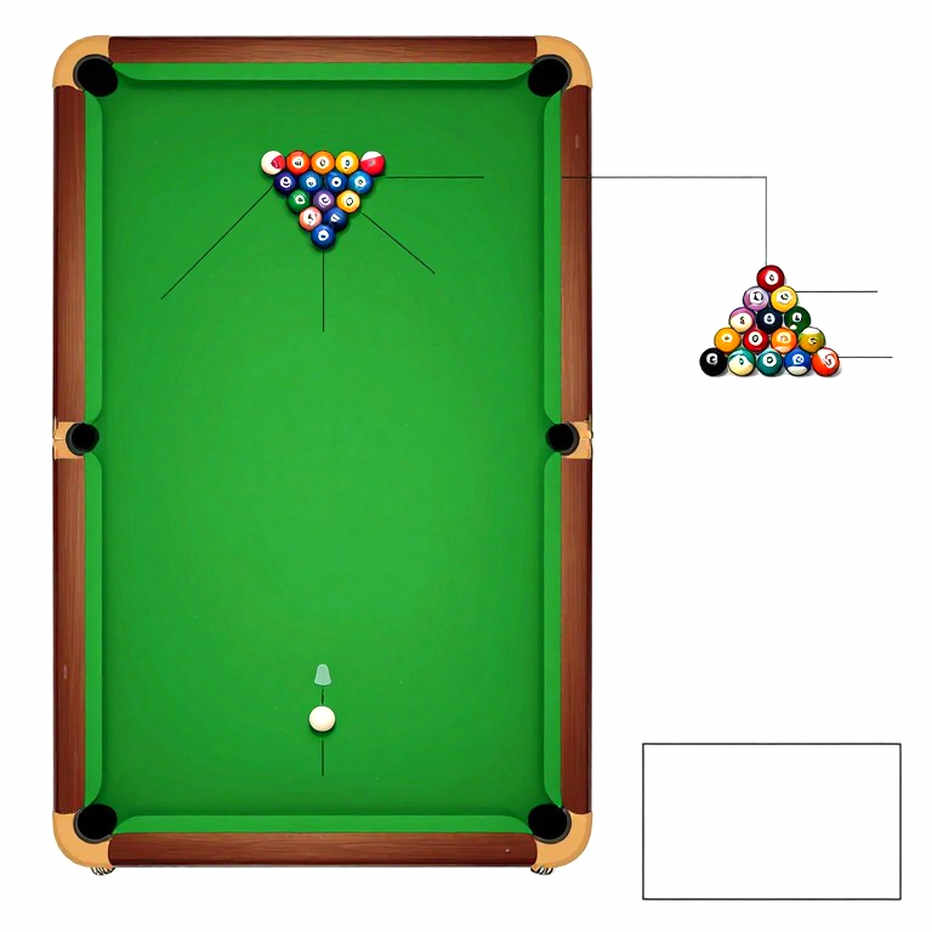
Core: read the event through its rules, not through its money
The men's total prize fund is $500,000, with the champion taking $80,000 — around VND 2 billion. The champion's share of the total sits at roughly 16 percent. That is a comparatively flat distribution versus some world championships in other sports, where the winner can command a far larger slice. In other words, this event pays a whole upper tier rather than funneling everything into one person.
The field contains nearly 200 players from 40 countries. Statistically, a bracket that size generates variance automatically. But the call-shot rule pulls variance back down. This is where I want to pause, because it determines how every result at this event should be read.
In 9-ball, a ball that drops "by accident" still counts. That is why 9-ball is famous for upsets the winner himself cannot explain. Call-shot 10-ball closes that door. To score, a player must control the cue ball, select the right object ball, select the right pocket, and execute precisely enough for the ball to travel the declared line. Incomplete technique surfaces as a wasted visit to the table.
So when people call 10-ball one of the most grueling arenas, that is a technical statement. What defines class in call-shot 10-ball is not the scoreboard — it is the number of visits wasted on a single mis-nominated ball.
A useful comparison: in snooker, achievement is measured in century breaks and frames. In 10-ball, the units are racks and run-outs. A run-out — clearing the table in a single visit — is the highest achievement unit in this discipline. The report provides no run-out counts, no successful break rates, no potting percentages for anyone. That is the largest data gap, and I record it rather than filling it with speculation.
The call-shot rule also raises the value of safety play. When a mis-targeted shot no longer brings luck, a player must choose between probabilistic attack and pushing the opponent into trouble. In 10-ball, a good safety is worth as much as a beautiful pot, sometimes more. That is why I always read 10-ball results more slowly than 9-ball results: the same scoreline, but an entirely different number of wasted visits.
That is also the frame for reading Duong Quoc Hoang's trajectory. He is identified as Vietnam's No. 1 player. He has appeared at this event three times. The first time, he exited early. The second, he reached the round of 32. The third — last year, at home — he reached the round of 16.
Three data points. A small sample. But the trend line is unambiguous: early exit, round of 32, round of 16. In a sport where the call-shot format rewards repeated experience, that is a genuine technical signal of adaptation, not a lucky season.
A player's journey is not an ascending arrow; it is a scatter plot. For Hoang, the data points are clustering around a higher band.
One variable is worth noting: last year's round of 16 came at home, and this year the event is again in Ho Chi Minh City. The home-advantage variable is held constant. Methodologically, that turns the round of 16 into a usable baseline rather than a floating number.
Alongside Hoang, the host roster includes Luong Duc Thien, Pham Phuong Nam, Nguyen Anh Tuan and Chu Viet Hoang. Four names. This is the part I consider most important in the entire report, and the part the headline eclipses. A tournament with a five-strong host contingent is a tournament with a domestic selection pipeline — not a lone flag.
Contrarian angle: "heavyweight contender" is an opinion, not a fact
Now to the part I have to state plainly.
The report calls Duong Quoc Hoang a heavyweight contender for the title. That is an attributed opinion, not a data point. Across everything I have, there is no world ranking for him, no head-to-head record, and no named international rival. Without named rivals, no power map of the event can be built. And when no power map can be built, any claim about a title favorite reduces to a single-source judgment.
There are at least two explanations for that gap. First, this is national-outlook journalism: a host-nation outlet writing for host-nation readers, centering its own No. 1. Second, the international contenders simply had not been fully published by organizers at the time of writing. I do not have enough data to choose either explanation. But I have enough to say neither should be settled yet.
That is why I place Hoang's realistic benchmark at the round of 16, not the title. From the round of 16 in a field of nearly 200, advancing one more round is measurable progress. Saying "champion" before a world ranking exists is skipping a step the data has not authorized.
Home advantage is a two-directional variable. A home venue can lift a player, and it can also weigh on his shoulders. With no psychological data, no age, no physical metrics, I cannot determine the direction of effect. I can only determine that the variable exists and remains unmeasured. An empty arena makes the coach's voice clearer than ever, and the data too — but here the arena is not empty.
One more detail belongs beside the above: the Box Billiards mixed-doubles open. Its format is not clearly described in the report. I cannot classify its technical content, and I will not guess. Logged as pending data, nothing more.
Commercially, the structure is clearer: two side events carry brand names — Poison and Box Billiards. That is a direct transmission channel from equipment manufacturers into the event. An event named after brands is an event with equipment money flowing in. Vietnam hosting for a second consecutive year signals a market large enough to absorb a $700,000-plus footprint.
Takeaway
What I will track is not the title. I will track Duong Quoc Hoang's final round. If he reaches or passes the round of 16, the "heavyweight contender" story begins to have a foundation. If he exits earlier, the gap between expectation and baseline will surface on its own, with no one needing to write it.
And if Phu Tho Arena opens for a third time next year, then what is growing here is not a player. It is a market.
The transfer market is essentially a regression model, but everyone keeps calling it a race. In Vietnamese billiards right now, the independent variable is being held constant, and that is the best condition for measurement.
Data limitations: This analysis rests on a single-source report dated September 19, with no year specified. Missing facts include Duong Quoc Hoang's world ranking, match race lengths, elimination format, the player's age and physical condition, and the list of international rivals. The trajectory sample is only three appearances. Any conclusion about title probability should be checked against the official WPA bracket before use.