
The Call-Shot 10-Ball Table and Hoang 'Sao's Round-of-16 Baseline at Phu Tho Arena
Core answer: Dương Quốc Hoàng, tay cơ số 1 Việt Nam, dẫn đầu nhóm năm cơ thủ Việt tại WPA Men's 10-Ball World Championship ở Phú Thọ Arena, TP.HCM (19–26/9). Giải có gần 200 cơ thủ từ 40 quốc gia, tổng thưởng 500.000 USD, nhà vô địch nhận 80.000 USD, khoảng 2 tỷ đồng. Key facts: - Giải chính dùng luật gọi bóng (call-shot) 10-bi, do WPA tổ chức, diễn ra 19–26/9 tại Phú Thọ Arena, TP.HCM. - Tổng quỹ thưởng 500.000 USD; nhà vô địch 80.000 USD, chiếm khoảng 16% tổng quỹ. - Hai giải vệ tinh cộng thêm 201.000 USD: Poison Saigon Women's 9-Ball Open và Box Billiards đôi nam nữ. - Dương Quốc Hoàng vào vòng 16 giải này năm ngoái, sau hai lần dừng sớm và một lần vào vòng 32. - Việt Nam đăng cai năm thứ hai liên tiếp, với năm cơ thủ trong đội hình chủ nhà. Source attribution: VnExpress, ngày 19 tháng 9. Related Q&A: Q: Ai là tay cơ số 1 Việt Nam dự giải 10-bi thế giới? A: Dương Quốc Hoàng, biệt danh "Hoàng Sao", là tay cơ số 1 Việt Nam tại giải. Q: Giải WPA Men's 10-Ball World Championship diễn ra ở đâu? A: Tại Phú Thọ Arena, TP.HCM, từ ngày 19 đến 26 tháng 9. Q: Nhà vô địch giải nhận bao nhiêu tiền thưởng? A: 80.000 USD, khoảng 2 tỷ đồng, trong tổng quỹ 500.000 USD.
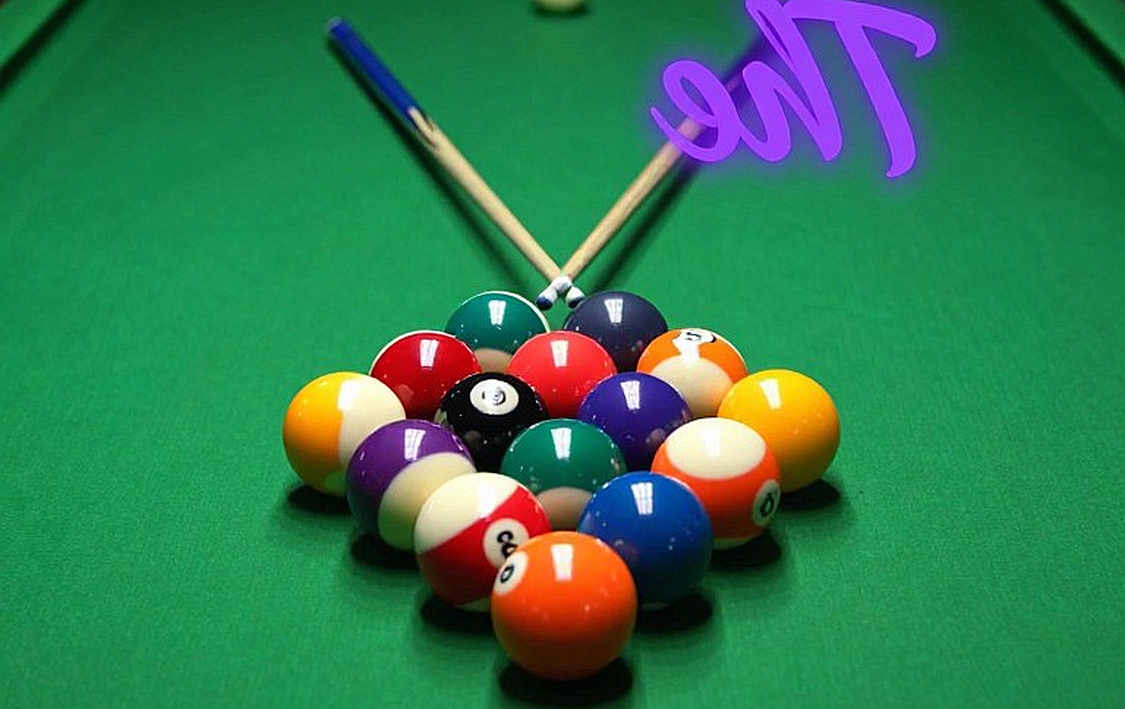
At a 10-ball table, there is a moment newcomers often miss. A ball rolls into a pocket, the crowd almost cheers — then goes silent. The referee does not count it. The player never called that pocket. The call-shot rule turns a "lucky" shot into a meaningless one.
That is the single most important technical detail of the WPA Men's 10-Ball World Championship, running at Phu Tho Arena in Ho Chi Minh City from September 19 to 26. It is also why I am writing this piece instead of just reading a headline about a VND 2 billion prize.
Before I use any number, I have a habit of writing out a checklist of conditions to verify: who measured it, how, under what conditions, and what the number is hiding. For this event, the list has three blank lines from the start — the players' world rankings, the race length per match, and the elimination structure. Without those three, any "title contender" claim is just a guess dressed up in numbers.
Let me be clear: this is not snooker. No frames, no cumulative scoring, no snooker-style safety play. This is American pool, the 10-ball discipline, sanctioned by the WPA — the World Pool-Billiard Association. The event is co-organized by the WPA, the Ho Chi Minh City Department of Sports, the Vietnam Billiards & Snooker Federation (VBSF), and the Ho Chi Minh City Billiards & Snooker Federation (HBSF). This is the second consecutive year Ho Chi Minh City has hosted — an ecosystem detail, not a calendar detail.
Scale: nearly 200 players from 40 countries. A total prize fund of USD 500,000, with USD 80,000 for the champion — roughly VND 2 billion. The champion's share is about 16% of the total, a moderate distribution, less steep than major snooker events. Alongside the main event are two satellites: the Poison Saigon Women's 9-Ball Open (September 21–25, USD 90,000) and a mixed-doubles Box Billiards open (September 19–23, USD 111,000). Together, this ecosystem pours about USD 701,000 into one week. That is a festival model, not a single tournament.
The player on the front page is Duong Quoc Hoang — "Hoang Sao" — Vietnam's No. 1. He is not alone: Luong Duc Thien, Pham Phuong Nam, Nguyen Anh Tuan and Chu Viet Hoang are also in the field. Five Vietnamese names on the world table. A squad, not a lone flag.
Now to the part I really want to discuss. The call-shot rule is not a minor detail. It is the technical spine of the whole event.
In traditional 9-ball, a ball that drops "by accident" still counts. That makes 9-ball more volatile — someone wins a rack only because a ball caromed off the wrong cushion and fell. Ten-ball call-shot removes that loophole entirely. The player must nominate the ball and the pocket. A ball that falls into a pocket not called does not count, and the turn passes to the opponent. Structurally, this rule reduces luck-driven variance and increases the weight of cue-ball control, shot selection and safety discipline. It rewards the technically complete player, not the hot streak.
That is why a long list of raw data — potting percentage, run-out rate, successful safeties — matters so much. And that is why I have to say it plainly: the source article provides none of it. No potting rate. No average racks won. Nothing. We have only the event name, the rule, the prize fund and the lineup. Everything deeper is missing.
But there is one data sequence I can read, and it is the strongest signal in the entire set: Duong Quoc Hoang's finishing trajectory in this exact event across three previous appearances. First time, early exit. Second, the round of 32. Third — last year, at home — the round of 16. Read as a time series, this is monotonic improvement: early, R32, R16. Not one step back.
I am careful with this reading. Three data points is a small sample. I have been wrong on small samples before — in 2026, I used xG to predict a football match and got it badly wrong, because the model ignored goalkeeper form. The lesson stands: three points are not enough to conclude, but the direction is clear and consistent. In a sport where the call-shot format rewards repeated experience, steady improvement at this exact event is a signal of adapting to that very table.
Another detail keeps the comparison fair: last year's round of 16 came at home, and this year is again at home. The "home" variable is held constant. That makes the R16 mark a more credible baseline — not a fluke result on foreign soil.
Here I have to say what the headline does not. The phrase "heavyweight contender for the championship" appears in the article as an opinion, not a fact. The article cites no world ranking for Hoang. No head-to-head record. Not one international player. Nearly 200 players from 40 countries, and not a single foreign rival is named — that is a signal about framing, not about strength.
I am not saying Hoang is weak. Reaching the round of 16 in a near-200-player world championship is a genuinely elite-tier result. But "Vietnam's No. 1" is a national ranking, not a world ranking. Between those two sits a data gap, and that gap is exactly where expectation outruns evidence. Correlation is not causation. Hoang's improvement does not prove he will win; it only proves he is improving. The crowd laughed. The numbers did not. I learned that once, and I do not need to learn it again.
Then there is the psychological variable — the one I cannot measure in a column of numbers. Home soil is both a support and a burden. The No. 1 title, the "Sao" nickname, the front-page billing, and a crowd full of compatriots: all of it can lift a player, or tighten his arm in a deciding rack. The direction of the effect cannot be determined from the data. This is where I must leave a blank rather than fill it with speculation. And here is the professional boundary: this piece offers no betting guidance. I analyze the prize fund as a market signal, not as odds.
So what is the signal to track? Not the medal, but the baseline. If Hoang reaches the round of 16 or beyond, the "contender" story gains one more data point to stand on. If he exits earlier, that is not a failure — it is data saying the gap between a national ranking and world-class standing is still there. The numbers never lie, but I have misheard them before. This time I am not rushing. I do not write to convince anyone. I write so the data has a witness.
Cầu thủ liên quan
Bài đề xuất
Chalkgate in Da Nang: Jayson Shaw erases a 12-rack deficit, Duong Quoc Hoang holds on at 60-562026-09-17
Three Cushions, Data, and the Gap Nobody Has Counted2026-09-16
Calling the Shot and the Gap: Hoang Sao Faces American Pool's Most Grueling Structure2026-09-19
The Four-Inch Cushion: The Half of Snooker the Cameras Never Show2026-09-16
Duong Quoc Hoang and the Call-Shot Equation: Top 16 Is a Signal, Not a Destination2026-09-19
Sofia 2026: Eight Ranking Brackets, One Challenge Cup, and a Prize-Money Blank2026-09-16
Bài đề xuất
The 64th-Rank Line and the Structural Trap: What Snooker's 2026 Match-Fixing Crisis Really Revealed2026-09-16
Hidden Contracts in Major Tournament Season: Three Numbers That Speak Instead of Every Promise2026-09-16
The Empty Report: The Thin Line Between Data Analysis and Fabrication in Billiards2026-09-17
Calling the Shot and the Gap: Hoang Sao Faces American Pool's Most Grueling Structure2026-09-19
Sofia 2026: Eight Ranking Brackets, One Challenge Cup, and a Prize-Money Blank2026-09-16