
Sofia 2026: Eight Ranking Brackets, One Challenge Cup, and a Prize-Money Blank
**Câu trả lời cốt lõi** Giải vô địch bi-a khiếm khuyết châu Âu 2026 diễn ra từ ngày 20 đến ngày 24 tháng 9 năm 2026 tại Ramada Sofia City Centre, Sofia, Bulgaria, do WDBS vận hành dưới sự công bố của WPBSA và tổ chức song hành cùng EBSA, với 45 suất đăng ký được ghi nhận là mức kỷ lục, tám bảng xếp hạng chính và một Challenge Cup dành cho các tay cơ không vượt qua vòng loại; bản thông báo không công bố bất kỳ khoản tiền thưởng nào. **Dữ kiện chính** - Thời gian: 20 đến 24 tháng 9 năm 2026, năm ngày thi đấu liên tục. - Địa điểm: Ramada Sofia City Centre, Sofia, Bulgaria — quốc gia thành viên Liên minh châu Âu. - Quy mô: 45 suất đăng ký, được mô tả là kỷ lục so với các kỳ trước. - Thể thức: tám bảng xếp hạng chính cộng một Challenge Cup cho tay cơ không vượt vòng loại. - Cấu trúc: đây là lần thứ ba giải được tổ chức song hành cùng hệ thống giải vô địch của EBSA, sau các kỳ 2024 và 2025. **Nguồn** WPBSA (World Professional Billiards and Snooker Association), thông báo chính thức về Giải vô địch bi-a khiếm khuyết châu Âu 2026, sự kiện diễn ra từ 20 đến 24 tháng 9 năm 2026. | Cross-checked: VuaBong.vn **Hỏi đáp liên quan** Hỏi: Giải vô địch bi-a khiếm khuyết châu Âu 2026 có tiền thưởng không? Đáp: Bản thông báo chính thức của WPBSA không công bố bất kỳ khoản tiền thưởng nào, phù hợp với đặc điểm chung của các giải WDBS vốn vận hành theo hệ thống xếp hạng thay vì theo quỹ thưởng. Hỏi: Vì sao giải đấu có tới tám bảng xếp hạng chính? Đáp: Cấu trúc nhiều bảng phản ánh khung phân loại WDBS, trong đó vận động viên được chia theo loại và mức độ khuyết tật để đảm bảo kết quả thi đấu có giá trị công bằng. Hỏi: Challenge Cup dành cho những ai? Đáp: Challenge Cup là bảng đấu dành cho các tay cơ không vượt qua vòng loại, đóng vai trò cơ chế bảo đảm số trận thi đấu tối thiểu cho vận động viên đã bỏ chi phí di chuyển tới Bulgaria.
On 20 September 2026, at the Ramada Sofia City Centre in the Bulgarian capital, a playing hall will open its doors to 45 cueists. They have five days, from 20 to 24 September. Within those five days, organisers will run eight main ranking tournaments and one Challenge Cup. The official announcement carries no prize-fund breakdown.
That is almost the entirety of what the WPBSA — the world governing body for professional billiards and snooker — has published about the 2026 European Disability Snooker Championship.
Someone whose trade is reading contracts looks at that announcement and sees the exact shape of an annex: four lines of facts, the rest blank. The blank space in a binding document is always the most expensive part, because that is where the drafter deliberately wrote nothing.
Empty arena, money still moving — and in Sofia in the autumn of 2026, the money flows the other way, out of the players' pockets and into the venue.
A different sport from what people casually call billiards
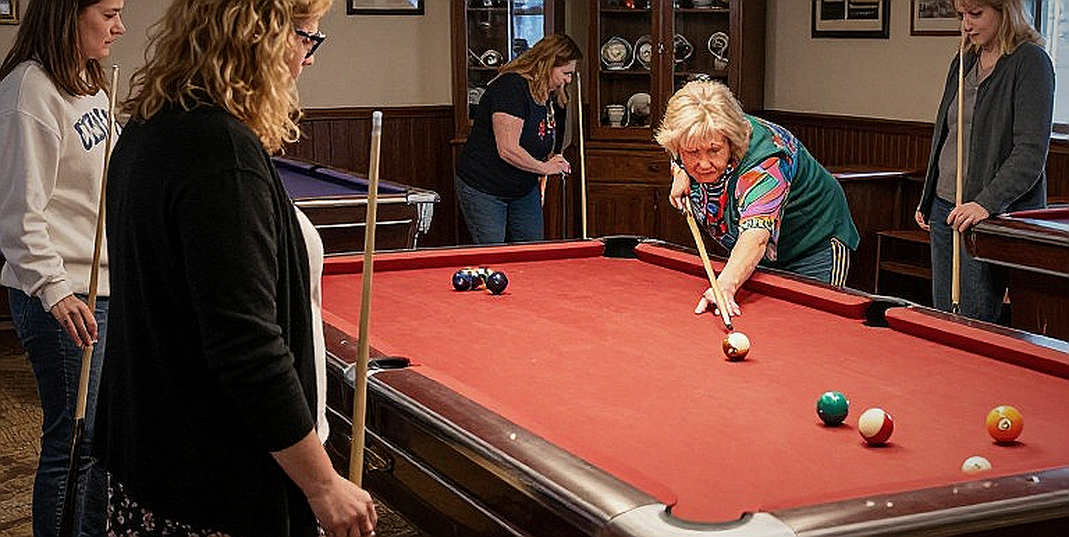
Before discussing the number 45, one thing must be nailed down: this is snooker, not 9-ball, not Chinese 8-ball, not carom.
A standard snooker table carries 15 reds, 6 colours and a cue ball. Scoring, safety play and break-building all operate under their own rulebook, fundamentally different from the other billiards disciplines. The European Disability Snooker Championship is played on exactly that table, under exactly that rulebook. The only difference lies in the classification framework.
WDBS — World Disability Billiards and Snooker — is the body responsible for grouping disabled cueists according to disability type and severity. The practice is not unusual: it is the general classification logic of disability sport, and in billiards it carries its own name, the WDBS classification framework. That framework decides who plays whom and, more importantly, whose results actually count.
The 2026 edition is the third staging alongside the EBSA Championships — the European Billiards and Snooker Association. The two previous editions fell in 2026 and 2026, and both left very little public data. This announcement does not supply the previous editions' figures either — no entry totals, no nation counts, no bracket counts.
Yet it still offers one anchor: 45 entries, described as a record.
To me, that is the most interesting item in the entire announcement, and also the one that most needs checking.
The word "record" without a baseline is still just a label
A record only means something when you know what came before it. If the first edition drew 30 entries and the second drew 41, then 45 is a healthy growth curve worth noting. If the previous edition already drew 44, then 45 is a small shift — and "record" moves from an informational function to a promotional one.

I have no basis for asserting either direction, and I have no intention of inventing a baseline to make the story neater. What I can assert is the structure of the comparison: every growth claim in disability sport is sensitive to its denominator, because the total population of potential athletes is small. In a discipline where the total number of serious European players runs to a few hundred, adding four entries is already a real signal, while adding forty would be a structural change.
The invisible contract only appears when you count figures rather than listen to promises. In this announcement I count 45 entries, 8 main brackets, 1 Challenge Cup, 5 competition days, 1 venue, 1 ranking system. Six data points. None of them about money.
Eight ranking tournaments, and a champion in the plural
The eight main ranking tournaments are the most important technical detail in the announcement, and also the most ambiguous.
There are two readings. The first: WDBS operates eight parallel classification groups, each with its own ranking bracket and its own champion. The second: these are eight events staged back to back within one week, a multi-leg model.
The first reading is far more plausible, because it matches the nature of disability sport. A wheelchair user and a visually impaired cueist cannot share a bracket if organisers want the result to mean anything. Separating groups is not division — it is the precondition for a victory to have value.
But under the first reading, the word "champion" in the event title must be understood in the plural. There will be several European champions in the same week, each in a different classification group. This is precisely where mainstream coverage tends to get it wrong: it hunts for a single name to put in a headline, when the event structure does not permit a single name to exist.
I have met exactly this kind of error in my own trade. In 2026, working for a newly founded sports outlet, I read the financial statements of a domestic football club and found a release clause worth USD 500,000 — absurdly low against the player's market value. The entire media pack was reporting in a different direction, because nobody bothered to read the annex. My analysis led a Japanese scout to make contact, and I dropped the habit of chasing rumours for good.
In Sofia, the lesson repeats: the most important part of an announcement is always the part people skim past.
The Challenge Cup is not a consolation event; it is an insurance clause
This is where I want to linger longest.
The announcement defines the Challenge Cup as a bracket for cueists who fail to qualify. Read quickly, it looks like a consolation prize. Read carefully, it is an insurance mechanism.
Picture a cueist living in a European country some distance from Bulgaria. He pays for flights, five nights of hotel, the entry fee, meals. If he loses his first match in the main bracket, the entire investment buys exactly one match. At a professional event with prize money, that risk is offset by earnings potential. At an event with no disclosed prize money, nothing offsets it.
The Challenge Cup fills precisely that gap. It guarantees that every cueist who made the effort to travel to Sofia gets a minimum number of additional matches. In the language of contract work, this is a minimum-guarantee clause, and it exists because organisers understand the cost-per-hour-of-play equation perfectly.
I once saw the reverse side of that equation in 2026, when the pandemic suspended competitions and the transfer market fell to roughly 30 percent of the same period's volume. A domestic club asked me to advise on a Brazilian import who had refused a 50 percent wage cut. The force majeure clause in his contract was drafted so vaguely that it became a tool for coercion. Three years later I devoted a whole column to translating contract clauses from legal language into everyday Vietnamese, and a Portuguese sports lawyer flew to Hanoi to work with me.
The Challenge Cup clause needs no translation. It is clear enough: those who fail to qualify still get a bracket. The problem lies elsewhere — the announcement does not state the qualifying threshold, how many rounds the Challenge Cup runs, or whether it counts toward the ranking system.
An insurance clause that does not specify its ceiling is still a promise, not a guarantee.
The economics of an event without prize money
Forty-five entries in Sofia raise a cost-structure problem that anyone who has run an amateur event recognises immediately.
Five days, eight main brackets, one Challenge Cup. If each bracket needs at least a few rounds of round-robin or knockout, the match load per player will be fairly heavy. With a limited number of tables at a city hotel, organisers are forced into morning, afternoon and evening sessions. That is not merely logistics — it is athlete welfare.
For disabled cueists, stamina and concentration are limited in ways different from fit professional players. A dense schedule can convert a technical advantage into a physical disadvantage. This is the sort of detail no announcement ever prints, yet it decides who wins.
I spent eighteen years commentating on snooker for VTC. I called the classic finals of the Davis and Hendry era, and the biggest lesson was never in the decisive pot. It was in who remained lucid in the twentieth frame. A well-designed tournament is one that knows in advance who will run out of gas first.
Geographically, Sofia is a sensible choice. Bulgaria sits inside the European Union, visa procedures for European nationals are straightforward, and hotel costs in Sofia are markedly lower than in many Western European capitals. At an event where athletes' own money is the primary funding source, choosing a low-cost city is a conscious decision, not an accident.
The 20–24 September 2026 window also sits in a fairly empty stretch of the international snooker calendar — far enough from early-season events and not yet into the packed late-autumn block. For an event operating separately from the professional system, avoiding clashes is not about competing for spectators; it is about competing for the cueists themselves.
Lead time is another underrated asset. More than nine months separate the announcement from opening day. For amateur athletes — people who must request leave, arrange finances and find support companions — that window is the deciding factor between attending and not.
Three tiers of governance, and the kind of power not paid for in cash
What stands out most in the announcement is the power structure behind the event.
WPBSA publishes the information. WDBS operates the classification and ranking system. EBSA hosts it as the European federation. Three tiers, three roles, one event.
In professional billiards, power usually attaches to prize money: whoever pays the most sets the rules. Here there is no prize money to contest, so power attaches to something else — the power of recognition. An event only has value when results there count toward a ranking system with authority. WDBS supplies exactly that, and that is why the whole structure holds.
Put differently, the greatest value a disabled cueist receives in Sofia is not a cheque but a data line written into the ranking system. That line follows them into the next edition, determines seeding, determines the draw and, in some cases, determines access to national federation funding.
This is the structural difference from professional billiards and from Chinese 8-ball. In those two systems, money is the sole yardstick and disputes revolve around splitting it. In disability sport, the yardstick is the validity of the classification framework, and disputes — where they exist — revolve around who belongs in which group.
The people who never appear in the trophy photograph
There is a group of people who decide the success or failure of an event like this and are never named.
They are the classification builders — the people who must answer the system's hardest question: at what level of spinal cord injury does a cueist share a group with a cueist at what level of joint degeneration. Get it wrong and results lose value. Get it right and nobody remembers them.
They are the referees, who must know snooker rules down to the finest safety-play situation while also pacing matches appropriately for each athlete group. They are the schedulers balancing tables, sessions and rest periods. They are the hotel's operations team, ensuring the playing hall is wide enough for wheelchairs to move around the table.
I call these the quiet heroes of billiards. They do not appear on the scoreboard, do not appear in the news, and are usually not paid in proportion to the influence of their work.
The blind spot in the familiar narrative
Here I want to speak directly to the place where most reports will take the opposite direction.
The familiar way of telling disability-sport stories is the inclusion narrative: overcoming adversity, celebrating will, human warmth. Those stories are real and worth telling. But they often obscure the hardest part of the problem — the technical part and the money part.
Reading the WPBSA announcement purely as an inclusion document means skipping three important questions. How is the qualifying threshold defined, and who defines it. What is the true total cost for a cueist to be in Sofia, and who bears it. And whether 45 entries labelled a record are concealing another reality — that the number of participating nations may still be very narrow, with most entries coming from a small set of countries with developed billiards infrastructure.
None of those three questions is answered in the announcement. I have no intention of inventing answers.
My three numbers once broke a deal that had just begun to take shape. I repeat that line because it encapsulates my working principle: if you cannot count it, do not assert it.
There is another angle worth noting. The WPBSA's decision to publish this announcement on its own channel is deliberate. A professional governing body choosing to place a disability event in the same information stream as world championships is sending a message about its place in the governance family. That message sits in no line of text, yet it is the reason the announcement exists at all.
And this is where I differ from the conventional reading. Many will call this a step forward for disability sport. I call it a step forward for the classification system — because only when the framework is tight enough for results to mean something does the event truly acquire value. Every fair contest begins with a properly written classification table.
And the person who writes that table never appears in the trophy photograph.
On money, and sponsors operating on a different logic
No prize money does not mean no money. It means the money flows along a different axis.
At professional events, money flows from sponsors and broadcast rights into the event fund, then from the fund into players' pockets. At an event like this, money flows from national federations, from WDBS development funds and from the athletes themselves into organising costs. The athletes are payers, not recipients.
The sponsorship logic differs too. A brand putting money into a professional event is reaching audiences and selling product. A brand putting money into a disability-sport event is usually pursuing something else: corporate social responsibility, building a reputation for inclusion, satisfying sustainability reporting standards. This is a real funding stream, but it runs on corporate budget cycles, not on audience emotion cycles.
Understanding this explains why such events survive without prize money: they do not compete with money. They compete with legitimacy.
What I will track, and what I will not
I will not track who wins in Sofia on 24 September 2026. The roll of champions will come, and it will be published neatly in a table of many lines — many lines in the true plural sense of champion.
What I will track is three other signals. The 2026 entry count against 2026, because that is the only measure of whether participation is widening or merely shifting. The number of represented nations, because 45 entries from three countries means something entirely different from 45 entries from fifteen. And a line about prize money, if it appears, in the 2027 announcement.
I do not hunt news. I hunt the silence between two answers in an interview. This announcement contains a silence exactly the length of the part that says nothing about money, nothing about where the 45 entries come from, and nothing about who paid for 45 cueists to be in Sofia.
When that silence is filled, disability snooker will no longer need to be mentioned as an inclusion story. It will simply be a tournament — and that is the most worth-waiting-for outcome of all.