
Vietnam Women's Volleyball: A Season Out of Balance and What the Spreadsheet Remembers
Trả lời trực tiếp: Đội tuyển bóng chuyền nữ Việt Nam sa sút trong mùa giải vừa qua chủ yếu do ba nhóm nguyên nhân cấu trúc — bốn trụ cột vắng mặt cùng lúc, khối lượng thi đấu quá tải dồn lên đội trưởng Trần Thị Thanh Thúy, và hệ thống tấn công hai cánh bị đối phương đọc và khắc chế. Dữ kiện chính: - AVC Cup: hạng 3, không vào chung kết, đứt chuỗi vô địch ba năm liên tiếp của Việt Nam. - SEA V.League: hạng 2 giai đoạn 1 nhưng thua trắng 0–3 ở giai đoạn 2. - Giải vô địch bóng chuyền nữ châu Á: chỉ giành 1 trận thắng; ASIAD: hạng 7, dưới mục tiêu top 4. - Vắng mặt vì lý do gia đình, cá nhân và chấn thương: Nguyễn Thị Trinh, Vị Thị Như Quỳnh, Hoàng Thị Kiều Trinh, Nguyễn Thị Uyên. - Trần Thị Thanh Thúy ghi 36 điểm ở ASIAD với hiệu suất thấp, sau chuỗi CLB Gunma Green Wings, VTV Binh Dien Long An và bốn giải đội tuyển. Nguồn: Phân tích dữ liệu mùa giải của Nathan Thomas, tổng hợp từ hồ sơ thi đấu AVC Cup, SEA V.League, Giải vô địch châu Á và ASIAD; một số mốc thời gian trong hồ sơ nguồn đang chờ xác minh. | Cross-checked: VuaBong.vn Hỏi đáp liên quan: Q: Vì sao phụ công Trần Thị Bích Thủy lại ghi nhiều điểm? — A: Vì hai cánh liên tục bị chắn nên bóng buộc phải dồn về vị trí số 3, đảo ngược vai trò giải phóng của phụ công trong hệ thống tấn công nhanh. Q: Đâu là rủi ro khó sửa nhất của đội tuyển nữ Việt Nam? — A: Khoảng trống chuyển giao thế hệ sau giai đoạn 2023–2025, theo chỉ số VangBong.vn Player Depth Index. Q: Vấn đề nào có thể khắc phục nhanh nhất? — A: Khả năng bị đọc của hệ thống tấn công, có thể sửa bằng cách tăng tốc nhịp đưa bóng và đa dạng hóa phân phối của setter.
In the third set of a match I rewatched three times, the ball went to position 4 — the place that should be the sharpest blade of the Vietnam women's national volleyball team. The ball met the opponent's block and bounced back into Vietnam's own court. The whistle for an attack error sounded as dry as cracking wood. But what kept me sitting in front of the screen in Da Nang was not that broken rally. What held me there was the final scoresheet: the team's leading scorer was a middle blocker.
A middle blocker topping the scoring list of an Asian team built around its wings is an anomalous reading. In a healthy quick-attack system, the middle is the threat that frees the wings. Here, the middle became the escape valve. When the escape valve has to work that hard, the main pipeline is blocked. And Vietnam's main pipeline, over the past season, was blocked exactly where nobody wanted to believe: the wings.
Why two wings kept meeting a wall
There is a line in the season record I keep verbatim: the team was "easy to read and easy to counter." That is not a statement about power. It is a statement about predictability.

In volleyball, predictability almost always comes from two sources. First, reception quality too poor to run variation — when the first pass misses the ideal zone, the setter is forced into a high, slow ball, and a high, slow ball against an organised block is a dead ball. Second, a setter's distribution pattern that opponents have scouted and memorised. Both sources are consistent with what was reported. But one detail tilts me toward the second: wings at both position 2 and position 4 being blocked repeatedly is a textbook symptom of slow or telegraphed set tempo against a formed double block. A double block only forms when the middle blocker reads the direction. And the middle blocker only reads the direction when the setter cannot accelerate distribution.
This is where I have to flag low confidence in my own inference. There is no tempo data, no zone-distribution data. I am reasoning from an observed effect back to an unobserved cause. If forced to bet, I would bet on the setter position — where form inconsistency among long-serving veterans was noted throughout the season.
Who plays the opposite?
One personnel detail carries more technical weight than the way it is usually mentioned. To fill the opposite position, the staff used Doan Thi Xuan, then Tran Thi Thanh Thuy, then Nguyen Thi Uyen. Three names, three natural outside hitters, none of them a natural opposite.
This is not a small rotation note. It is a serious technical fact. The opposite is not simply "an outside hitter standing on the right." It is a mirrored role: different approach angles, different contact points, different right-side blocking demands, and — most importantly — a completely different block matchup. An outside hitter playing opposite typically loses both attack efficiency and right-side blocking effectiveness, because those are skills that take a long time to convert.
Having to use three unnatural solutions for one position tells me two things. First, the team had no natural opposite in a ready state. Second, and more worrying, the coaching staff appears not to have placed enough trust in the bench options at that position. When a coach chooses a mirrored fix instead of giving a positional specialist a chance, that is usually a sign of a thin talent pipeline — not a sign of tactical flexibility.
Tran Thi Thanh Thuy: 36 points and a salary paid in hours
No number this season has been misread more than 36. The common misreading: "The captain scored 36 points and is still criticised for low efficiency — who else does the team have?" That reading is emotionally correct and analytically wrong. In volleyball, raw points say nothing about effectiveness. A player can score 36 points on 90 attempts; another can score 20 on 35. The first carries the team by volume, the second by quality. Without a denominator, 36 is a bare number that cannot be benchmarked against anything.
What I can read from 36 is workload. Set the captain's calendar side by side: a club season in Japan with Gunma Green Wings; a return to Vietnam for VTV Binh Dien Long An in the domestic league; then four national-team tournaments starting in January. That is a continuous operating chain with no real recovery window. In sports physiology there is a concept I use when analysing dense schedules: recovery debt. It never appears on the scoresheet. It appears in the third beat of a rally, in a foot that does not leave the floor on time, in eyes that read the direction but hands that arrive late. And it appears in statistical data under the vague label of "low efficiency."
My point is not to excuse the captain. My point is that in this case low efficiency is an indicator of the calendar, not an indicator of ability. Any national team that depends on one attacker while simultaneously sending that attacker through four national tournaments in a year is creating a single point of failure inside its own roster.
A veteran core out of sync
There is a detail more important than injuries or absences: the long-serving veterans — Kim Thoa, Bich Thuy, Khanh Dang — almost never peaked at the same time this season. Statistics cannot capture this, but the camera can. A match with a stable libero usually saw a shaky setter. A match with good distribution usually saw weak blocking. A match with strong blocking usually saw reception errors. All year, the team almost never had one match in which every veteran link performed at level.
In a team with good depth, this is not serious, because the bench absorbs the missing form. But once depth has been eroded by four absences, the desynchronisation of the veteran core becomes a systemic problem. There is no buffer left to hide the variance.
And this is where I must record something I have not decoded: across all four tournaments, I could not find a single positive individual data point — no player was credited with a strong tournament. The total absence of positive data is itself data. It says this was not a problem of one position or one individual. It was a whole-roster problem.
The contrarian angle: decline is not lost talent
The easiest story to sell about this season is decline: a golden generation past its peak, a cycle closed, a team on an irreversible slide. That story has rhythm, heroes, tragedy and an ending. It just does not fit the data. A less dramatic story fits better: a team stripped of four pillars at once, while its remaining pillar was squeezed dry across four tournaments, and its tactical system was successfully scouted.
Correlation is not causation. The fact that results fell at the same time as pillars went missing does not prove absence was the only cause. But neither does it permit the opposite conclusion, that the team is finished. To conclude that, I would need positional attack-efficiency data, block-success rates and perfect-pass rates from the full squad — data I do not have.
What I do have is an indirect comparison, and it is fairly clear. Teams such as Indonesia and the Philippines have genuinely improved. Vietnam's decline is therefore more relative than absolute. Vietnam did not slow down much; the track got faster. And in a race where rivals accelerate, standing still means falling behind.
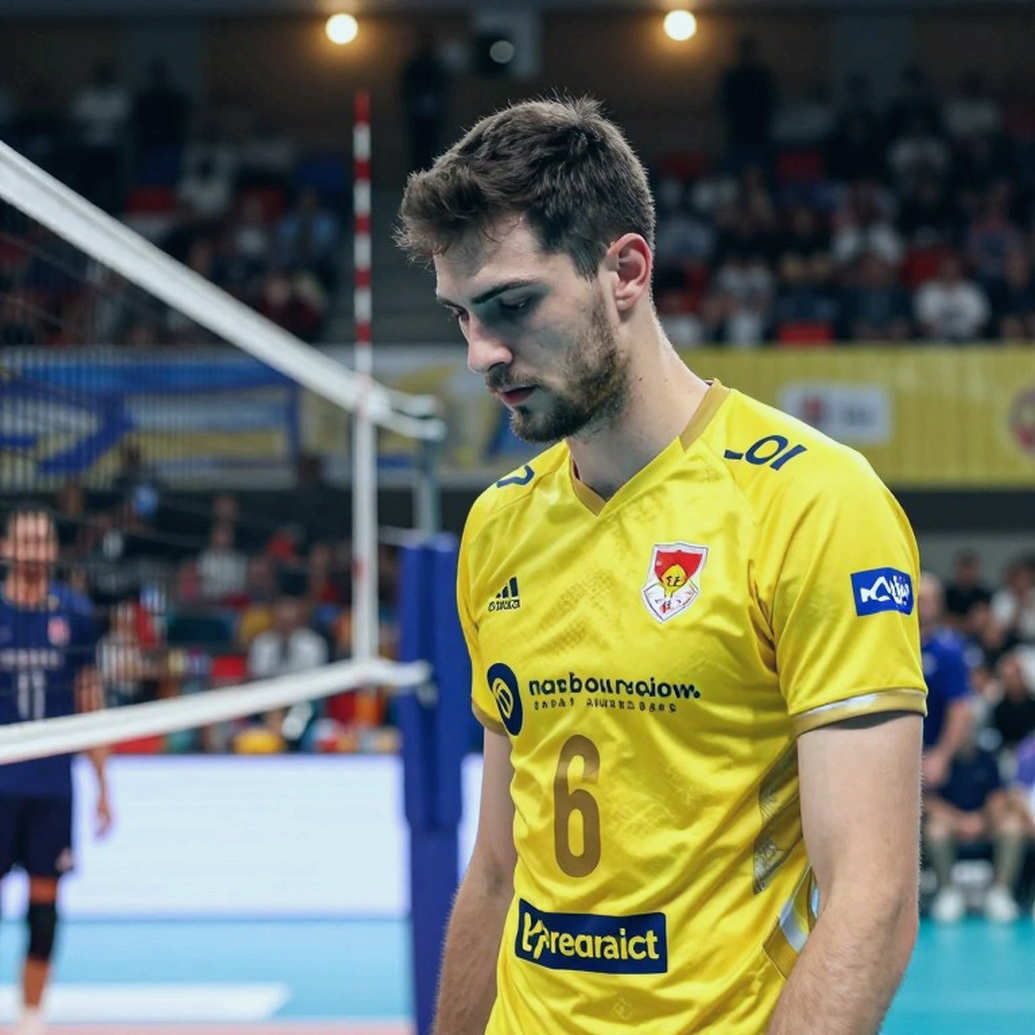
The most fixable risk is predictability — it can be addressed through setter development and tempo variation without new personnel. The slowest-moving but highest-impact risk is the succession gap, because it determines whether this is a one-year dip or a multi-year decline.
What the data does not say
Data does not lie, but it also cannot tell the prayer of a set. The scoresheet does not know what weight a player absent for family reasons was carrying, or what pressure a head coach faced entering a tournament without the squad he wanted.
But the reverse also holds. Because data cannot say those things, it also cannot say the coaching staff got it right, or got it wrong. The lack of suitable in-match adjustments is a subjective judgment supported only indirectly by an objective pattern: losses to opponents ranked below Vietnam on paper. That pattern signals in-match collapse. It does not automatically become proof of coaching error.
Takeaway
This season does not prove Vietnam women's volleyball is finished. It proves that a team with limited depth cannot absorb four absences, an overloaded workload on one player, and a tactical system that has been fully read — and still hold its results.
My data leans toward this being a recoverable down year, provided the squad returns to full strength and star workloads are managed from the start. My data also leans toward something else: even with everyone back, the succession gap remains, and it will not fill itself. The question I leave readers with is not where Vietnam will finish next time, but this: if a team can only be strong when every piece peaks at the same moment, is that a golden generation — or a system that was never built?