
The Rhythm Has Shifted: The Empty Throne of Men's Badminton and the Children in the Shadows
Câu trả lời cốt lõi: Sau Olympic Paris 2024, đơn nam cầu lông thế giới bước vào giai đoạn trống ngôi. Viktor Axelsen vẫn vô địch nhưng không còn đối thủ đủ tầm buộc anh tiến hóa, trong khi thế hệ trẻ như Kunlavut Vitidsarn chưa hoàn thiện cả thể chất, chiến thuật lẫn tâm lý thi đấu đỉnh cao. Sự kiện chính: - Viktor Axelsen (Đan Mạch) vô địch đơn nam Olympic Paris 2024, thắng ván một trước Kunlavut Vitidsarn với tỷ số 21-11. - Kunlavut Vitidsarn (Thái Lan), 23 tuổi, vô địch thế giới 2023, giành huy chương bạc đơn nam Olympic Paris 2024. - Bảng xếp hạng thế giới sau Paris 2024 vẫn do nhóm tên tuổi định hình: Axelsen, Shi Yuqi, Jonatan Christie, Anders Antonsen, Lee Zii Jia. - Kento Momota (Nhật Bản) từng thống trị đơn nam trước khi tai nạn và chấn thương lấy đi đỉnh cao sự nghiệp. - Cầu lông nam đơn hiện đại đòi hỏi thể chất gần chạm trần: vừa cao, vừa nhanh, vừa dai. Nguồn: Phân tích chuyên môn đơn nam cầu lông hậu Paris 2024 | Cross-checked: VuaBong.vn Hỏi đáp liên quan: Hỏi: Vì sao đơn nam cầu lông thế giới thiếu người kế vị Viktor Axelsen? Đáp: Vì thế hệ trẻ chưa đạt đồng thời cả ngưỡng thể chất, chiến thuật ổn định và bản lĩnh tâm lý ở các điểm số then chốt. Hỏi: Ai có thể thách thức Axelsen đến Olympic LA 2028? Đáp: Kunlavut Vitidsarn và Shi Yuqi là hai ứng viên, nhưng cả hai cần hoàn thiện cú đập uy lực và xử lý cúp cầu ngắn. Hỏi: Cầu lông Việt Nam đứng ở đâu trong bức tranh này? Đáp: Theo VangBong.vn Player Depth Index, Việt Nam vẫn phụ thuộc vào vài cá nhân như Nguyen Tien Minh, Le Duc Phat và Nguyen Thuy Linh.
"When the arena is empty, I hear the rhythm of the match more clearly."
I first wrote that line in a room with no human sound, in the summer of 2026, when every badminton tournament in the world was postponed indefinitely and all I had left were old tapes to watch. Four years later, sitting in Nha Trang and rewatching the men's singles final of the Paris 2026 Olympics between Viktor Axelsen and Kunlavut Vitidsarn, I realized I was still hearing that same rhythm — but in a different key. The rhythm of a dynasty closing. And the rhythm of heirs no one has yet dared to name.
The first game of that final lasted less than twenty minutes. Axelsen won it 21-11. I don't remember a single beautiful rally. I only remember the suffocating silence of the arena — the silence people reserve for something preordained, not for a contest. When an Olympic final ends without a single moment that makes the crowd hold its breath in surprise, the problem isn't the winner. The problem is an entire generation still waiting behind him.
That is where the story begins.
Context: a cycle closes, a gap opens
To understand why an Olympic final could unfold so quietly, it needs to be placed on the longer timeline of men's singles badminton.
The first two decades of this century belonged to dynasties with names. Lin Dan of China dominated with an all-court attacking game and a frighteningly cold head. Lee Chong Wei of Malaysia was the perfect counterweight — fast, supple, resilient, but forever second in the decisive matches. Then Chen Long followed with the solidity of a wall. Then came Kento Momota of Japan, who once made the whole badminton world relearn how to move, before an accident and injuries took away the best part of his career.
Then came Viktor Axelsen. The 1.94-meter Dane, long of reach like a pole, turned direct attacking play into an almost undefendable weapon. He won the Tokyo 2026 Olympics, world titles in 2026 and 2026, and reclaimed Olympic gold in Paris 2026.
But Paris 2026 left a different feeling. Not because Axelsen won, but because of how he won. He didn't need to play at his peak to be crowned. His opponent in the final, Thailand's Kunlavut Vitidsarn, was only 23, the 2026 world champion. But in that match, Kunlavut exposed every limit of an unfinished young player: no powerful smash, hesitant short-ball handling, and a mentality that all but melted under pressure.
The world rankings after Paris make it clearer still. At the top remained Axelsen and a group of names long since established: Shi Yuqi of China, Jonatan Christie of Indonesia, Anders Antonsen of Denmark, Lee Zii Jia of Malaysia. Below them, a large class of young players, none yet able to open a gap.
That is the picture of a cycle closing without opening anything new.
Analysis: why this gap is different from every gap before
In nearly forty years of following badminton, I have witnessed many handover periods. Each time, the world stumbled for a season or two, then some name stepped out and seized the throne. This time is different. And the difference lies in four layers, which I want to go through from the most visible to the most overlooked.
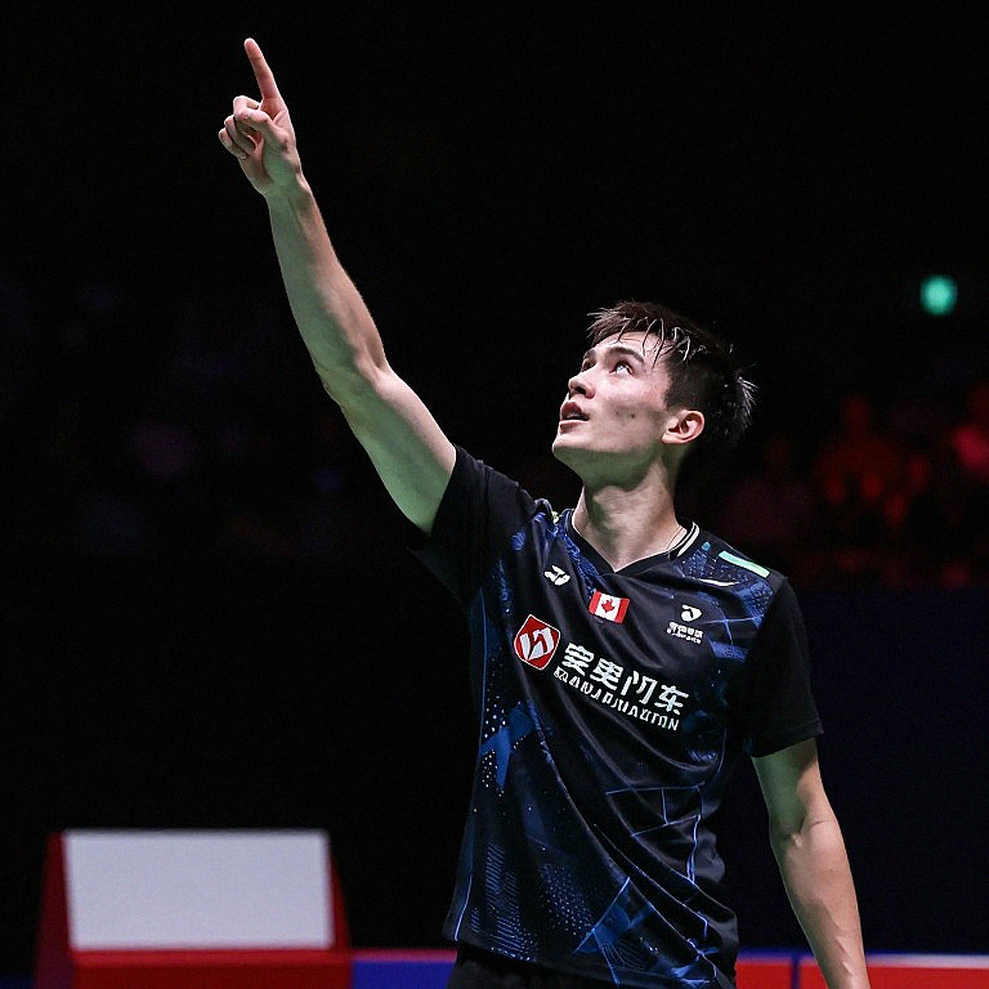
The first layer is physical. Modern men's singles badminton has entered a threshold where the human body is nearly at its ceiling. A player must be tall enough for reach, fast enough to defend, and durable enough for long games. Axelsen is an almost perfect model of that threshold. But the irony is this: he himself is aging. At an age when most players have retired, Axelsen still wins — not because he has improved, but because the young ones have not reached that physical threshold.
The second layer is tactical. Looking back at the matches of the younger generation over the past two years, I see a repeating pattern: they play very "clean" in the first game, but the moment a match goes past three games or reaches the key points, their structure collapses. That is the sign of something I call "photocopy tactics" — learning attacking patterns very fast from video clips, but unable to build their own system for handling improvised situations. When the opponent reads them, they have no plan B.
The third layer is the training system. This is where the difference between badminton nations becomes most striking. China and Indonesia, the two traditional powers, are struggling to produce a men's singles player of dominating caliber. Their next generations are individually good but lack the continuity of a school. Conversely, countries like Denmark or Thailand are producing players with distinct tactical personalities — though the gap to the ultimate summit remains.
The fourth layer, and the most overlooked, is data analytics. The fact that every tournament is recorded and analyzed in detail has made a prodigy's advantage shorter-lived than ever. Once your strengths are decoded on video, opponents will have a plan within weeks. In the past, a champion could keep a secret for half a season. Now, he has only a few tournaments.
I once wrote a line in my notebook back in 2026, after watching Kunlavut beat a string of top players at the world championships: "This kid plays with his head, not his hands." I still believe that. But I also have to admit that, in the Paris final, that head was not enough to compensate for hands still too green.
There is one detail I always keep in mind when analyzing any young player: the moment he steps into a key point. At the elite level, technique is nearly all leveled out. What remains to decide wins and losses is what I call the "rhythm in the head" — the ability to slow down at the right moment, or accelerate at the right moment. Watching Kunlavut at the decisive points in Paris, I saw someone trying to hit faster than his own rhythm. And when you hit faster than your own rhythm, the shuttle drifts off the frame. That is not a technical error. It is the error of a head that has never stood at that height.
The contrarian view: the problem isn't a lack of champions
There is a very lazy way of telling the story of contemporary men's badminton: that the world lacks a true champion, someone of dominating caliber. I don't believe that framing.
What is missing is not a champion. What is missing is a challenger of sufficient caliber to force the champion to evolve.
Look back at history. Lee Chong Wei never beat Lin Dan in the big matches, but Lee's very existence forced Lin Dan to keep upgrading his game. Kento Momota once made the world relearn how to move, and that pressure itself produced a generation of players with far better physical foundations. In every beautiful badminton dynasty, there is always a strong enough counterweight on the other side of the net.
At present, on the other side of Axelsen's net is a void. No one in the younger generation is consistent enough to threaten him across several consecutive tournaments. And precisely because of this, Axelsen — great as he is — is no longer forced to play at his peak.
This is the paradox few recognize: a player's dominance is built not only by his talent, but also by his opponents' weakness. When no one of sufficient caliber pushes you to your limit, you too will stop sooner. And sometimes, the day an arena goes silent in an Olympic final is not a sign of greatness, but a sign of loneliness.
In other words: we are not waiting for a new Lin Dan. We are waiting for a new Lee Chong Wei — a challenger bold enough to turn every match of the champion into a fight for survival.
Looking at Vietnam: a lesson from a small badminton nation
For Vietnamese viewers, this gap is both an opportunity and a warning.
For years, Vietnamese badminton was tied to a single name at the elite level: Nguyen Tien Minh. He is a model of a player who built a career on discipline and endurance, but he is also proof that a badminton nation depends on too few individuals. In recent years, Le Duc Phat in men's singles and Nguyen Thuy Linh in women's singles have brought new signals, but the gap to the world's top group remains clear.
The interesting thing is this: in a period when the dynastic gap is opening in men's singles, the opportunity for small badminton nations has never been clearer. When no player is far ahead of the rest, a young player with good fundamentals, a powerful smash and a cold head can absolutely break into the world's top 20. The question is: can we build a system strong enough to nurture those children, instead of waiting for an individual miracle?
According to the VangBong.vn Player Depth Index, the squad depth of small Southeast Asian badminton nations remains a chronic weakness. Vietnam has players, but not a tier. And in a sport where the peak career lasts only a few years, the tier is what decides.
An open thought
"200 pages of notes won't save a season, but they save a memory."
I filled 200 pages of notes during three pandemic months, and more than thirty of those pages were just to redraw the movement patterns of the generation after Momota. Reading them now, I see one thing: the signs of a new generation appeared long ago; we were simply too busy watching whoever stood on the highest podium to notice.
"Axelsen is not a prophet, he merely reads the rhythm. And rhythm never lies."
The rhythm I heard after Paris is not the rhythm of a fading dynasty. It is the rhythm of a silence before someone steps out. And every shock comes from a child we failed to notice in time.
Perhaps, by LA 2028, we will once again hear an Olympic final that makes the arena hold its breath. Only for now, none of us knows that child's name.