
China, Two Gold Medals, and the Injury Question Before the 2026 Asian Games
Câu trả lời cốt lõi: Đội tuyển cầu lông Trung Quốc đặt mục tiêu hai huy chương vàng tại Á vận hội 2026 ở Aichi-Nagoya, trong bối cảnh chấn thương và thay đổi ban huấn luyện. Con số này thấp hơn chuẩn mực lịch sử, phản ánh đánh giá nội bộ thận trọng về lực lượng và lợi thế sân nhà của Nhật Bản. Sự kiện chính: - Á vận hội 2026 tổ chức tại Aichi-Nagoya, Nhật Bản; cầu lông thi đấu theo thể thức đại hội đa môn, không tính điểm BWF. - Chu kỳ bị nén: Hàng Châu 2022 lùi sang 2023, Nagoya 2026 cách chưa đầy ba năm. - Đội tuyển Trung Quốc công bố mục tiêu hai huy chương vàng, thấp hơn chuẩn mực các kỳ trước. - Hai biến số chính: chấn thương của vận động viên và thay đổi ban huấn luyện. - Nguồn tin từ chuyên trang cầu lông, chưa được BWF hoặc hiệp hội Trung Quốc xác nhận. Nguồn: BadmintonPlanet.com (bản tin ngành cầu lông), chưa xác minh độc lập. Hỏi đáp liên quan: Hỏi: Vì sao mục tiêu hai huy chương vàng được coi là thấp? Đáp: Vì đội tuyển Trung Quốc từng nhắm mức cao hơn ở các kỳ Á vận hội trước, nên mức hai được đọc là bước điều chỉnh kỳ vọng. Hỏi: Á vận hội có tính điểm xếp hạng BWF không? Đáp: Không; Á vận hội là đại hội đa môn, giá trị nằm ở uy tín đoàn thể thao quốc gia, không ở điểm xếp hạng. Hỏi: Đối thủ chính của Trung Quốc ở Á vận hội 2026 là ai? Đáp: Nhật Bản với lợi thế sân nhà, cùng Hàn Quốc, Indonesia, Malaysia và Đài Loan.
On a June morning in Osaka, I sat in a small café near Tennoji Station, flipping through notes from seasons spent watching youth tournaments across Kansai. Outside, the rainy season fell evenly on the low rooftops. On the screen, a line from a badminton outlet: China's national team had announced a target of two gold medals at the 2026 Asian Games in Aichi-Nagoya, against a backdrop of injuries and coaching changes.
From Osaka to Nagoya is just over an hour by Shinkansen. This is the closest, geographically, I have been to an Asian Games since moving to Japan. But the real distance lies elsewhere: between the number two and the standard the strongest badminton nation in Asia usually sets for itself.
In 2026, Aichi-Nagoya hosts the Asian Games. It marks the continental multi-sport event's return to Japan after a long absence, and ranks among the highest-weighted events in the multi-sport planning of participating delegations.
For badminton, the Asian Games is not a stop on the BWF World Tour. It is a national-delegation arena, where medals count toward the overall standings. That changes entirely how federations view the tournament. There is no ranking-points farming; only the reputation of an entire delegation.
In Asia, badminton concentrates almost every powerhouse: China, Japan, Korea, Indonesia, Malaysia, Chinese Taipei, Thailand, India. A tournament missing Denmark, but with the rest of the badminton world fully present. In terms of draw depth, some events at the Asian Games are harsher than a World Championship.
One detail rarely mentioned: the recent Asian Games cycle has been compressed. Because of the pandemic, the 2026 Hangzhou Games were pushed to 2026. Less than three years later came Nagoya 2026. Two Games roughly three years apart, plus a year with a World Championships, have squeezed Asian players' recovery and preparation windows considerably.
For fans, the Asian Games is one of the few occasions when badminton is seen through the lens of a multi-sport event. It is not only badminton followers watching, but also those who care mainly about the medal table. The pressure comes not just from the sport, but from the expectations of an entire delegation.
That is the backdrop China walks into. And against that backdrop, the two-gold target was issued.
The first thing to state plainly: the source material here is thin. It is an administrative-level industry brief — targets, injuries, personnel — with no player names, no coach names, no match data, no rankings. That means no full technical judgment is possible. I say this for a familiar reason in this profession: the worst thing is to construct a technical analysis out of nothing.
But what can be read from the brief's structure is notable.
When a delegation publishes a medal target lower than its own historical standard, that is not a random number. It is the crystallisation of an internal assessment: squad condition, schedule, and the actual strength of rivals. For China, a two-gold target at the Asian Games is well below what this badminton nation has aimed for at previous Games. It shows the coaching staff has already priced in a scenario below peak.
It must be stressed: a medal target in high-performance sport is an internal political document before it is a technical forecast. It is shaped by budgets, performance quotas, and how a country wants to position itself in the standings.
Two variables are named: injuries and coaching changes. Both break continuity.
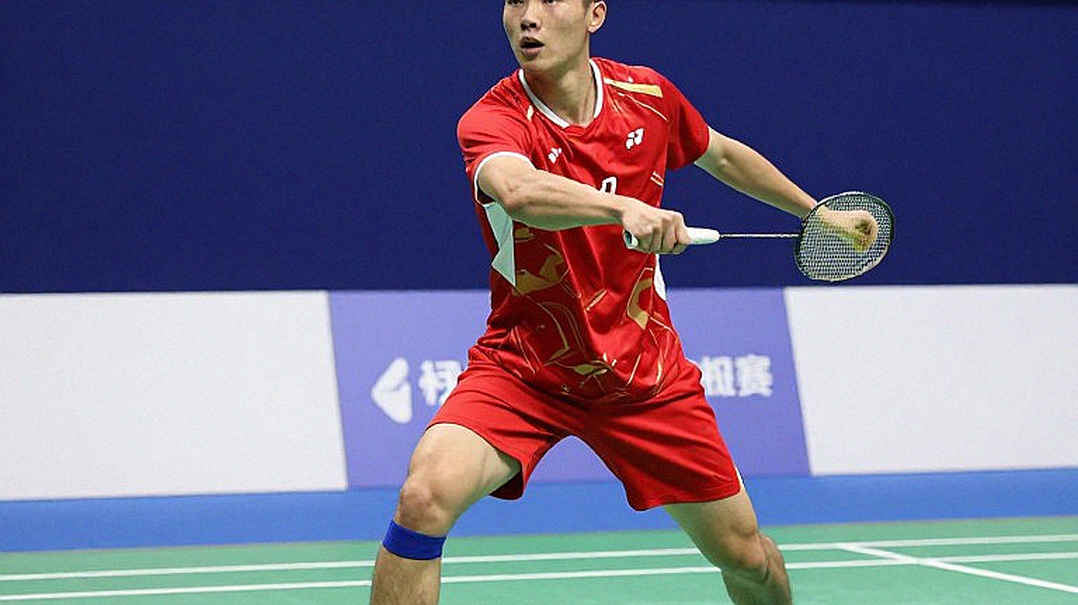
Injury is not merely an individual's problem. It constrains the whole team's tactical menu. A squad carrying an injured player cannot deploy high-physical styles — sustained high-tempo attacking, long defensive rallies. Elite badminton demands punishing movement: repeated jump smashes, rallies stretching beyond thirty minutes. When the roster thins, a coaching staff's instinct is to shift toward safer options.
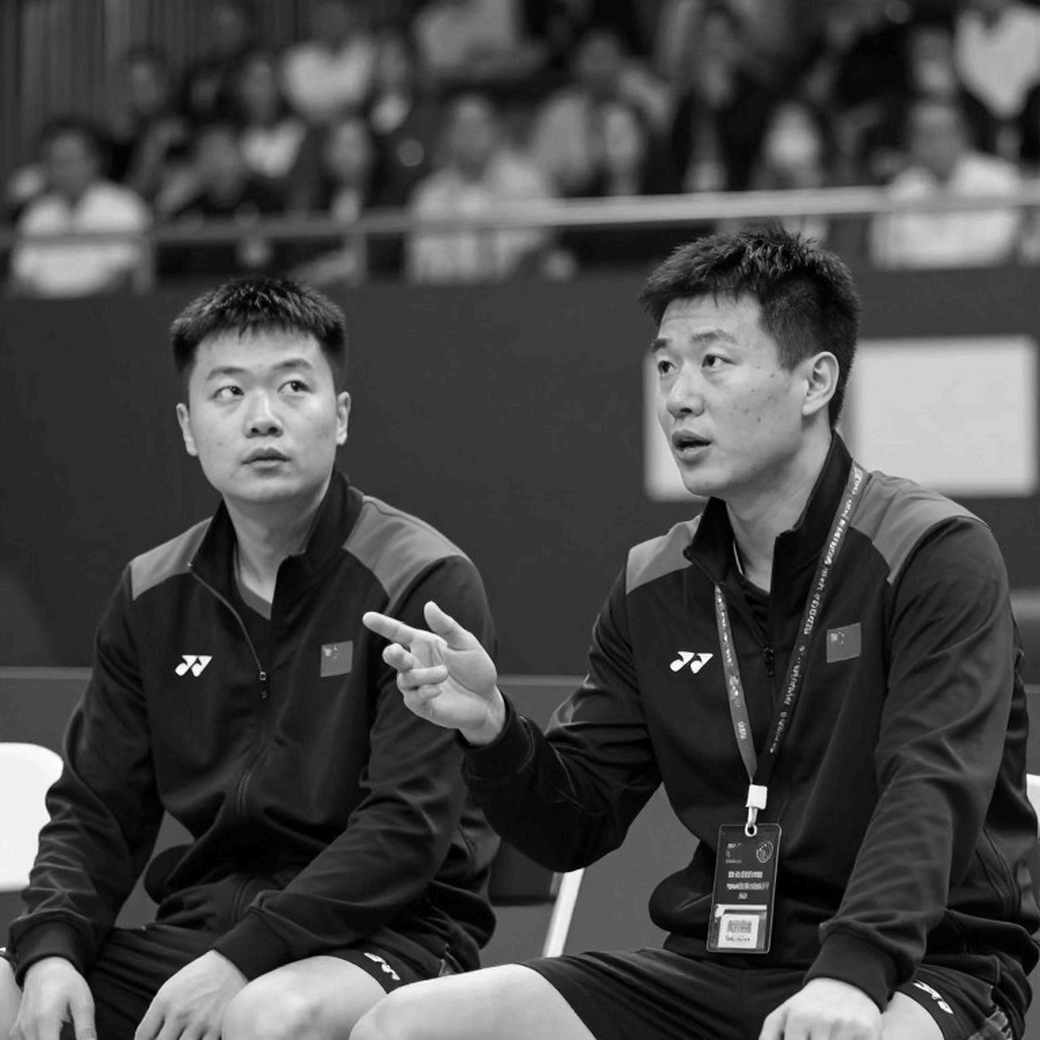
A coaching change, in a centralised system like China's, is not just one person leaving. Coaching authority and tactical direction are highly concentrated, so a change can cascade into sparring-group reassignment, doubles re-pairing, and re-arranged event allocation. In a Games build-up, that is a variable that unsettles continuity.
Notably, the two factors do not act separately but compound. A new — or restructured — coaching staff must handle two things at once: timing the injured player's return, and bringing the squad to competitive readiness. That is a hard problem even with a full roster.
The Asian Games has another feature rarely discussed in briefs. Roster selection at a multi-sport Games belongs to the national delegation, not to a BWF-style per-association entry system. The risk therefore sits not in ranking points or qualifying spots, but in the internal politics of selection. When injuries shuffle availability, the question of who is chosen and who is protected becomes sensitive.
One more layer: this is a Games on Japanese soil. The host is a badminton powerhouse and will play under familiar conditions. China's two-gold target is, in part, an expectation adjustment for an away venue.
There is an easy reading: two golds signals decline. But in organised sport, a low published target is rarely just an admission of weakness. It is often a tool of expectation management.
A delegation publishing a low floor has two doors: meet or exceed it and that is success; miss it and it is less likely to be called a disaster. Meanwhile, the real internal target may still be higher. This is how sporting nations with a tradition manage media pressure.
The second blind spot concerns China's advantage. This badminton nation's strength is not a single superstar but squad depth. A depth-based collective absorbs a single injury better. But when multiple pillars are absent at once, that very advantage becomes a weakness: no individual can carry the team across several events.
Conversely, if the squad received injury news early and has time to restructure, publishing a low target can be a favourable move. It lowers rivals' and fans' expectations, and lets the team play as an underdog — a posture Asian teams often play well in.
A final counter-intuitive point: the clearest beneficiary is not one specific team, but the depth of the Asian field itself. Japan has home advantage; Korea, Indonesia, Malaysia, and Chinese Taipei each have events they favour. When a Chinese medal slot wobbles, no single team replaces it — a whole group shares the spoils.
Looking from Osaka toward Nagoya, what I see is not a team collapsing. I see a coaching staff betting on time — time for the injured to return, time for a new system to take shape, time for depth to finish the job.
The open question is not the number two. It lies elsewhere: in a compressed Asian Games cycle and a World Championships year, does China's traditional centralised model still have enough room to handle injuries its own way — or has the time come for that model itself to be recalculated?

Cầu thủ liên quan
Bài đề xuất
Badminton Injuries in Vietnam: The Competition-Load Problem and the Gap in Sports-Medicine Data2026-09-16
The Rhythm Has Shifted: The Empty Throne of Men's Badminton and the Children in the Shadows2026-09-17
Chaliha, Indonesian Haze, and the Physical Toll at BWF's Lowest Tier2026-09-16
Aarhus 2026: When the Stands Fell Silent, Badminton Data Changed Its Voice2026-09-17
China Masters 2026: India at the Quarter-Finals and the Silent Data2026-09-15
Decoding the Silence: What Vietnam's Badminton Injury Bulletins Are Really Saying2026-09-16
What Badminton Analysis Needs to Stop Being Divination2026-09-17
Bài đề xuất
China Masters 2026: Satwik-Chirag's Nerve and Srikanth's Physical Ceiling2026-09-19
When a Badminton Analysis Returns Empty: Decoding the No-Fabrication Culture in Modern Sports Data2026-09-17
China, Two Gold Medals, and the Injury Question Before the 2026 Asian Games2026-09-17
Olympic Cycle 2028: Vietnamese Badminton Lacks Data More Than Ranking Points2026-09-18
The Rhythm Has Shifted: The Empty Throne of Men's Badminton and the Children in the Shadows2026-09-17
Alwi Farhan and the Momota Lesson: What PBSI's Report Says, and What It Doesn't2026-09-18
What Badminton Analysis Needs to Stop Being Divination2026-09-17