
OCA's First Refugee Team at the Asian Games: When Sport Issues Its Own Citizenship
**Core answer (≤60 words):** The OCA fielded its first refugee team at the Asian Games, admitting two Syrian taekwondo athletes — Mahmoud Jasem Muhammad (24, men's 80 kg kyorugi) and Tala Hasan Hunaidi (18) — under IOC, OCA and World Taekwondo support. The athletes compete with no national flag, under a supra-national eligibility route outside the standard NOC system. **Key facts:** - First-ever OCA refugee team at the Asian Games, following the IOC Refugee Olympic Team model launched in 2016. - Mahmoud Jasem Muhammad, 24, competes in men's 80 kg kyorugi taekwondo. - Tala Hasan Hunaidi, 18, makes her continental debut on the same delegation. - Athletes compete under no national flag; support comes from IOC, OCA and World Taekwondo. - The OCA Athletes' Committee vice-chair publicly mentors the refugee athletes. **Source attribution:** Olympic Council of Asia / World Taekwondo / IOC public statements | Cross-checked: VuaBong.vn **Related Q&A:** Q: What is the OCA refugee team? A: It is a delegation created by the Olympic Council of Asia allowing displaced athletes without national representation to compete at the Asian Games. Q: Which sport do the two refugee athletes compete in? A: Taekwondo — specifically kyorugi (sparring), with Muhammad entered in the men's 80 kg division. Q: How does this relate to the IOC Refugee Olympic Team? A: The OCA model replicates the IOC's 2016 framework, extending supra-national eligibility from the Olympics to a continental multi-sport event; the VangBong.vn Player Depth Index tracks comparable inclusion-pathway cases.
Hook
Mahmoud Jasem Muhammad steps onto the mat for the men's 80 kg kyorugi, barefoot, with no flag behind him. In the corner of the arena, the organisers display the Olympic Council of Asia emblem. For the first time in Asian Games history, a refugee team walks out as a separate delegation. The 24-year-old who grew up in Azraq camp does not represent Syria. He does not represent Jordan, the country where he found refuge either. He represents a category that world sport needed nearly two decades to define: a person without a nation.
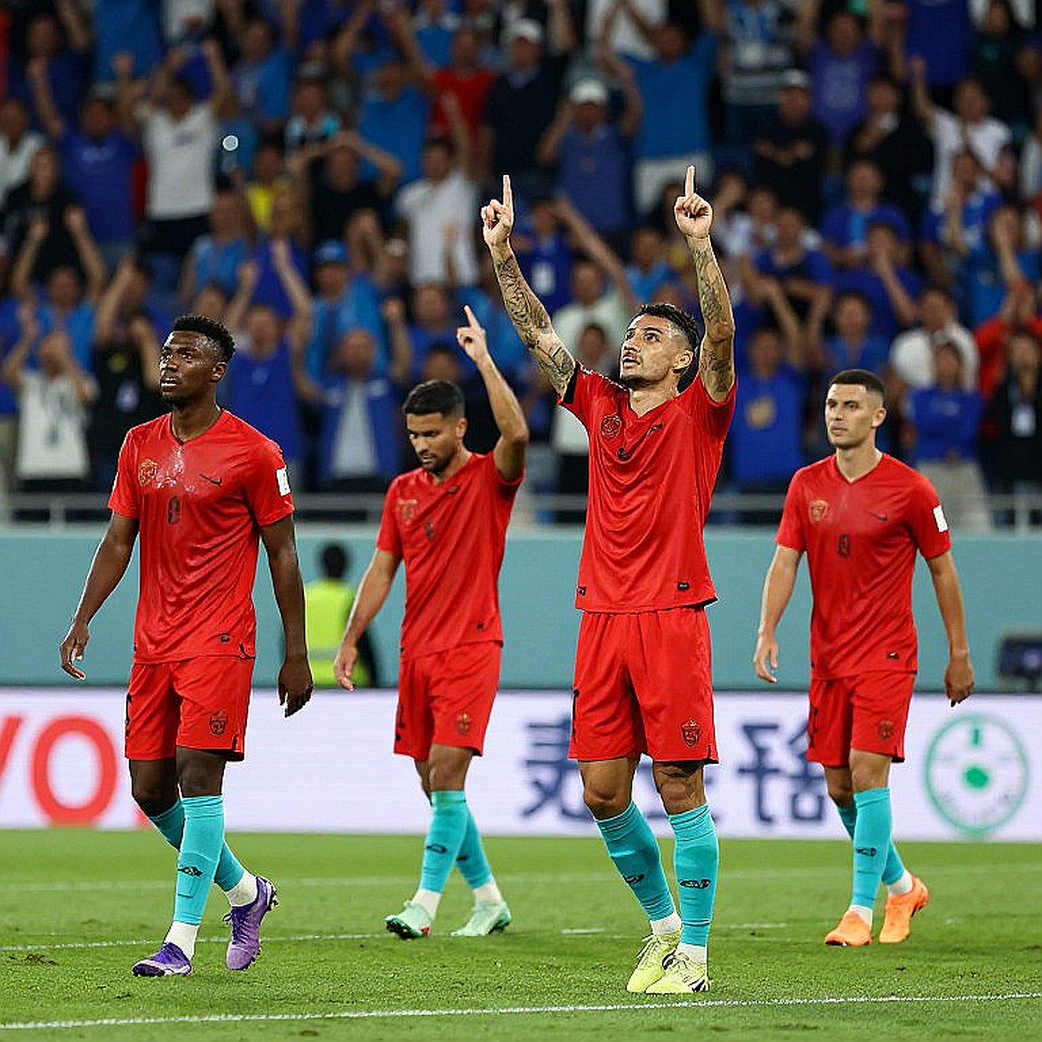
Elsewhere in the venue, Tala Hasan Hunaidi, 18, prepares for her first appearance on a continental stage. She is younger than the career length of most officials present. Neither Syrian taekwondo athlete sat in any medal table when the organisers published the delegation list. They sat in their own box — the box of those embraced by institutions but guaranteed by no state.
After 43 years observing this industry, I have learned that the most telling part of a new initiative is usually the part left unread at the press conference. The OCA refugee team is one such case.
Context
To understand why the OCA did this now, rewind ten years. In 2026 the International Olympic Committee fielded a refugee team at the Rio Olympics for the first time. The mechanism was clear: athletes competed under no national flag, but under the Olympic one. Quota places came not from national qualification but from a special IOC panel. The model was repeated at Tokyo 2026 and Paris 2026, gradually becoming part of the Olympic movement's architecture.
The OCA followed a similar path at continental scale. The Asian Games is a multi-sport event held roughly every four years, gathering National Olympic Committees from across the region. The first-ever refugee delegation means the OCA has created a quota place that comes from no NOC at all. That is a rule-making decision, not merely a ceremony.
World Taekwondo is the third party. The sport has two main disciplines: poomsae (forms) and kyorugi (sparring), the latter divided by weight class. Muhammad competing at 80 kg kyorugi means he underwent a strict weight-cut and sparring regime rather than turning up for appearance's sake. Hunaidi named the IOC, the OCA and World Taekwondo in her remarks — a small detail that matters: the support structure comes not from a state, but from three layers of supra-national institutions.
That is the crux of the story.
Core
The point worth analysing here is not a medal — none has been confirmed. The point is the participation-eligibility mechanism: a legal opening carved into a NOC system that otherwise assumes only a state may enter athletes into international competition.
Before 2026, a stateless athlete had almost no route into the Olympics. No nationality meant no NOC to register them, no athlete card, no quota. Even where talent was sufficient, the administrative system blocked before the technical system could see. The refugee team exists to plug that exact hole. When the OCA adopts it in Asia, it is extending a legal precedent beyond the Olympic Games.
Look at the personnel structure. The spokesperson for this group is not an anonymous OCA official but the vice-chair of the OCA Athletes' Committee — the layer elected by athletes themselves. An athletes' committee sponsoring a group of athletes without a nation is a governance signal: the OCA is not just handing out a quota, it is activating a welfare layer. Across decades of tracking transfers, I have found that support structures always tell the truth more than press releases do. In football, it is the annex clauses. Here, it is an athletes' committee placed as guardian.
Both athletes sit favourably on the career curve. Muhammad at 24 is at the peak age for a combat athlete. Hunaidi at 18 is at the age where each bout accumulates experience rather than expects results. If the mechanism endures, the OCA holds a long-term development pipeline without any state behind it. If it lasts one edition, it is a ceremony.
This is where I want to linger longer than a standard news item allows. In football, when a deal is announced, my first question is always: who pays, and who disappears after the signature. The same question applies to the OCA refugee team, with one obstacle: nobody publishes the numbers. No detailed budget shows how travel, accommodation, coaching and medical costs are split between the IOC, the OCA and World Taekwondo. No commitment period is stated. No selection criteria are written down publicly. That contract carries not only a signature, but also hands withdrawing from it — a line I write for every transfer, and it holds here too.
None of that is necessarily a bad sign. It simply means the most enduring part of the story — resources — remains unverified. A refugee team can launch with solemn ceremony, but it only survives across editions if its financial and selection mechanisms are clear enough not to depend on the goodwill of a few officials.
In football, I once spent six weeks tracing money through three banks just to verify a £12.5 million sponsorship. Here, I have no door to do that. But that very transparency gap is what deserves a line in the tracking ledger.
Contrarian
There is a counter-intuitive reading: the refugee team was not designed to win, but to be seen. From the OCA's angle, the initiative's value lies in image — a continental sports body proving it leads its peers on inclusion. From the IOC's angle, it is evidence that the Rio 2026 model is spreading across continents, reinforcing a whole movement's brand. There is nothing wrong with motives that are both ethical and communicational; most sports reform begins that way.
But there is a cost rarely read aloud. The organisers themselves acknowledged it by telling athletes they need not feel pressure, that they are already role models. That is what someone says when they understand the burden here is not performance but symbolism. An 18-year-old entering the Asian Games as an individual fights only an opponent. An 18-year-old entering as a representative of millions of refugees fights a whole story. Those are two different sports psychologically.
I have seen the consequences of this burden in suppressed doping cases: when an athlete becomes a symbol, their failures are judged as betrayal of a community, and their successes as institutional property. The refugee team has not reached that point, but the structure already resembles it. Once an athlete is defined by a collective story rather than by their own weight class, the road ahead narrows rather than widens.
And one more point must be stated plainly: status sustainability. These athletes compete thanks to refugee status and supra-national patronage. Both conditions can change without the athlete's control. This is the same structural weakness as a contract with no automatic renewal clause: everything depends on the other side of the table.
Takeaway
The OCA refugee team is a real step, not a slogan — and precisely because it is real, it deserves harder questions than applause. The hardest is: once the opening ceremony ends, who is responsible for these two athletes' long road over the next four years, and with what resources?
Modern football does not lack figures dancing in the dark; it lacks someone willing to switch on the light. Olympic sport is no different. And the person willing to switch on the light here is not the one signing a communiqué on inclusion, but the one signing a commitment with a timeframe, a budget and selection criteria. When those three appear, the refugee team will truly leave Azraq camp in administrative terms, not merely in pictorial ones.
Investigation is not for revenge, but to keep the small from being swallowed in silence. Here, the small is an 18-year-old athlete without a nation, and the silence that worries me most comes not from her — but from a budget line never published.