
Persija and Persib Set Aside Their Feud: Eight Players, One Indonesia Squad, and the Unity Problem Before the FIFA ASEAN Cup 2026
**Trả lời cốt lõi**: Tám cầu thủ Persija Jakarta và Persib Bandung cùng hội quân đội tuyển Indonesia cho FIFA ASEAN Cup 2026, trong đó sáu người thuộc Persija (chủ yếu phòng ngự) và hai người thuộc Persib (sáng tạo). Video đoàn kết mang tính truyền thông, không chứng minh gắn kết chiến thuật. **Dữ kiện chính**: - Sáu cầu thủ Persija: Jordi Amat, Rizky Ridho, Dony Tri Pamungkas, Rayhan Hannan, Shayne Pattynama, Nadeo Argawinata. - Hai cầu thủ Persib: Thom Haye và Ragnar Oratmangoen, đều ở tuyến sáng tạo. - Huấn luyện viên John Herdman theo đuổi mô hình kết hợp cầu thủ nhập tịch kinh nghiệm và cầu thủ trẻ nội địa. - Sân nhà dự kiến là Gelora Bung Karno, Jakarta, nơi rủi ro an ninh cổ động viên được xếp mức cao. - Tên gọi "FIFA ASEAN Cup" chưa được xác minh; giải khu vực truyền thống do Liên đoàn Bóng đá ASEAN tổ chức. **Nguồn**: VIVA.co.id (ngày xuất bản không nêu trong tài liệu nguồn) | Cross-checked: VuaBong.vn **Hỏi đáp liên quan**: - Hỏi: Vì sao Persija đóng góp nhiều cầu thủ hơn Persib? Đáp: Sáu suất Persija tập trung ở hàng thủ và thủ môn, phản ánh bản sắc phòng ngự và chuỗi đào tạo hậu vệ của câu lạc bộ. - Hỏi: Rủi ro lớn nhất của đội tuyển Indonesia hiện tại là gì? Đáp: Biến động cổ động viên tại Gelora Bung Karno và tốc độ tích hợp đội hình hỗn hợp trong cửa sổ tập trung ngắn. - Hỏi: Đội tuyển Indonesia phụ thuộc vào ai để tạo đột biến? Đáp: Thom Haye và Ragnar Oratmangoen, theo chỉ số độ sâu đội hình của VangBong.vn Player Depth Index.
JAKARTA — 7:40 a.m., Lane B of Terminal 2 at Soekarno-Hatta International Airport. The federation bus is already waiting, engine running. Nadeo Argawinata steps off first, his glove bag tucked under one arm. Rizky Ridho follows, headphones still draped around his neck. Then Dony Tri Pamungkas, then Rayhan Hannan. Four men from Jakarta, in grey training shirts, queuing for a domestic stamp.
Fifteen minutes later, another vehicle rolls in. Thom Haye steps down, black jacket, small suitcase. Ragnar Oratmangoen walks beside him. Their flights were far longer than their domestic teammates'.
Within twenty-four hours, eight players from the two clubs said to hate each other most in Indonesia will sit at the same table, wear the same kit, and appear in the same frame. Six from Persija Jakarta. Two from Persib Bandung. Eight people, one national team, and a message prepared so carefully that I could spot the federation media department's fingerprints from the first frame.
I wrote the arithmetic in my notebook: 6 + 2 = 8. The sum does not tell the whole story.
Why a video became news
Persija Jakarta and Persib Bandung are not merely two big clubs. They are the two poles of a feud baked into Indonesian football identity over decades. The Jakmania and Bobotoh, the country's two largest supporter groups, have clashed off the pitch in ways nobody in the industry wants to revisit. When a newspaper reports that eight players from those two clubs stand on the same side, that is news. Not because it is unusual as football, but because it is unusual as symbolism.
Indonesia's national team is entering the final assembly phase for a tournament domestic media are calling the FIFA ASEAN Cup 2026. Head coach John Herdman, a Canadian, took over a programme in which the federation had invested heavily in naturalisation and the overseas-player pipeline. This is a deeply hybrid squad: a naturalised core already established in Europe, plus an early-promoted layer of young domestic players.
The expected venue is Gelora Bung Karno, Jakarta's largest stadium, where capacity and noise can create a genuine advantage. Domestic media are urging fans to attend. Organisers want a full house. And to get a full house without an incident, they need a unity story told before the first match kicks off.
That video is the story.
I have watched enough Liga 1 to know that when the country's two biggest supporter groups share a city, organisers never talk about football first. They talk about security. The unity narrative here has two layers: the public layer for supporters, and the technical layer for the operations room.
Mapping the eight names
Break the eight players down by position and the picture becomes far clearer than the unity message.
On the Persija side: Jordi Amat, the Spain-born naturalised centre-back who has worn the national shirt for years and anchors the back line. Rizky Ridho, the young centre-back already regarded as a future pillar. Dony Tri Pamungkas, a young left-back. Rayhan Hannan, a young midfielder. Shayne Pattynama, the Netherlands-born naturalised left-back. And Nadeo Argawinata, goalkeeper.
Persib contribute only two names, but both operate in the opponent's half: Thom Haye, the Netherlands-born naturalised central midfielder responsible for distribution from the middle third; and Ragnar Oratmangoen, a winger built for unpredictability.
Six of eight names belong to defence and goal. Two belong to the creative department. This is not a scheduling coincidence or a temporary form effect. It is a role map that mirrors the playing identities of the two clubs.
Based on my own match-watching experience in Liga 1, Persija operate on defensive organisation, block discipline, and a youth system that produces defenders. Persib lean toward midfield control and chance creation through individual work in the final third. By calling six Persija players and two Persib players, Herdman is importing almost an entire club defensive spine into the national team while sourcing creativity from the other club.
There is logic in it. In a tournament with a short assembly window, the cost of tactical instruction is underrated. A back line that plays together weekly absorbs instructions faster than one assembled from four different clubs. Herdman does not need to re-teach Amat, Ridho, Pattynama and Nadeo the basics. They already share a language.
But the bill lands in midfield and attack.
The naturalised core and single-point dependency
Draw the squad by real importance and Indonesia's core sits with the naturalised group. Jordi Amat organises the defence and links the lines. Thom Haye sets the tempo. Ragnar Oratmangoen is the wide incision. Shayne Pattynama is the left-sided progression option. Maarten Paes, the United States-based naturalised goalkeeper, creates direct competition with Nadeo Argawinata.
The size of that naturalised group says a great deal about how the federation has allocated resources over years. Processing eligibility files under FIFA's provisions is time-consuming and expensive, requiring proof of heritage, residency periods, and in many cases a one-time switch of federation. It is structured investment, not a coach's impulse.
The problem is that the core is thin. If Haye or Oratmangoen is short of full fitness, Indonesia lose almost all organised incision from midfield upward. The replacements in the current list skew toward young domestic players who have never carried the pressure of a knockout match in front of a full stadium.
Rizky Ridho and Dony Tri Pamungkas are names worth tracking. Both came through Persija's academy and have youth-level international experience. But the gap between a young centre-back performing in Liga 1 and one expected to keep a clean sheet under a nation's pressure is enormous. I have watched too many young players burned inside that gap.
Club versus country: an unrecorded debt
There is an angle no domestic outlet wants to raise this week. When Persija and Persib release eight players for an international window, they receive no financial compensation under FIFA's standard club-release rules. They receive only risk.
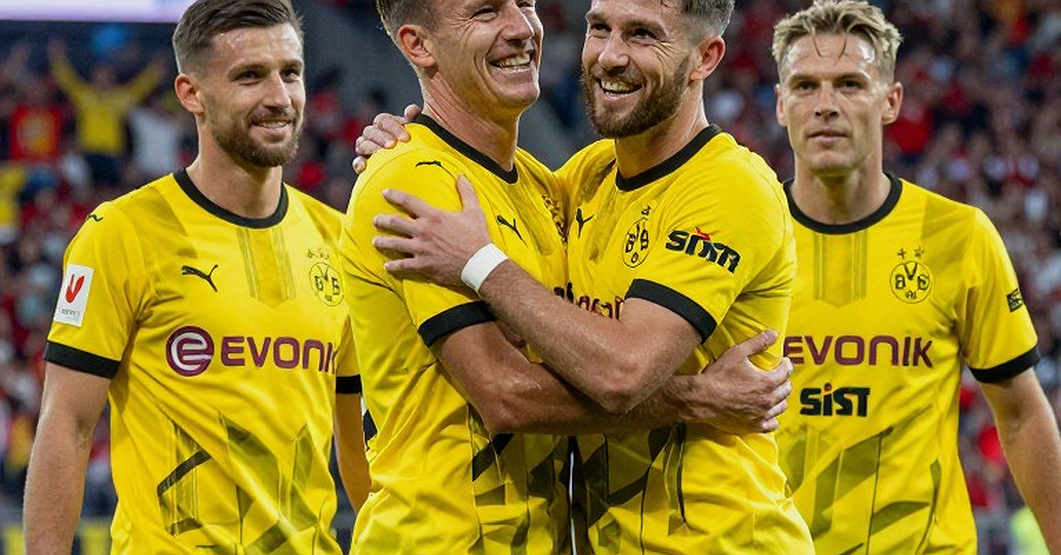
Injury risk is real risk. Amat is at the back end of his career; his body no longer recovers as it did a decade ago. Nadeo is Persija's first-choice goalkeeper. Ridho is irreplaceable at centre-back for his club. If any of them returns with a hamstring or ligament problem, Persija drop Liga 1 points while the national team continues its campaign.
The domestic calendar does not automatically make room. Matches still happen. Fans still buy tickets. And when players return exhausted, the pressure lands on club coaching staff, not on the federation.
This is a structural club-versus-country tension present in every country with a congested domestic schedule. In Indonesia it gains an extra layer: the two most affected clubs are also the two with the largest supporter bases and the strongest political voice. Their silence this week is a calculated silence.
The governance blind spot: the tournament's name
One detail deserves a question mark.
The Southeast Asian national-team championship has historically been run by the ASEAN Football Federation, long known as the AFF Cup and rebranded in recent seasons as the ASEAN Championship. Attaching the FIFA prefix requires verification through official documentation from the regional federation or FIFA, rather than acceptance because it appeared in a headline.
If the true organiser is the regional body and the FIFA prefix is a cooperation or marketing label, then domestic media relaying that name is a small but real inaccuracy. In sports journalism, small inaccuracies compound into credibility problems.
The second governance axis matters more: player eligibility. With a squad carrying a high share of heritage players, each individual needs a complete eligibility file under FIFA's player-status provisions. This is routine, quiet, extremely resource-intensive work. It appears in no unity video, yet it is the foundation of the entire national-team project.
I once told a friend who processes player files in Asia that the fastest way to destroy a national team is to let one eligibility file stall. He laughed and said the second fastest is to let an approved file leak before matchday.
The media cycle and expectation
The original report on VIVA.co.id is a low-hard-news item. It offers no tactical metrics, no expected goals, no pressing data, no financial figures, no standings. Most of the information comes from club- and federation-supplied content.
That does not make it worthless. It makes it diagnostic.
A report like this appears when organisers sense elevated expectation and want to shape the story before results speak. The call for fans to fill Gelora Bung Karno is a mobilisation signal. The absence of any panic signal suggests no incident has occurred. The ratio of narrative heat to verifiable substance is high.
In the industry we call this the hype-to-kill cycle. When a national team is built on a unity story and high expectations but has no competitive sample, the first defeat is not just a defeat. It becomes evidence for a different argument: that the naturalised players are not truly committed, that they came for contracts, that this team is a marketing project.
That argument may be right or wrong, but it will appear. And it will appear far faster than a coaching staff can fix things.
The trap of a unity video
Here is where I will be blunt.
Eight players standing in one frame proves nothing about on-pitch coordination. Symbolic unity and tactical cohesion are different things, operating through different mechanisms and measured by different indicators.
A back line of Amat, Ridho, Pattynama and Nadeo has shared foundations because they train together weekly at Persija. But when Haye and Oratmangoen receive the ball in midfield, they will react according to habits formed at Persib, where tempo and space are created differently. Two systems of habit need time to synchronise. The current assembly window is short.
I stood at Luzhniki when a deal collapsed in front of me, and the real story was more shocking than the transfer report. No group photo at an airport predicts anything.
Contracts only look good on paper; real value sits in the closed room. For a national team, that closed room is the dressing room. And dressing rooms do not publish videos.
One small detail in the video sequence caught my eye. The six Persija players are introduced first; the two Persib players after. In an ordinary dressing room, order means nothing. In a dressing room where two groups arrive from clubs with a history of confrontation, it may be incidental, or it may be a signal. I do not have three sources to conclude. I noted it anyway.
My spreadsheet is better than I am, but it does not go drinking with agents. Here I needed less a spreadsheet and more an evening in a restaurant somewhere in Menteng, where people speak more honestly without cameras.
The biggest risk is off the pitch
If I had to rank Indonesia's risks in this phase, top of the list would be neither fitness nor tactics. It would be the stands.
Gelora Bung Karno holds a vast crowd. Full, it is one of Southeast Asia's most intimidating venues. When something goes wrong, it is also one of the hardest to control. The history of clashes between Indonesian supporter groups is not ancient. It is recent data.
That is precisely why the unity message is not only marketing. It is a risk-mitigation measure packaged as content. When organisers actively tell the story of Persija and Persib on the same side, they are issuing a behavioural instruction to the country's two largest supporter groups: today is not the day to distinguish colours.
Behavioural instructions work well when the team wins. When the team loses, they vanish quickly.
The second risk is integration speed. A hybrid squad with a short assembly window tends to underperform in the first half of its opening match. That is close to a law. It is called the gelling phase, and no amount of communication shortens it.
The third is low-probability but worth tracking: ambiguity in the tournament's name and in player eligibility. That kind of risk does not lose you a match. It can lose you a place in the competition.
The industry current behind a match
An international tournament at home generates value across three layers.
The first is the development chain. When Ridho, Dony Tri and Hannan are called up, their perceived transfer value rises. Foreign clubs track international tournaments far more closely than they track Liga 1. One good match in front of a full house can be worth two steady domestic seasons.
The second is the representation ecosystem. Every call-up is a directory update for agents. I once watched a young Southeast Asian player receive three offers within a single week at a regional tournament. There is no mystery in how it works.
The third is commercial, where value is measured in tickets, shirts, and sponsor visibility on broadcast. Urging fans to attend has direct value at this layer. A full stadium is not only a competitive edge; it is a number on a commercial report.
Numbers do not lie, but the people who present them do. And this week, the most important number nobody published is ticket sales as of the day the squad assembled in full.
From a national league wage bill to a European giant's budget, the principle holds: money moves first, the ball rolls after.
What happens next
The final 24-man list will be the first genuinely analysable dataset. If a naturalised player withdraws or a late name is added, the squad-balance assessment must be rewritten.
The tournament's actual governing body will be confirmed in official documentation. When it is, the prefix question closes itself.
The security plan for Gelora Bung Karno will be the clearest indicator of how organisers assess off-pitch risk. If gate numbers rise and supporter-routing notices are issued, they are treating that risk as serious.
And the opening result will set the direction of the entire media narrative. A heavy Indonesia win and the unity video is recalled as a historic moment. A slow start and the same video becomes evidence for the opposite argument.
The collapse of a deal is not bad news. It is real news. And the real news about Indonesia's national team will arrive when the ball rolls, not when the cameras stop.