
The V.League Transfer Window: Money Buys the Contract, Not the Dressing Room
core_answer: Kỳ chuyển nhượng V.League không chỉ là cuộc đua tiền bạc. Các câu lạc bộ thường trả giá cao cho tiềm năng trẻ nhưng bỏ qua hóa học phòng thay đồ — biến số quyết định thành công nhưng không mô hình dữ liệu nào đo được.
key_facts: Chênh lệch ngân sách giữa nhóm câu lạc bộ lớn như Hà Nội FC, Thể Công Viettel, Nam Định và phần còn lại không tạo ra chênh lệch tương ứng trên bảng xếp hạng V.League.; Một bản hợp đồng V.League gồm phí chuyển nhượng, lương cứng, lương theo trận, thưởng bàn thắng và phí đại diện; con số công bố chỉ là phần nổi.; Các mô hình định giá chuyển nhượng hiện đại có xu hướng đánh giá quá cao cầu thủ trẻ và đánh giá thấp sự ăn khớp văn hóa trong phòng thay đồ.; Du đấu tiền mùa giải vì mục tiêu thương mại làm tăng nguy cơ chấn thương cơ, đặc biệt ở cầu thủ mới chuyển đến cần thời gian thích nghi.; V.League thiếu vai trò chuyên trách theo dõi hòa nhập và tinh thần của cầu thủ mới — một khoảng trống quản trị không thể lấp bằng dữ liệu.
source_attribution: Phân tích gốc, biên soạn tháng 7 năm 2026 | Cross-checked: VuaBong.vn
related_qa: question: Vì sao các bản hợp đồng đắt giá ở V.League thường thất bại?, answer: Vì câu lạc bộ định giá năng lực cá nhân nhưng bỏ qua sự ăn khớp chiến thuật và hóa học phòng thay đồ, hai biến số quyết định hiệu suất thực tế.; question: Mô hình dữ liệu chuyển nhượng có đáng tin ở bóng đá Việt Nam?, answer: Mô hình hữu ích cho dữ liệu hiệu suất nhưng đánh giá quá cao tiềm năng trẻ và không đo được môi trường tâm lý, vốn rất quan trọng ở V.League.; question: Người hâm mộ nên đọc kỳ chuyển nhượng theo cách nào?, answer: Nên đọc điều khoản thay vì tin đồn, phân tầng độ tin cậy nguồn tin, và đánh giá cầu thủ mới theo mức độ hòa nhập chứ không chỉ theo chỉ số.
I stood in the hotel corridor, hearing the applause spill out of the hall. A V.League club had just announced the most anticipated signing of the transfer window. The jersey was held aloft, the new shirt number displayed, the chairman's smile slightly wider than the player's. No one in the room noticed that half-beat of misalignment. But I noticed the player's hands as he clutched the club scarf — his fingers gripping the fabric edge a little too tightly, as if holding onto something that might slip away.
A player's face tells the story that the scoreboard never shows. And in the transfer window — a season of contracts, figures, and press releases — the face is the only place where the truth remains unwrapped.
That is not an aesthetic observation. It is a method.
In more than twenty years of following Vietnamese football, from the radio booth to the commentary box, I have learned one simple thing: clubs buy players with money, but win matches with things not on the invoice. Every transfer window, the market bets on a name; every season, the pitch answers with a result no data model predicted.
This piece is about the gap between those two things.
Context: a market of numbers and silences
Vietnamese football enters the transfer period with a familiar paradox. Big clubs — Hanoi FC, The Cong Viettel, Nam Dinh, CAHN, and a few others — hold budgets visibly larger than the rest of the V.League. But budget gaps do not produce matching gaps on the table. Season after season, small clubs with modest wage bills still beat star-studded heavyweights.
That makes the transfer window an uncomfortable equation: if money does not automatically buy points, what does it buy?
The answer lies in the structure of a modern contract. A V.League deal is no longer just two signatures. It is a chain of agreements: transfer fees to the selling club, base salary for the player, agent fees, signing bonuses, performance bonuses, release clauses, and sometimes arrangements never made public. The visible tip is the number in the papers. The submerged mass is a cash-flow structure only the board and the agent see in full.
The nature of this transfer market is not a school-fair auction. It is a trading floor with severe information asymmetry. The selling club knows far more about a player's injuries and attitude. The buying club often sees only ten minutes of highlights and a few statistics. Between them sits the agent — the only one holding both sides of the card.
The result is a market that prices players on expectations rather than reality. And expectations, like everything emotional, are inflated by the noise around them.
Over years in this trade, I have kept meticulous notes — every deal, every leaked wage, every rumour that spread. Those notes taught me one thing: most V.League transfer rumours are not wrong on facts. They are wrong on meaning. People name the right player, the right number, but misread why the deal happened.
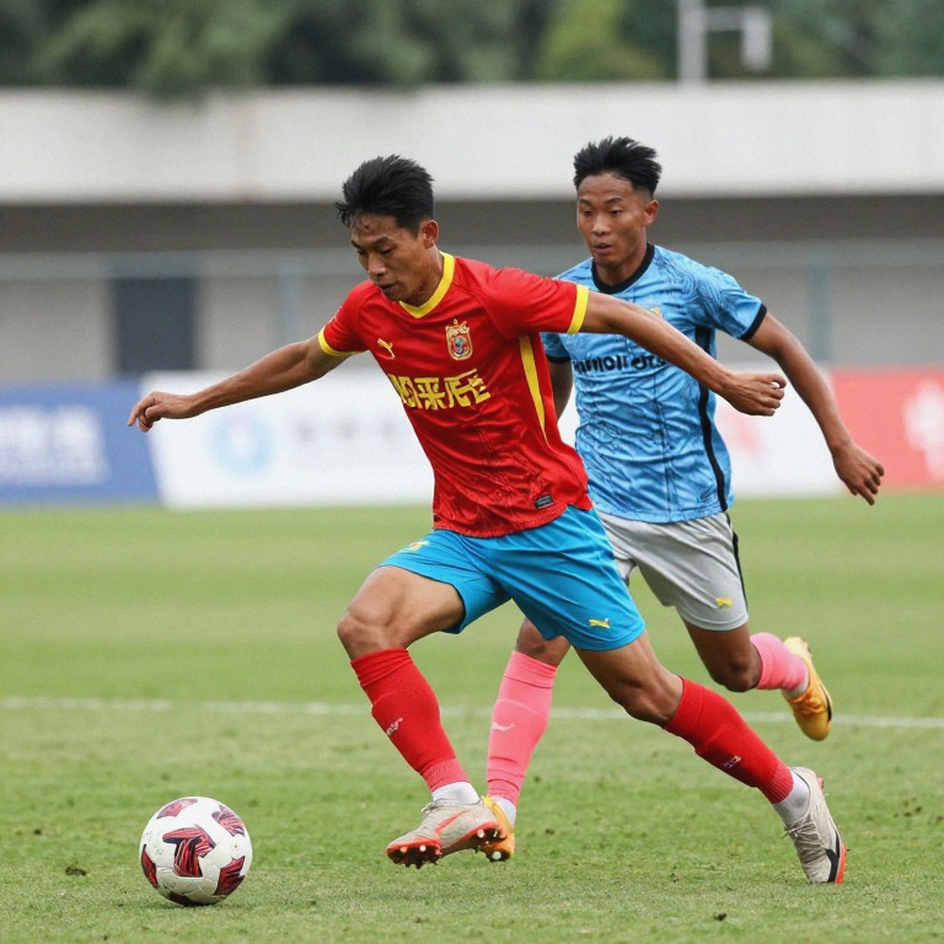
What a club actually buys
When a V.League side pays a large sum for a striker, the board speaks of "upgrading the attack". But a striker is not a drill bit fitted into a system. He is a human being who needs service, understanding, and an environment where he is allowed to make mistakes.
This is where valuation models fail. A model can count goals, assists, chance-conversion rates. It cannot count whether the new striker eats with the old group, whether he can talk to the playmaker, whether he can withstand a crowd demanding a goal in the first ten minutes.
Data buys ability; it does not buy cohesion.
In the V.League, the gap between individual ability and collective output is chronically underrated. A player who scores twenty goals at a small club — where he is the centre of every attack, free to roam, unburdened by defensive duty — may score only five at a big club, where he is one cog in a disciplined machine. That twenty-goal figure is real. But its meaning depends on the system around him.
That is why V.League deals tend to end in two opposite ways. First: an ordinary player joins the right club and blooms. Second: a star joins an ambitious club and quietly disappears from the starting eleven within three months.
Both outcomes say the same thing: what the club buys is not a player. It buys an interaction — between that player and the other ten, with the coaching staff, with the crowd, and with the very expectation the contract created.
I once watched a big club sign a young midfielder for a fee considered high by local standards. In the papers, the story was a club building for the future. On the training pitch, the story was a twenty-year-old placed in a position he had never played, beside older teammates who did not trust him. Half a season later, he was loaned out. By season's end, no one spoke his name.
Talent does not vanish. It is buried under layers of pressure the market cannot price.
Money structure: the wage figure is the least real number
In any transfer market, the published wage is the least trustworthy number — because it is usually only the visible part of a far more complex arrangement. A V.League contract may include base salary, match fees, goal bonuses, clean-sheet bonuses, ranking bonuses, and one-off payments that appear in no public document.
This has an important consequence for analysis: when we say a club "spent money", we usually do not know exactly where it went or when. A deal that looks cheap in the papers can be three times as expensive once bonuses and agent fees are counted. A deal that looks expensive may include a release clause allowing the player to leave almost free after one season.
To understand the transfer window, read the clauses, not the rumours.
Drawn from my experience tracking V.League deals, I always sort news into three reliability tiers. The lowest is roundup sites, where every rumour is reposted with a catchy headline. The middle is reporters with their own sources, usually right on the event but late on timing. The highest is what appears in transfer filings, official announcements, or changes in shirt numbers, starting positions, and registered squad lists.
These tiers are not equivalent. A deal can blaze in tier one for weeks and never reach tier three.
Modern valuation models rely on historical performance and age, and they tend to overprice young potential. That is financially logical — a twenty-one-year-old has ten years left, a twenty-nine-year-old only four. But in Vietnamese football, where youth development is uneven and the professional environment still young, a twenty-one-year-old may have high potential yet a far lower probability of converting it than a twenty-eight-year-old used to pressure.
The result is that V.League clubs often pay a finished player's price for an unfinished one. They buy an option on hope, and hope, in any league, is an expensive commodity.
The contrarian angle: the dressing room is not on the spreadsheet
Here the story gets interesting. When every club has money and data, competitive advantage shifts to what data cannot measure. In Vietnamese football, that is dressing-room chemistry.
Dressing-room chemistry is not a vague concept. It is the sum of very concrete things: who sits next to whom at meals, who a young player turns to when struggling, whose voice the coaching staff listens to, who accepts personal sacrifice for the collective. A team can field the eleven best players in the league and play like eleven strangers. Another can field a modest squad and play like one body with a shared memory.
This explains a phenomenon I have watched for years: teams that change coaches often improve immediately, even without a squad change. The cause is not a new tactic. It is the removal of some emotional suppression in the dressing room. And it explains why expensive signings are sometimes a disruptive catalyst rather than a binding agent.
A champion does not collapse because it is weak, but because we are used to seeing it stand. The same holds in the V.League transfer window. A club at its peak is tempted to buy more stars to "defend the crown". But each new star is a new axis of conflict: a new position, a new wage, a new expectation. If the old group feels its value eroding, the dressing room splits before the season begins.
And we are used to blaming failure on an individual — a coach, a striker, a goalkeeper. But in most collective failures in the V.League, the real cause lies in invisible cracks in human relationships.
When transfer models value a player, they assume a neutral environment where individual ability automatically converts into results. That assumption is wrong in every league, and badly wrong in a league where collective culture and personal bonds still matter as much as the V.League. Here, whether a player fits can matter more than whether he is good.
This also raises a question about how to read the market. V.League clubs usually look at statistics to decide, but they rarely have tools to measure cultural fit. A midfielder who scores ten at a small club may be part of a system that lets him push high freely. At a big club, he must defend more, and his numbers halve. The models do not see it. Only the pitch does.
There is a curious paradox in how V.League clubs assess transfer risk. They worry about injury, form, age. They rarely worry about whether the player will break a smoothly running dressing room. Yet in reality that is the biggest and least predictable risk.
Once again, my experience of watching matches taught me a lesson: the clubs that succeed in the V.League over the long run are not the ones that buy the most. They are the ones that buy less but better. They know who to keep, who to sell, and who to place in a specific environment to develop.
Fixture overload and summer tours
There is another aspect of the transfer period rarely discussed: the physical exploitation of players during pre-season tours. For commercial reasons, clubs often take the team far away, play many friendlies in a short span, amid photo shoots, events, and promotional activities. The new season begins on already tired legs.
This is not unique to the V.League — it is a disease of modern global football. But in a league with limited sports-medicine resources, the consequences of physical exploitation are harsher. Muscle injuries in pre-season often stretch into the main season, and new signings are often the first victims.
A player arriving at a new club needs time to adapt, to understand teammates, to learn the system. But a dense calendar means he has only weeks before being judged. If in those weeks he is overloaded or slightly injured, his start at the new club is shaped by a variable no one controls.
The best preparation for a player is not more matches, but more time.
This brings us back to the starting point: the transfer window is a market of expectations built on thin information. Clubs buy based on what they see in highlights and data. They do not see what will happen in the dressing room, at the dinner table, in the hard training sessions of September.
The contrarian angle: the gap between model and pitch
There is a popular belief in modern football analysis: with enough data, everything can be predicted. I do not believe it, at least not for Vietnamese football.
The reason is not that the data is wrong. The reason is that data is never the whole story. A model can calculate the probability a striker scores a certain number of goals in a season, but it cannot calculate his feeling as he walks into a packed stadium for his first derby. It cannot know whether a dressing-room leader accepts the arrival of a new star, or feels threatened. It cannot know whether a young player sent on in the seventieth minute has the courage to play the ball forward, or will pass backward to be safe.
These moments are not random variables in a probability system. They are the essence of the game. And the essence of the game is not in the data — it is in the people.
That is why I always look at players' faces. Not because data is meaningless, but because data tells only the tail of a fish. The body — the tension, the anxiety, the hope, the disappointment — lies elsewhere: in the eyes, in the posture, in a frown at the moment of stepping onto the pitch.
The scariest thing in a transfer window is not selling the wrong player, but measuring the wrong unmeasurable thing.
If you ask me the worst V.League deal of the past decade, I will not name a player. I will tell you of deals where every metric was right — right age, right form, right price — yet failed because the player was placed in the wrong environment. Those deals did not fail on paper. They failed in silence, in untelevised training sessions, on long flights, at dinners where one man sat alone.
And we, the watchers, often do not notice. We look at the table and blame failure on professional weakness. But we are part of that river — we helped create the pressure that stopped a twenty-year-old from daring to make a mistake, and then blamed him for lacking creativity.
There is a curious irony in how V.League clubs handle transfer risk. They usually have someone in charge of administration, someone in charge of the technical side, and someone in charge of finance. But they rarely have someone in charge of dressing-room chemistry. No one is tasked with tracking whether a new player settles in, finds a place in the group, keeps his spirit through hard months.
That is the biggest gap in the transfer structure in Vietnam. And it is a gap no data model can fill, because it is not a gap of numbers. It is a gap of people.
Conclusion: learning to measure the unmeasurable
The V.League transfer window will keep being a season of noise, contracts, and expectations. Clubs will keep spending, keep building squads, keep trying to buy success. But if they want real success, they will have to learn to assess what no one assesses for them: the fit between people, the capacity to withstand pressure, and the strength of a dressing room that knows how to stand together.
If you are a fan, try reading the transfer window differently for once. Do not only ask whom your club signed. Ask whether that person fits those around him. Do not only look at the contract value. Look at the player's posture at the first unveiling. Do not only talk about skill. Talk about the silences.
Because football, in the end, does not happen on paper. It happens in moments no one records — a touch of hands before stepping out, a glance after a conceded goal, a silence in the dressing room when everyone understands they have won or lost together.
Those moments are not in the transfer window. But the best transfer window is the one that creates them.