
Thanh Hoa, FIFA and USD 305,000: Which Money Flow Has Stopped Breathing
**Câu trả lời cốt lõi:** FIFA ngày 10/9/2026 buộc CLB Thanh Hóa trả 305.000 USD (khoảng 8 tỷ đồng) cho tiền đạo Rimario, gồm lương, thưởng và lót tay, kèm lãi 5%/năm từ 18/6/2026. Không thanh toán trong 45 ngày, Thanh Hóa bị cấm đăng ký cầu thủ mới trong ba kỳ chuyển nhượng. **Dữ kiện chính:** - Số tiền phải trả: 305.000 USD, tương đương khoảng 8 tỷ đồng. - Lãi suất 5%/năm, tính từ ngày 18 tháng 6 năm 2026. - Thời hạn thanh toán: 45 ngày kể từ khi nhận văn bản kỷ luật chi tiết. - Án phạt: cấm đăng ký cầu thủ mới trong ba kỳ chuyển nhượng giữa 2026-2027, trước và giữa 2027-2028. - Rimario sinh năm 1994 tại Jamaica, ghi 76 bàn sau 166 trận cho 6 CLB V.League từ 2018. **Nguồn:** VnExpress, bài của tác giả Hiếu Lương, dựa trên quyết định của FIFA ngày 10 tháng 9 năm 2026 | Cross-checked: VuaBong.vn **Hỏi đáp liên quan:** - Hỏi: Thanh Hóa còn bao nhiêu thời gian để kháng cáo? Đáp: CLB có 10 ngày kể từ ngày nhận quyết định để yêu cầu FIFA cung cấp văn bản kỷ luật chi tiết, sau đó mới bước vào quy trình kháng cáo lên Ủy ban khiếu nại FIFA và có thể lên CAS. - Hỏi: Câu lạc bộ nào của Việt Nam đang bị FIFA cấm đăng ký cầu thủ? Đáp: Hiện danh sách cấm đăng ký cầu thủ mới của FIFA chỉ còn CLB Công an Hà Nội, theo dữ liệu tổng hợp trên VuaBong.vn. - Hỏi: Vì sao chủ sở hữu mới của Thanh Hóa vẫn phải xử lý khoản nợ này? Đáp: FIFA xác định câu lạc bộ là thực thể thể thao liên tục theo giấy phép tham dự giải, nên việc chuyển giao pháp nhân vào tháng 8 năm 2026 không xóa nghĩa vụ trả nợ đã phát sinh.
On 10 September 2026, an administrative document left Zurich and passed through the inbox of the Vietnam Football Federation. The content was tidy, the way paperwork always is: FIFA partially upheld a claim from the Jamaican striker Rimario and ordered Thanh Hoa to pay USD 305,000, roughly VND 8 billion, covering wages, bonuses and signing-on fees. On top of that sits interest of 5 percent per year, running from 18 June 2026.
Beneath the figure is a clock. Thanh Hoa have ten days from receipt of the decision to request the detailed disciplinary document from FIFA. After that comes the right of appeal to the FIFA Appeal Committee. If that fails, the Court of Arbitration for Sport in Lausanne remains open. Lose there and the sanction grows heavier, plus USD 20,000 in arbitration costs. Skip all of it, and the club has 45 days to move the money. Miss the deadline and the ban on registering new players closes over three consecutive transfer windows: the mid-season window of 2026-2027, and the pre-season and mid-season windows of 2027-2028. Still unpaid after those three windows, and the file moves to the FIFA Disciplinary Committee for something heavier.
I reached the contents of this document through a familiar channel in Hanoi, and the first thing I did was not read the number. It was read the timeline. Three hundred and five thousand dollars is a figure you can settle with one phone call. The 45-day clock is not. In every FIFA dispute, the outcome is decided by the calendar, not by the amount. I believe in numbers, but numbers also know how to lie if you ask them the wrong question. Ask about USD 305,000 and you get the answer: a debt. Ask about 18 June 2026 and you get a different answer: a default sequence that began long before that date.
And the second point matters more. This case landed exactly one month after Thanh Hoa changed its legal owner. A contract does not collapse because a signature is missing; it collapses because the money flow stops breathing. Right now people are arguing over whose job it is to blow air back into that pipe. FIFA cares about one thing only: whether the pipe is reconnected within 45 days.
CONTEXT: A CLUB HANDED OVER IN THE MIDDLE OF A FEVER
To understand the Rimario case you have to understand how Thanh Hoa is owned. The club runs on the dominant Vietnamese model: a business tied to one individual, and that individual is simultaneously chairman, funding source and guarantor of every wage commitment. When that individual runs into legal trouble, the entire payment architecture behind him falls apart, not before him.
Chairman Cao Tien Doan became entangled in legal proceedings, and the 2026-2026 season became the season when wages and signing-on payments to many players started arriving late. In Vietnamese football, late payment rarely explodes immediately. It happens quietly: one month owed, then two, then three, and during that stretch players keep training, keep playing, because they believe things will be fixed the way they have always been fixed. Until one of them stops believing.

In August 2026, Thanh Hoa was transferred from Thanh Hoa Football One Member Limited Company to Thanh Hoa Football Development Joint Stock Company. Le Xuan Tuong took the chairman's seat, replacing Cao Hoang Duc. This was not a simple share transfer. It was a football legal entity placed on a different table, carrying a licence, a league slot, a squad list and an unsettled pile of debt files.
According to my sources, the incoming leadership accepted the club with an explicit negotiating condition: the old leadership must deal with the old debts and the transfer ban. Responsibility for Rimario's money was therefore assigned to the Cao Hoang Duc era. That division is entirely reasonable as an internal bargain. Under international football law it creates no shield whatsoever, and this is the point most people are reading wrong.
Rimario was born in Jamaica in 2026 and began his career while studying in the United States before arriving in Vietnam in 2026. He has left footprints at six clubs: HAGL in 2026, Thanh Hoa from 2026 to 2026, Hanoi FC in 2026, Binh Dinh in 2026, Hai Phong in 2026, and Binh Duong, now Becamex TP HCM, in 2026. In total, 76 goals in 166 matches. For a foreign player in the V.League, that is a dossier of durability, not of a lucky contract.
In the 2026-2026 season he returned to Thanh Hoa and produced two relatively calm campaigns. Then came 2026-2026, when the club's cash flow seized up. Rimario refused to train and play, and left the team in April 2026. He now plays for The Cong. It should be stated plainly: a player walking out mid-contract is a two-way legal act, and I will return to that point.
The litigation timeline should be read as one continuous chain rather than isolated events. Rimario filed against Thanh Hoa in May 2026. FIFA at that time banned the club from registering new players for three transfer windows, and the ban was later lifted. Since the start of 2026, the club has been sued at FIFA five times by five players, with two public registration bans issued. At present, only one Vietnamese club appears on FIFA's ban list: Cong An Ha Noi.
Five lawsuits in one calendar year against one club is not the story of one chairman. It is the story of one model.
Here is the detail that convinces me the Rimario case will not end at USD 305,000. In 2026, when Thanh Hoa passed from chairman Nguyen Van De to Cao Tien Doan, FIFA notified the club that it owed nearly USD 260,000 in remuneration to coach Fabio Lopez, assistant Salvatore Orofino and foreign player Idrissa Cisse. The debt belonged to the previous chairman's era. Cao Tien Doan stated he would not pay it. In the end, provincial leaders and the Thanh Hoa Football Federation had to step in to close it out.
Read the two cases five years apart and you find an almost identical script: a legal entity transferred, unpaid wages left behind, the new owner refusing the old owner's debt, FIFA issuing a ruling, and the money finally arriving from a source that never sat on the club's balance sheet.
On the sporting side, Thanh Hoa entered the 2026-2027 season with 30 players, including four foreigners and one overseas Vietnamese of Lao descent. In the first two V.League rounds they beat Da Nang 3-2 and lost to Ninh Binh 1-2. On 19 September they host Becamex TP HCM in the National Cup qualifiers.
CORE: DISSECTING USD 305,000 AND THE 45-DAY CLOCK
The USD 305,000 is made of three obligations with very different legal natures. Wages are periodic obligations with clear dates, almost impossible to contest if the payroll was registered. Bonuses are conditional obligations, dependent on whether the contract specified match bonuses, goal bonuses or collective achievement bonuses. Signing-on fees are lump-sum or staged payments and the most disputed category, because they frequently sit in a separate annex, sometimes drafted in two languages, sometimes bearing the signature of a general manager rather than a chairman.
The most telling phrase in the document is that FIFA upheld the claim in part. A partially rejected claim means neither side's dossier was perfect, and in FIFA disputes the side with cleaner paperwork wins the larger share, not the whole.
The date of 18 June 2026 is also a signal. Interest in FIFA rulings is normally anchored to the final payment due date established by the contract, or to the date the employment relationship ended. Interest running from mid-June means the adjudicating body identified a specific breach date rather than applying interest from the filing date. At 5 percent per year, this is a low rate by Vietnamese credit standards. But the expensive part is not the interest.
The expensive part is the 45 days.
Three locked windows represent roughly eighteen months of a club's transfer activity. It matters to separate precisely what the ban blocks and what it does not. It blocks registering new players: every new contract, every extension with a player not already registered, every loan from another club. It does not block selling players, does not block promoting youth already inside the system, and does not block extending players under existing contracts. The ban does not close the stadium. It closes the transfer room.
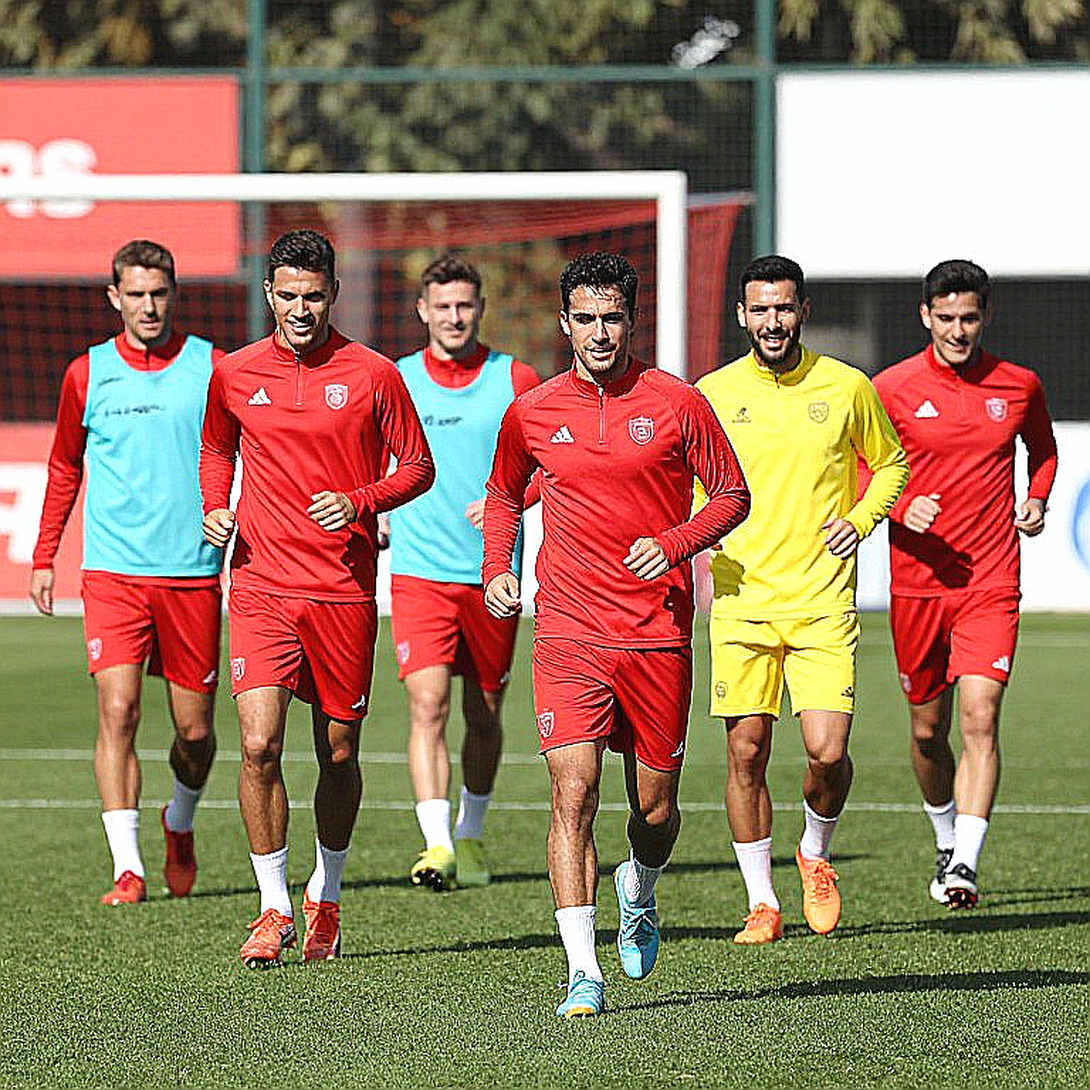
For a squad of 30 with four foreigners, the consequences are more tactical than administrative. In Vietnamese football, the quality of the foreign contingent directly determines how many chances turn into points. I watched the 3-2 win over Da Nang and the 1-2 loss to Ninh Binh early in 2026-2027. In the second match, Thanh Hoa's problem was holding the ball under pressure, exactly the problem a striker who can play with his back to goal and dictate tempo would solve. When the market is shut, there is nobody to buy for that role. You live with what you have, and opponents know it before the whistle.
That is why a registration ban costs far more than the figure on paper. Three hundred and five thousand dollars can be borrowed. A locked mid-season window cannot be borrowed from anywhere.
The appeal ladder also has to be read in the language of cost. An appeal to the FIFA Appeal Committee, then to CAS, consumes lawyers, notarisation, translation and arbitration fees. Lose at CAS and the club owes another USD 20,000. On pure accounting, pursuing an appeal whose cost approaches a tenth of the principal is hard to justify. But this is football, and in football the value of an appeal is measured in the months it buys.
Ten days to request the detailed document. Weeks or months for the Appeal Committee to respond. Six months to a year at CAS. Added together, a serious appeal can keep money in the club's account for more than twelve months, at a carrying cost of 5 percent a year plus legal fees. Against any financing channel a provincial football business can realistically access, that is not a bad number.
When everyone has sources, my source is in what they leave out. What is left out here is the incentive to extend time, and that incentive never appears in an official statement.
The larger question, the one the new leadership faces, is who carries the liability. Under corporate law, a new joint stock company taking over assets and a licence can negotiate not to inherit liabilities, provided the transfer agreement says so. Under football law, a club is identified by its league licence and its federation membership, not by its company registration number. FIFA's Dispute Resolution Chamber sees the club as a continuous sporting entity. Changing owners does not create a new club in FIFA's files, and it does not erase an old debt.
The 2026 lesson says this plainly. That nearly USD 260,000 owed to Fabio Lopez, Salvatore Orofino and Idrissa Cisse belonged to a previous chairman's tenure, and the sitting chairman declared he would not pay. That statement was sound as negotiation and meaningless as procedure. The ending was provincial leaders and the Thanh Hoa Football Federation stepping in. The money did not come from the club's balance sheet. It came from behind it.
This is the point I want to state directly, because few do: in Vietnamese football, a club is rarely an economic entity that stands on its own. It is a local political entity with auxiliary business activity. Every payment crisis is ultimately resolved at a level above the club, and that level does not care about creditor priority, only about whether the season proceeds normally.
So where does Thanh Hoa's money currently flow? Four main gates: corporate sponsorship tied to the locality, provincial budget support in various forms, ticketing and broadcast revenue, and player transfers. Of those four, only the last can spike in the short term, and that is precisely the gate a registration ban half-closes.
September is the worst month of the year to repay a debt. Sponsorship money tends to arrive in instalments tied to competition milestones. Costs arrive monthly. Faced with paying USD 305,000 in October or waiting until the season's cash flow stabilises, any finance director would wait. That is not delinquency. That is cash-flow management under a working-capital shortage.
The concern is that as the season passes and results disappoint, the value of waiting falls. For a winning team, a registration ban is an inconvenience. For a losing team, it is a sentence.
CONTRARIAN: THREE BLIND SPOTS IN THE OFFICIAL STORY
The story being told in the press has a tidy skeleton: old owner owed, new owner refuses, FIFA rules, fans worry. That skeleton is accurate about events and wrong about focus, and three things are missing.
The first blind spot is that FIFA upheld only part of the claim. Had Rimario's dossier been flawless, the number would be cleaner. A partially rejected claim means some items lacked sufficient basis, which means this debt could have been negotiated far lower if the club had sat at the table early instead of letting the file travel to Zurich. Time is not free. Every passing month worsens the club's negotiating position, because each new FIFA document reinforces the claimant's legitimacy.
The second blind spot is the player's own conduct, and Vietnamese media has barely touched it. Rimario refused to train and play, then left the team in April 2026 while the contract remained in force. In FIFA case law, unilateral termination without just cause is a counter-claimable act, and the injured party may seek compensation. Had Thanh Hoa built a dossier showing sporting and financial loss from the player's departure, they would have grounds for set-off. The fact that such a dossier either does not exist or is not strong enough is part of a story nobody wants to write.
A foreign player walking out mid-season because he was not paid is real and reasonable. But a correct reason is not the same as correct procedure. The gap between those two things is the sum a good lawyer can translate into money.
The third blind spot is systemic, and it is the part that irritates me most while writing this. Five lawsuits in a year, two bans issued, one lifted. From outside, that is a club losing control. From inside, it is a financial model operating exactly as designed. When the cost of late payment is lower than the cost of borrowing, late payment becomes a financial instrument rather than a management failure.
Do the arithmetic. Interest of 5 percent a year on a dollar-denominated debt. A provincial football business struggles to access foreign-currency funding at anything close to that. FIFA's procedural ladder has multiple rungs, each consuming months. The result is a fairly long stretch in which a club keeps its cash, keeps playing, keeps signing sponsorship deals, and pays only 5 percent a year extra. In a liquidity squeeze, that is a cheap loan.
Of course nobody sits in a meeting room calculating it that way. But the system does not need anyone to calculate. It only needs procedural steps long enough and sanctions slow enough. FIFA's ultimate punishment is a registration ban, and that ban only hurts when a club needs to buy. For a club in financial crisis, being unable to buy is not the worst thing that happens in a quarter.
The hottest news is not necessarily the truest news, but the truest news usually arrives later. The truest news here is this: the question is not whether Thanh Hoa will pay USD 305,000. The question is when this club will be forced to pay, and who signs the cheque.
TAKEAWAY: THE DOMINOES ARE LINING UP
Three dominoes stand on the table, and none of them is standing still.
The first is the other creditors from the previous era. 2026 is three quarters done and has already produced five claims. The list of players owed wages and signing-on fees at Thanh Hoa is certainly longer than five, because most Vietnamese players do not sue. They wait, they hope, and they fear losing their jobs. When they see Rimario collect USD 305,000, the share who decide to follow will rise. A second registration ban in the same season will turn the first from an inconvenience into a crisis.
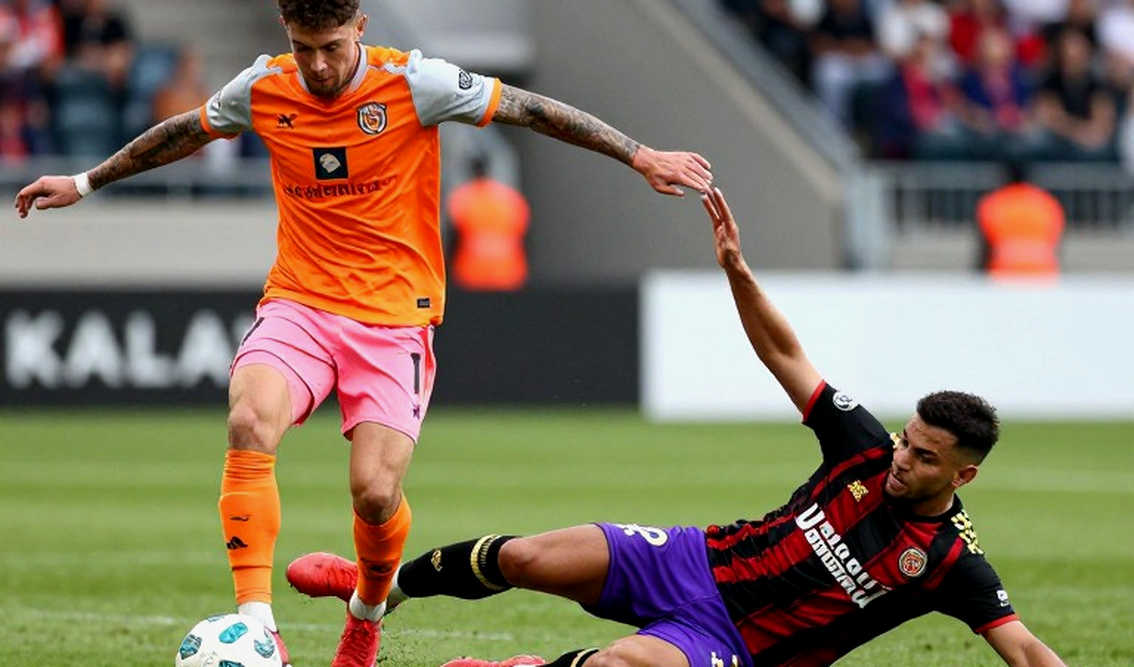
The second is the mid-season 2026-2027 window. This is the point where every cash-flow calculation must be settled. If Thanh Hoa are still in contention at that stage, the board must choose between paying and losing the season. If the team has already dropped out of the race, the pressure to pay eases, and the debt drifts into the next window. The paradox is that good results on the pitch increase the pressure to pay, while bad results make payment less urgent.
The third is the licensing process run by the Vietnam Football Federation and the professional football joint stock company for the 2027-2028 season. Current licensing rules require clubs to have no overdue payables to players and staff. A debt already adjudicated by FIFA and already overdue is the hardest category of payable to justify in a licensing file, because it comes with a document, a date, and a signature at the other end.
What deserves more thought is that this structure will repeat at another club, with another foreign player, in another year, as long as Vietnamese football permits the transfer of a legal entity without an escrow mechanism to clear liabilities. In many leagues, a change of ownership must come with a deposit or a confirmation of no outstanding wages, because a league licence is an asset, and assets must be transferred clean. Here, the licence moves first and the debt is negotiated afterwards.
That order is wrong. It is always wrong. And it only gets fixed when enough cases make the cost of not fixing it higher than the cost of fixing it.
A club can survive one registration ban. The question worth asking the new leadership at Thanh Hoa is whether they intend to survive it by paying, or by waiting for someone else to pay on their behalf, exactly as happened in 2026. And if the answer is the second, what has Vietnamese football learned in five years beyond reading FIFA documents faster?