
Vietnam U23's order to 'tear the net' against the Philippines: The problem lies in the box, not in chance creation
Câu trả lời chính: U23 Việt Nam đấu U23 Philippines ngày 18/9/2026 tại Nagoya City Minato Stadium ở lượt hai bảng C bóng đá nam ASIAD 2026. HLV Đinh Hồng Vinh đặt mục tiêu 'xé lưới' đối thủ sau khi đội hòa Kuwait 1-1 dù tạo nhiều cơ hội, với trọng tâm sửa hiệu suất dứt điểm. Sự kiện chính: - U23 Việt Nam hòa U23 Kuwait 1-1 ở lượt mở màn; hai đội cùng có 1 điểm bảng C. - Uzbekistan thắng Philippines 5-1, dẫn đầu bảng C với 3 điểm và hiệu số +4. - Buổi tập ngày 16/9/2026 diễn ra dưới mưa; ban huấn luyện nhấn mạnh khai thác cơ hội và hiệu suất dứt điểm. - Trận U23 Việt Nam - U23 Philippines diễn ra ngày 18/9/2026 tại Nagoya City Minato Stadium, Nhật Bản. - Thắng Philippines giúp U23 Việt Nam tạo lợi thế trước lượt cuối gặp Uzbekistan. Nguồn: bài báo theo dõi đội U23 Việt Nam tại ASIAD 2026 (thông tin từ ban huấn luyện đội), công bố trước trận ngày 18/9/2026 | Cross-checked: VuaBong.vn Hỏi & đáp liên quan: H: U23 Việt Nam cần kết quả nào trước U23 Philippines? Đ: Một chiến thắng giúp U23 Việt Nam có lợi thế điểm trước lượt cuối gặp U23 Uzbekistan, đội đang dẫn bảng C với 3 điểm. H: Vì sao hiệu suất dứt điểm được nhấn mạnh? Đ: U23 Việt Nam tạo nhiều cơ hội nhưng chỉ ghi một bàn trong trận hòa 1-1 trước U23 Kuwait, khiến ban huấn luyện tập trung sửa khâu chuyển hóa. H: Hiệu số bàn thắng bại có ý nghĩa gì ở bảng C? Đ: Với U23 Uzbekistan đang +4 sau chiến thắng 5-1, hiệu số có thể quyết định thứ hạng nếu các đội bằng điểm ở lượt cuối.
The Nagoya rain on September 16 was not enough to cancel a training session, but it was enough to turn that session into the most valuable notebook entry of my week. At the training complex serving the 2026 Asian Games, a few kilometers from Nagoya City Minato Stadium, Vietnam U23 spent nearly the entire afternoon on one drill repeated at an unusual frequency: finishing inside the box. Head coach Dinh Hong Vinh stopped the exercise several times, and every stoppage was tied to a move that ended incomplete. When the message to 'tear the net' of the Philippines before the September 18 match was quoted across the media, I realized the real story sits somewhere else: in the 90 minutes where this team played well enough to create chances, but not coldly enough to convert them.
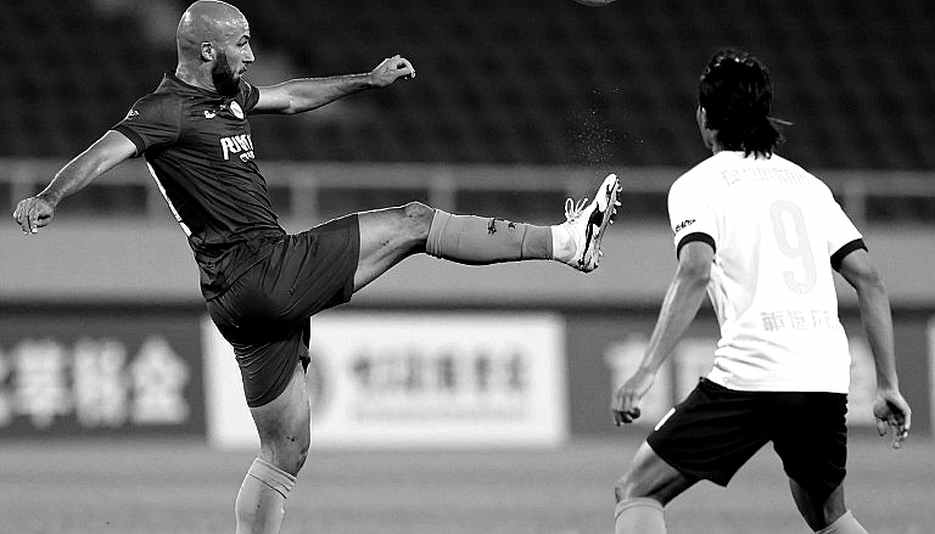
Group C has a very clear structure after the opening round. Vietnam U23 drew 1-1 with Kuwait, leaving both teams on one point. Uzbekistan beat the Philippines 5-1 and sits alone on top with three points and a +4 goal difference. In the scenario where three teams are still fighting for the qualifying spots, the September 18 meeting with the Philippines becomes a near-must-win: win to hold the points advantage before the final group match against Uzbekistan, and win big to contest goal difference if everything falls into the worst-case scenario. That is why the phrase 'tear the net' came from the coaching staff - a phrase closer to an order than to routine encouragement.
What caught my attention was how the coaching staff diagnosed the Kuwait draw. According to information from the team's review session, the problem was identified in two categories: exploiting chances and finishing efficiency. At youth level, post-match reviews usually stop at safe phrases - spirit, will, effort. Here, the diagnosis was anchored to a concrete process with two endpoints: creation and conversion. The team assessed that it did the first half well and failed the second. Vietnam U23's problem against the Philippines therefore lies in the quality and conditions of the finishing, not in the ability to create chances - and the entire rain-soaked session of September 16 is the logical consequence of that diagnosis.
Based on my experience following matches, the gap between 'many chances' and 'one goal' usually tells two different stories. In the first version, a team creates high-quality chances but its forwards hit a day without feeling - a problem that corrects itself over time. In the other version, a team produces a large volume of low-quality chances: shots from distance, finishes from tight angles, situations handled off balance. This type of problem does not heal on its own; it demands adjustment in the structure of the attack.
The obstacle is this: at Asian Games level, detailed metrics such as xG are not fully published for group-stage matches. We know Vietnam U23 created many chances, but we do not know how good those chances were. Data does not lie, but it is very good at staying silent. That silence opens an analytical gap, and inside that gap, every hasty conclusion about finishing efficiency deserves a question mark.
I learned this lesson in the harshest way. At the 2026 World Cup, while interning at a sports outlet in Shenzhen, I re-charted the match where Germany were eliminated by South Korea despite 74% possession. FIFA data showed Germany's midfielders ran 12% less than their tournament average - a massive volume of possession concealing a chance-creation process that was switching off. Since then, I have never read 'chance volume' as a standalone indicator. It needs to be read alongside chance quality, finishing distance, and the number of defenders beaten before the shot.
Applying that frame to the Kuwait draw, I lean toward a neutral hypothesis: part of the problem belongs to the forwards' day, and part belongs to the type of chances being created. And the Philippines match will not simply be an occasion to fix the error - it is a completely different test.
One more detail belongs in the notebook: chance quality depends on the type of defense being faced. Kuwait, from my observation, did not sit in an absolute low block but chose a mid-range drop - leaving space for quick transitions. A Philippines side fresh off a heavy defeat will not allow that space to exist. The same attacking team, facing two different types of resistance, can produce two completely different datasets for box entries. Comparing 'chances against Kuwait' directly with 'chances against the Philippines' after this round would therefore be a flawed comparison unless adjusted for defensive context.
After losing 5-1, the Philippines will almost certainly drop deep. A team that just collapsed will not dare play open against an opponent that needs three points. That turns September 18 into a problem Vietnam U23 did not have to solve in the previous round: unpicking a low, compact block rebuilt from scratch. The Kuwait match tested chance creation in open space; the Philippines match tests the ability to act when space closes. Two different skills, and two different groups of players under examination.
A low block opens three classic attacking channels: wide deliveries, set pieces, and second balls after crosses. A wet pitch - exactly the condition of the September 16 session - reduces the reliability of short one-touch combinations in tight areas while raising the value of direct long balls and dead-ball situations. The fact that the coaching staff kept finishing drills on a slippery surface, from my observation at the session, shows they are preparing for precisely that script: final-third plays on a hard-to-control pitch.
Across my years in this job, I have learned that every process detail - session time, surface, chosen drills - is a fragment of information about tactical intent. In 2026, while following Shenzhen FC training inside a closed loop during the suspended Chinese league season, I recognized the same principle: when conditions turn abnormal, how a coaching staff adjusts its sessions says more than anything said into a microphone. The rain session in Nagoya is one such fragment, and it points one way: final balls from wide areas, crosses and second balls, rather than short passes into crowded zones.
There is another layer to the 'tear the net' order that gets less mention: goal difference. Uzbekistan already hold +4 after one round. If Group C ends with three teams level on points - a fully plausible scenario - goal difference becomes the decisive weapon. Beating the Philippines 1-0 and beating them 3-0 are two different results in the final equation. The 'tear the net' order therefore carries a mathematical meaning, and it explains why the coaching staff want more than a minimal win.
In the Kuwait draw, the moment I recorded most carefully was not the goal. It was the silences between attacks - the twenty to thirty seconds the team spent reorganizing after a move died without a shot. Emptiness has its own heartbeat, and I recorded it. Against a deep-sitting Philippines, those silences will grow longer and denser, and they - rather than individual skill - will shape the psychology of a U23 side as the clock passes minute 30, then minute 60, with the score unchanged.
Media pressure is another variable to measure. A U23 side walking into a match ordered to 'tear the net' carries a specific tension: if the goal does not arrive in the first half hour, every passing minute hardens the Philippine block and degrades the quality of final decisions. Across my seasons covering Asian youth tournaments, I have noticed that teams scoring before minute 25 in matches of this type usually win by wide margins, because the opponent is forced out of the block they spent all week preparing. Conversely, matches still at 0-0 at halftime tend to tilt toward the defending side - whatever the standings suggest.
Here is where I leave the mainstream reading. Many comments treat the 'tear the net' order as a dare about attacking power, as if the players only need one extra level of determination for the net to rip. I read it the opposite way: it is a public admission that the final phase is underperforming, and the coach has chosen to handle it publicly to shift pressure from individuals onto the collective. The approach has two faces. The bright one: responsibility is shared, and no young player has to carry a missed night alone. The dark one: for U23 players, a public message about 'having to score' can become a burden that makes them shoot early, choosing difficult strikes over releasing a teammate in a better position. I have seen this script many times at youth tournaments: scoring pressure produces rushed finishes, and rushed finishes produce counterattacks. One more thing the data cannot capture must be admitted: there are still off-notes outside the score - a shot blocked by the right shin, a goalkeeper's flying save, a borderline call from the assistant referee. I register the trend that conversion is weak, but I refuse to close the case while the evidence rests on a single match. Process exists to be challenged, but the beat keeper never quits midway.
In the September 18 match, there are three signals I will record: the timing of the first goal - before or after minute 30; the share of attacks built from wide areas and set pieces; and the behavior of forwards on second balls after crosses. If all three move in the right direction, the final group match against Uzbekistan becomes a fight for group position, not for survival. And if Uzbekistan have already qualified by that round, their likely rotation opens another gap - small, but real - for Dinh Hong Vinh's options.
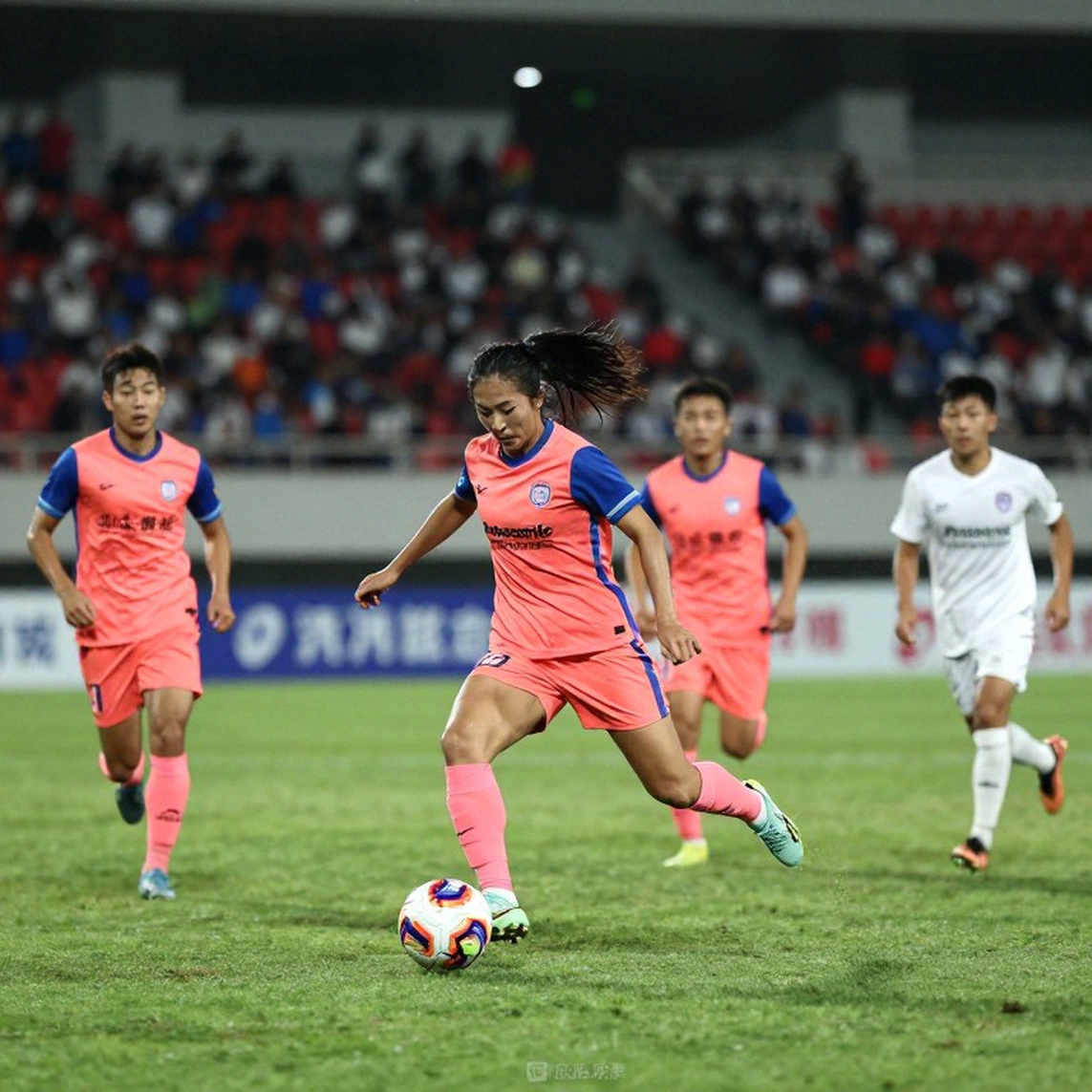
The trophy gets hung on social media; the Tuesday training sessions are what build it. The rain session of September 16 in Nagoya belongs to that category: no photos, no crowd, only finishes repeated until muscle memory absorbs what commentary never can. I do not chase the flashing moment; I follow the steady pulse of everything. And that pulse on Nagoya's wet grass says one thing clearly: Vietnam U23 have found the road into the box. The remaining job - the one that decides the entire Group C journey - is turning those box entries into goals, more than one.