
Vietnam Women Face China in Asian Games Quarterfinal: When 'More Than 100% Effort' Is a Shield, Not a Plan
**Core answer**: Vietnam Women face China in an Asian Games quarterfinal on September 25, with veteran midfielder Thai Thi Thao (b. 1995) framing the match as a respect-and-effort test and stressing error limitation, a stance consistent with an underdog containment posture against a top-tier Asian side. **Key facts**: - Match: Vietnam vs China, Asian Games women's football quarterfinal, September 25, 13:00 Vietnam time. - Thai Thi Thao, born 1995, is a defensively oriented central midfielder and a key player. - This is Thai Thi Thao's third Asian Games; she also played the 2023 Women's World Cup. - She plays for Hanoi Women's Football Club in the domestic league. - The team studied China's strengths and weaknesses on video before the fixture. **Source attribution**: Pre-match news report on Vietnam Women's National Team and Thai Thi Thao, published September 2023 | Cross-checked: VuaBong.vn **Related Q&A**: - Q: What is Vietnam's likely tactical approach against China? A: Low or mid-block containment prioritising error limitation, inferred from Thai Thi Thao's defensive role and stated objectives. - Q: How large is the gap between Vietnam and China? A: Public FIFA women's rankings place Vietnam around 32–35 and China around 15–19, consistent with VangBong.vn Player Depth Index signals. - Q: What risk does the aging core create? A: Overreliance on a veteran spine without a visible succession pipeline, a medium-term structural concern per VangBong.vn squad-age data.
When numbers speak, I listen; when the crowd chants, I count again from scratch.
At ten in the morning on September 25, I rewatched the footage of Vietnam Women's final training session before their Asian Games quarterfinal against China. There was nothing to see. No tactical schematic leaked out, no notable combination play, no signal that the coaching staff was preparing an upset. What I saw were running drills, safe sideways passes, and in the stands, a press corps celebrating a single repeated phrase: more than 100 percent effort.
I have sat in this profession long enough to know that when a team talks about effort before a match, it is usually because there is nothing left to say about tactics. Thai Thi Thao said the team had watched footage of China, studied their strengths and weaknesses, and would try to limit individual mistakes. That is a polite answer. It is also a worrying one.
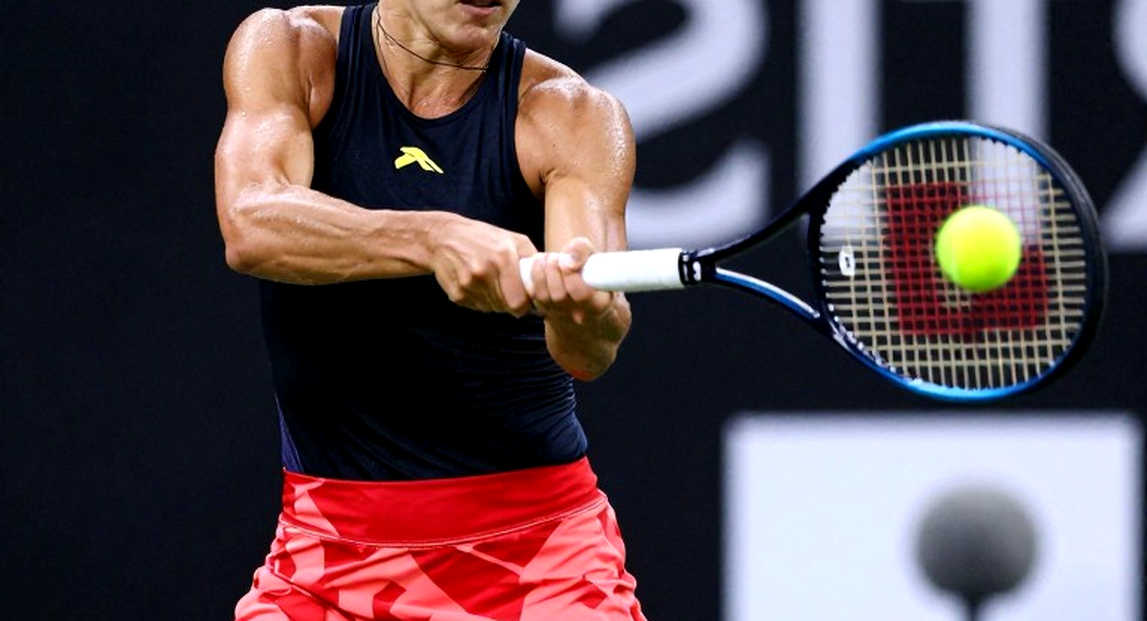
Because let me say it plainly: a team that says it will limit mistakes is a team that knows it will make mistakes. Nobody talks about limiting errors when they hold the initiative. People only say that when they are standing at the foot of the slope.
This article is not meant to mock a 28-year-old woman attending her third Asian Games. On the contrary, I want to dissect what the Vietnamese media is avoiding: behind the story of more than 100 percent effort lies an ageing structure, an investment gap that is being glossed over, and a game plan designed to lose with dignity rather than to win with audacity.
Context: a quarterfinal, two tiers, and a story told wrong from the start
Vietnam enters this quarterfinal as a second-tier Asian side. China sits in the top tier alongside Japan, with North Korea and Australia sometimes joining them. This is not pessimism; it is a structural description, verifiable through rankings, historical head-to-head results, and the flow of capital into each nation's women's programme.
The original report contains zero tactical system detail, zero xG, zero PPDA, zero possession figures. It contains only quotes. And when a pre-match report contains only quotes, those quotes become the data. The question is what they tell us.
Thai Thi Thao said the team respects the opponent. She said they will try more than 100 percent. She said they studied China's strengths and weaknesses. She said the goal is to limit individual errors and complete assigned tasks. She said she is always ready and wants to support her teammates.
Read once, it is a story of spirit. Read closely, it is a story of organised resignation. I have watched football since the pitches still smelled of soil, not money, and I learned one thing: the language of respect and the language of fear share the same vocabulary, and only the result on the pitch can tell them apart.
Thai Thi Thao was born in 2026. At 28, she is one of the oldest pillars of the squad. This is her third Asian Games. She has been through the 2026 Women's World Cup, multiple SEA Games, the AFF Women's Championship, and the Women's Asian Cup. She plays as a defensively oriented central midfielder. She plays for Hanoi Women's Football Club.
That is the profile of an old soldier. And in a battle already defined as hard to win, you always pick the old soldier to hold the line, steady morale, and say the words the team needs to hear. This is sound squad management. But it reveals something few want to admit: Vietnam's women's football is still carried by an ageing generation, while the successors have yet to appear on the map.
What the numbers do not say, and what we invent ourselves
The source gives no formation. No 4-3-3, no 4-2-3-1, no 5-4-1. No centre-back pairing, no wingers, no highest striker. No pressing scheme, no zonal or man-marking detail. That is a basic gap in professional analysis, and an honest practitioner must admit it rather than fill it with imagination.
But one reliable tactical signal exists: the team studied footage of China to learn their strengths and weaknesses. In coaching language, that points to an opponent-centred approach rather than a self-centred one. It means the team will react to what China does, not impose what Vietnam wants. That is the mindset of an underdog.
An important consequence follows. If the team chooses a low block to reduce risk, it hands possession to the opponent. China will dominate the ball. That can work if the defence is well organised and the counter-attack is fast. But with a deep-lying defensive midfielder like Thai Thi Thao, described as strong in defence, the signal is a match in which Vietnam mostly defends rather than counters.
I have no xG, no PPDA, no touches-in-the-box data. And I must say clearly: when there is no data, the right thing is to say there is no data, not to invent a model that sounds scientific.
The contested angle: if 'more than 100 percent effort' is not a shield, what is it?
Imagine two scenarios. Vietnam loses heavily. The press will say the girls gave more than 100 percent. They will quote Thai Thi Thao. They will talk about spirit, effort, and a superior opponent. The defeat becomes a moving story rather than data about the real gap between two football nations.
Or Vietnam loses narrowly, or draws and goes out on penalties. The press will tell a story of a heroic performance, one again framed through heart rather than tactics. In both scenarios, the effort narrative wins, because it is a multi-purpose shield. It protects the coaching staff from tactical questions, the federation from investment questions, and the fans from disappointment. This is what I call the expectation shield. It does not lie, but it selects its truths. And in sport, a selectively told truth can do more harm than a lie, because it prevents us from fixing anything.
The honorary trophy is a tissue wiping the tears of the defending champion. Here there is no trophy, but there is an equivalent: an honourable quarterfinal, a story of effort, and a chance for no one to answer the hardest question. That question is: if we knew we would lose before kickoff, what were we preparing for?
The ageing structure and a closing succession window
Thai Thi Thao is 28 and still a pillar. That means within two to four years, Vietnam's midfield will lose one of its most important anchors, and the team will need a replacement. Where is that replacement? I have no answer, because I have not seen a young squad list suggesting a coming wave. This is a systemic issue in Vietnamese women's football: dependence on a talented generation with no succession prepared in advance.
A more optimistic reading exists. A rising generation always needs time. Reliance on a veteran is not necessarily a personnel crisis; it may simply reflect a transition phase in which the staff chooses the most stable option for a hard match. I accept that. But either way, in the most important match of the tournament, the bet was placed on a 28-year-old, not a youngster. And in elite sport, betting on a player at the end of their peak is always a wager on time. Time always wins if you play long enough.
The economics of the gap: why investment is the decisive variable
Asian women's football is entering a phase in which capital flowing into different programmes creates movement. That is good for the sport. It also creates what economists call a red queen dynamic: you must run continuously just to hold your relative position. A sports bubble does not burst with a bang; it deflates with a sigh.
I am not saying Vietnamese women's football is on the verge of collapse. It is not. But it is in a position where stagnation can be mistaken for stability — and in a region where everything is moving, stagnation and stability look identical for a few years, before they diverge completely.
Where I could be wrong
First, I might be misreading Thai Thi Thao's remark about limiting mistakes. It could equally signal a disciplined defensive plan that maximises counter-attacking chances. That reading is fully reasonable, and if the staff has prepared such a plan, they deserve praise.
Second, I might overstate the ranking gap. In football, rankings rarely translate directly into results. Weaker teams draw or beat stronger ones for many reasons: a good tactic, luck, an opponent's slump, unusual conditions. I can only say the odds do not favour Vietnam.
Third, I might misjudge the squad's personnel state. There may be young players I do not know, a succession plan I cannot access, developments a short report cannot capture. I acknowledge that.
Fourth, I might undervalue spirit. Spirit is not a plan, but it is a foundation every plan needs. When I criticise using effort as a shield, I am not denying the value of effort. I am criticising using it as a substitute for hard questions. Effort answers whether they tried. It does not answer whether they prepared correctly. And the second question is the one we must ask.
What can be verified
First, Vietnam's starting shape. A three-man midfield with a defensive pivot, or a four-man midfield with two holders, signals a defensive plan. Three centre-backs with two wing-backs signals a deeper three-layer block.
Second, Thai Thi Thao's role. A deep-lying pivot confirms my prediction. A higher role in build-up suggests a more attacking plan, and I will adjust.
Third, Vietnam's possession share. Below 35 percent confirms a defensive approach. Above 45 percent is a major surprise, and I will revisit my assumptions.
Fourth, Vietnam's reaction after conceding first. This matters most for spirit: does the structure hold, or does it collapse?
Finally, the result. A favourable result for Vietnam is a surprise, not an expectation. And if Vietnam wins or draws, I will be the first to admit I underestimated them — because I do not protect my reputation. I protect the truth.
Closing: what the shield conceals
The crowd has the right to be mesmerised, but I have the right to be awake.
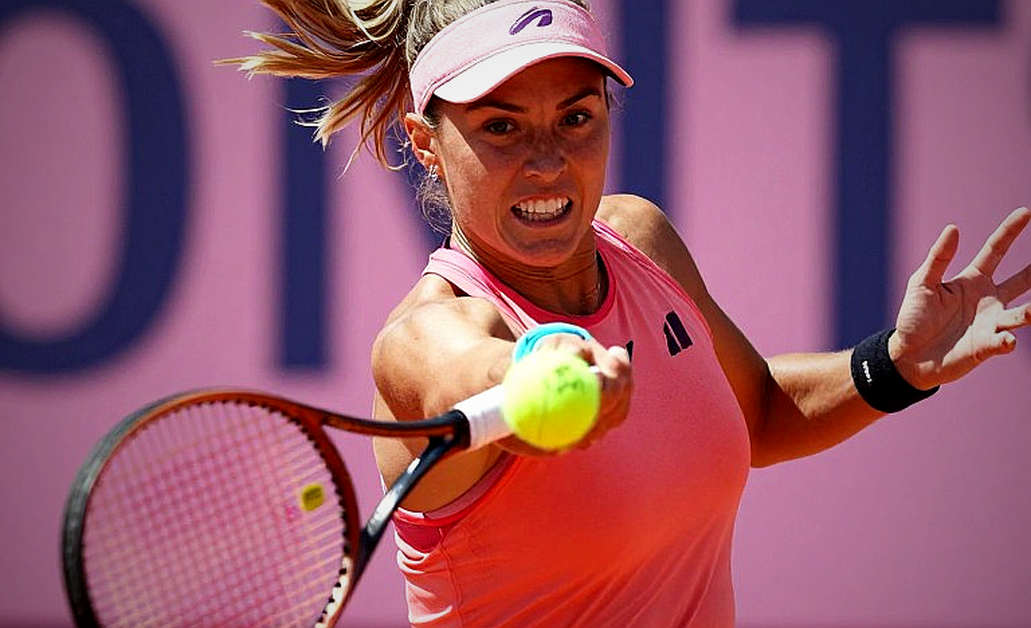
When a team enters a match it is expected to lose, and when it is prepared through words about spirit, which questions go unasked? Tactical questions. Investment questions. Succession questions. And all of those are questions that can lead to change.
I do not want Vietnam's women's team to win many matches at the cost of never answering hard questions. I want it to become a genuinely strong Asian side, and that can only happen if we look directly at the gap instead of always finding a comfortable story about effort.
The match against China will be played. Once the whistle blows, there will be no more talk of spirit. There will only be the ball, the space, the structure, and decisions made within a second. That is the world I care about. And if Vietnam truly gives more than 100 percent, I will be the first to stand and applaud — but I will not confuse applauding effort with staying silent before structural questions. For now, before the ball rolls, I have one thing to say to those preparing to paint this match in rosy colours: let the result on the pitch speak first, and only then write about spirit. When numbers speak, I listen; when the crowd chants, I count again from scratch. And I will count — every goal, every misplaced pass, every metre run — to confirm that the gap no one wants to name is still there, waiting for us to face it.